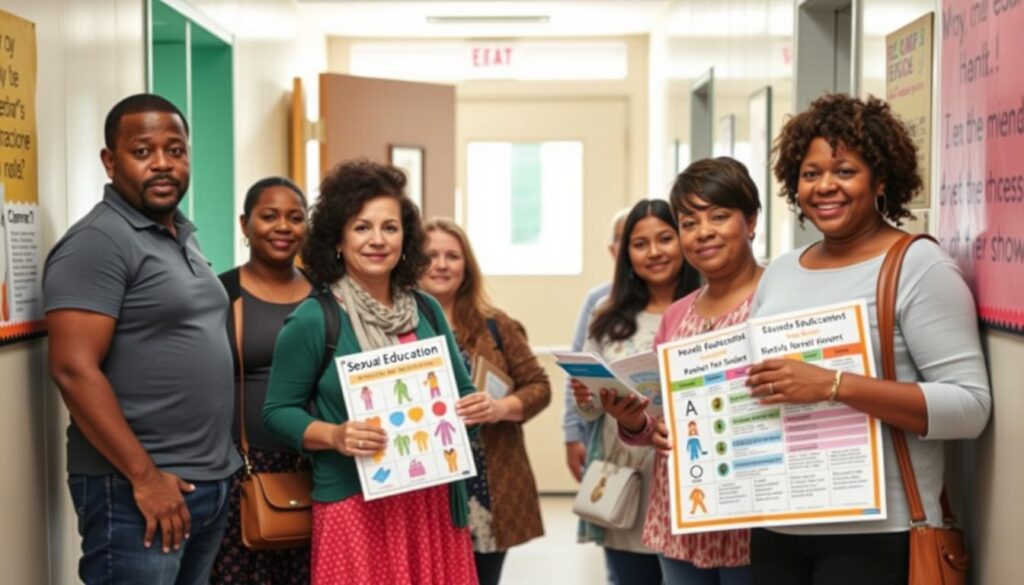
Parents play a vital role in shaping comprehensive sexual education for children. Most parents support medically accurate, age-appropriate sex education in schools1. Your involvement can ensure your child receives proper sexual health information2.
Many parents see school-based sex education as a complement to home discussions. This approach offers a well-rounded understanding of sexual health. It covers delaying relationships and learning about safe practices1.
Your advocacy can create a supportive learning environment. It addresses key aspects of sexual health and personal growth. Getting involved is crucial for child advocacy.
You can join school health education committees or attend board meetings. Speaking up during community discussions about sex education curricula is also helpful1. Support honest, shame-free content that promotes gender equality and critical thinking2.
Key Takeaways
- Comprehensive sex education requires active parental involvement
- Parents overwhelmingly support medically accurate sexual health education
- School-based programs complement home discussions about sexual health
- Advocacy helps create inclusive and supportive learning environments
- Balanced education promotes healthy decision-making skills
Understanding the Importance of Comprehensive Sex Education
Parents are key advocates for comprehensive sex education. This education gives young people vital info about their bodies and relationships. It supports their health and personal growth3.
Teen health issues show the need for parent involvement in sex ed. 55% of high school students report having sexual intercourse by age 18. This stat highlights the urgent need for informed guidance4.
Benefits of School-Based Sex Education Programs
Effective sex education programs offer multiple benefits for students:
- Provide age-appropriate, accurate health information3
- Support positive decision-making skills
- Help delay onset of sexual activity3
- Reduce risky sexual behaviors
Core Components of Quality Sex Education
Parents should look for these elements in comprehensive sex education programs:
- Human development understanding
- Relationship skills
- Personal safety education
- Medically accurate health information3
Impact on Student Health and Development
Comprehensive sexual education tackles critical health issues. Cases of sexually transmitted infections are rising among adolescents. This trend makes informed education more crucial than ever4.
Knowledge is the most powerful tool in protecting our children’s health and future.
Parents can be strong advocates for their children’s health. By supporting good sex education, they protect their kids’ wellbeing and future.
Parental Advocacy: Steps to Support Sex Education in Schools
Parents play a vital role in supporting comprehensive sex education. Your involvement empowers young people with accurate, age-appropriate information. Active participation is key to advocating for children’s sexual health education.
Understanding your school’s current sex education curriculum is the first step. Parent support groups can make a significant impact through these actions:
- Attend school board meetings and express your support for comprehensive sex education
- Request detailed information about existing sex education programs
- Connect with other parents interested in youth health education
- Review curriculum materials to ensure they are evidence-based
Statistics show a pressing need for strong sex education. Half of all new STIs occur in the 10-24 age group5. Your proactive engagement can help reduce these risks6.
“Parents are the first and most important educators in a child’s life” – Sexuality Education Expert
Helpful resources are available for your advocacy efforts. Planned Parenthood offers national hotlines and local support for parent-child conversations7.
Your involvement can create positive change. Comprehensive sex ed programs can delay sexual activity and increase safe practices6. By staying informed, you become a powerful advocate for your children’s health.
Conclusion
Your role in child advocacy for comprehensive sex education is vital. By understanding parental involvement, you can support your child’s health and educational needs. Parental advocacy protects children and ensures they receive appropriate services8.
Active family advocacy improves educational outcomes. Parents who engage with schools can help their children navigate health and educational challenges. Learn more about parental involvement.
Studies show that 42.7% of parents document their advocacy communications. Additionally, 81.6% lead support groups for other families9.
Your advocacy role goes beyond individual support. By joining school discussions and attending training sessions, you become a change agent. Your efforts can help create comprehensive sex education programs.
Your voice matters. Through consistent advocacy, you can ensure students receive essential sex education. This knowledge equips young people for healthy relationships and personal growth.
FAQ
Why is comprehensive sex education important for my child?
Comprehensive sex education is vital for your child’s health and growth. It offers age-appropriate info about sexuality, relationships, and sexual health. This helps young people develop a safe, positive view of sexuality.
Your child can build healthy relationships and make smart choices. They’ll also gain key communication and social-emotional skills. All this comes from getting accurate, evidence-based information.
What should comprehensive sex education include?
Quality sex ed should cover human development, relationships, and personal skills. It should also address sexual behavior, sexual health, and societal aspects. The content needs to be age-appropriate, medically accurate, and culturally responsive.
It should promote gender equality and include info on abstinence and birth control. The curriculum should also address diversity and teach positive relationship skills.
How can I become an advocate for sex education in my child’s school?
Start by learning about your school’s current sex ed offerings. Join school health committees and attend board meetings. Stay informed about the curriculum and know your teachers’ training.
Be ready to support evidence-based programs. Push back against efforts to limit access to comprehensive, inclusive sex education.
What are the benefits of comprehensive sex education?
Research shows that comprehensive sex ed reduces sexual risk behaviors. It increases the use of protection and improves communication skills. It also enhances social-emotional learning.
Sex ed can help prevent child sex abuse and reduce dating violence. It promotes a positive body image. Most importantly, it empowers youth to make healthy choices.
Do most parents support sex education in schools?
Yes! About 80-85% of parents want their kids to get comprehensive sex ed. They see it as a valuable add-on to talks at home.
Parents recognize its importance in supporting their children’s health and growth. They want the info to be medically accurate and age-appropriate.
When should sex education begin?
Sex ed is a lifelong process that should start early. It should continue throughout childhood and teen years. Age-appropriate info helps kids understand their bodies and relationships better.
As children grow, the depth of information can increase. This matches their stage of development.
How can I talk to my child about sex education?
Be open, honest, and use age-appropriate language. Create a safe space where your child feels comfortable asking questions. Listen well and provide accurate information.
Stress the importance of respect, consent, and healthy relationships. Back up school-based education with ongoing talks at home.
Source Links
- Parents as Advocates for Comprehensive Sex Education in Schools – https://www.advocatesforyouth.org/wp-content/uploads/storage/advfy/documents/advocate.pdf
- Sex Education Is Essential (Sex Ed for All Talking Points) – https://www.healthyteennetwork.org/news/sex-education-is-essential/
- Comprehensive sexuality education – https://www.who.int/news-room/questions-and-answers/item/comprehensive-sexuality-education
- The Importance of Access to Comprehensive Sex Education – https://www.aap.org/en/patient-care/adolescent-sexual-health/equitable-access-to-sexual-and-reproductive-health-care-for-all-youth/the-importance-of-access-to-comprehensive-sex-education/?srsltid=AfmBOorh4zZPizIpGLS6ljxw6a5C6LtzblsciEUF9Sz-O1DxSyAULpT9
- Sexuality Education as Part of a Comprehensive Health Education Program in K to 12 Schools – https://www.apha.org/policies-and-advocacy/public-health-policy-statements/policy-database/2015/01/23/09/37/sexuality-education-as-part-of-a-comprehensive-health-education-program-in-k-to-12-schools
- PDF – https://www.ippf.org/sites/default/files/from_evidence_to_action.pdf
- Sex Ed Additional Resources | Organization for Autism Research – https://researchautism.org/self-advocates/sex-ed-for-self-advocates/sex-ed-additional-resources/
- Parental Advocacy Styles for Special Education Students During the Transition to Adulthood – https://pmc.ncbi.nlm.nih.gov/articles/PMC4028223/
- Short Report: The Role of Parental Advocacy in Addressing Service Disparities for Transition-aged Youth on the Autism Spectrum – https://pmc.ncbi.nlm.nih.gov/articles/PMC9010347/