
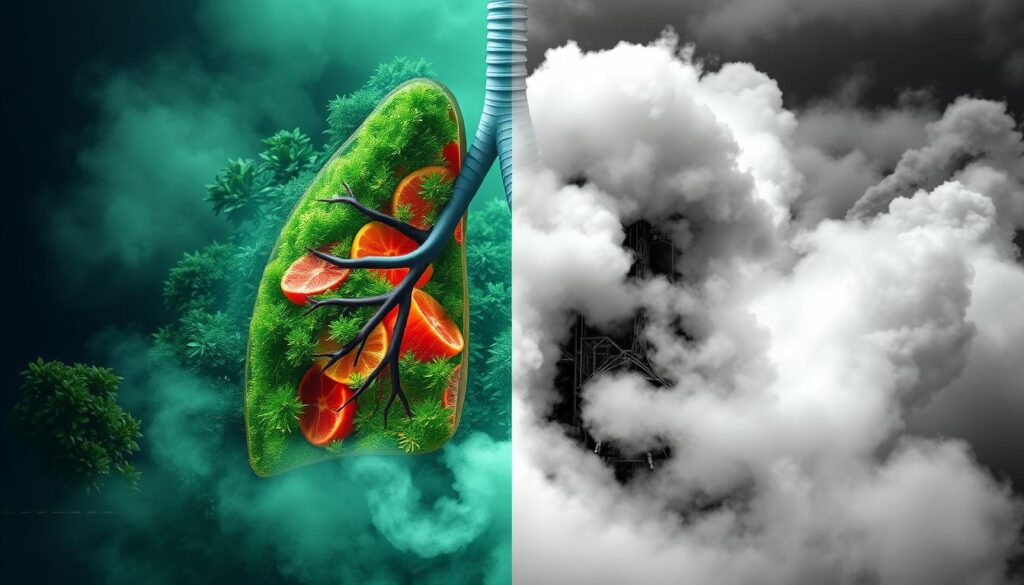
Air pollution and emphysema are closely linked, affecting millions of people’s respiratory health. Environmental pollutants can silently damage lung tissue over time. The Multi-Ethnic Study of Atherosclerosis explored how air quality influences lung diseases in six metropolitan areas1.
Researchers found that exposure to air pollutants can greatly increase emphysema risk. Each breath in polluted areas may harm your lungs. Some pollution levels are as harmful as smoking multiple cigarettes daily1.
The study looked at how different toxins affect your breathing. Over 15,000 CT scans were analyzed. They showed that multiple pollutants together pose a bigger threat to lung health1.
Key Takeaways
- Air pollution directly impacts lung tissue and respiratory health
- Metropolitan areas face higher risks of emphysema development
- Multiple pollutants can cause more damage than single toxins
- Long-term exposure increases respiratory disease risks
- CT scans can help track lung damage from environmental factors
Understanding Emphysema: A Brief Overview
Emphysema is a complex respiratory condition that slowly affects lung health. It’s a progressive disease impacting millions of Americans. Emphysema creates significant challenges for those diagnosed2.
What Is Emphysema?
Emphysema is a type of chronic obstructive pulmonary disease (COPD). It damages the air sacs in your lungs. These structures weaken and lose elasticity, making breathing harder3.
The condition develops slowly over time. It often takes years before noticeable symptoms appear4.
Symptoms of Emphysema
Recognizing early signs of emphysema helps in seeking timely medical care. Key symptoms include:
- Shortness of breath
- Persistent coughing
- Wheezing
- Chest tightness
- Mucus production
How Emphysema Affects Breathing
Environmental factors and emphysema are closely linked. Poor air quality increases the risk of emphysema. Prolonged exposure to harmful pollutants worsens the condition.
As emphysema progresses, lungs become less efficient at exchanging oxygen. This makes even simple activities challenging4.
“Breathing becomes a conscious effort for those with emphysema, transforming a natural process into a daily struggle.”
Emphysema impacts more than just physical health. Men between 50 and 70 are most likely to be diagnosed. However, the condition can affect people as young as 402.
Smoking significantly speeds up the disease’s progression. It can potentially reduce life expectancy by 3.5 years2.
What Is Air Pollution?
Air pollution is a major environmental issue affecting global health. It has a significant impact on lung health and respiratory well-being. Understanding its nature helps us recognize its effects.
Types of Air Pollutants
Air contains harmful substances that can cause respiratory problems. The most dangerous pollutants include:
- Particulate matter (PM2.5 and ultrafine particles)
- Nitrogen dioxide (NO2)
- Ozone
- Sulphur dioxide (SO2)
Sources of Air Pollution
Pollutants come from many sources, creating a complex problem. About 2.1 billion people cook using inefficient stoves with harmful fuels5.
Major pollution sources include:
- Industrial emissions
- Vehicle exhaust
- Agricultural activities
- Household cooking and heating
Health Effects of Air Pollution
Air pollution greatly risks respiratory health. High pollution levels can increase hospital visits for lung issues6. Long-term exposure may cause serious health problems.
These problems can include:
- Increased risk of asthma
- Chronic obstructive pulmonary disease (COPD)
- Lung infections
- Potential lung cancer development
The combined effects of ambient and household air pollution are associated with 6.7 million premature deaths annually5.
To protect yourself, learn about pollution sources and health risks. Take steps to reduce your exposure to air pollution.
The Connection Between Air Pollution and Emphysema
Air pollution threatens respiratory health, especially regarding emphysema. Learning how pollutants harm lung tissue can help protect your breathing. Safeguarding your lungs is crucial in polluted environments.
Mechanisms of Damage to Lungs
Air pollution and emphysema share a complex, alarming relationship. Scientists have discovered how various pollutants affect lung health:
- Ozone exposure can cause significant lung tissue damage7
- Fine particulate matter accelerates emphysema progression8
- Nitrogen oxides contribute to respiratory deterioration9
Epidemiological Evidence
Studies show strong links between air pollution and emphysema. A large research project followed over 7,000 people in six metro areas. It revealed clear connections between pollutant exposure and lung damage9.
| Pollutant | Impact on Lung Health |
|---|---|
| Ozone | Equivalent lung damage to smoking a pack daily for 30 years7 |
| Particulate Matter | Accelerates emphysema progression8 |
| Nitrogen Oxides | Contributes to respiratory decline9 |
Vulnerable Populations
Traffic-related pollutants can affect people of all ages, sexes, and smoking statuses9. Some groups face higher risks from air pollution.
- Urban residents
- People with pre-existing respiratory conditions
- Older adults
- Individuals with limited access to healthcare
Chronic exposure to air pollution may contribute to emphysema development, even in non-smokers7.
Knowing these links helps you protect your lungs. Take action to guard your breathing against air pollution and emphysema. Your respiratory health is worth the effort.
Risk Factors for Emphysema
Knowing emphysema risk factors is vital for prevention and air pollution control. The disease can affect anyone through various pathways.
Effective prevention starts with understanding these risk factors. They help in developing strategies to protect respiratory health.
Smoking and Non-Smoking Prevalence
Smoking is the main cause of emphysema. However, 1 in 4 people with COPD have never smoked10.
This fact shows how complex pollution exposure and emphysema severity can be11. It highlights the need for comprehensive prevention strategies.
- 75% of COPD cases occur in people with smoking history10
- Female smokers are 13 times more likely to die from COPD11
- Male smokers are 12 times more likely to die from COPD11
Genetic and Environmental Factors
Alpha-1 antitrypsin deficiency is the most common genetic form of emphysema. It can be diagnosed through blood tests10.
Less than 1% of COPD cases come from genetic variations11. This shows that environmental factors play a significant role.
Occupational Hazards
Some jobs greatly increase respiratory risk. Occupational exposures cause 10-20% of respiratory symptoms10.
| High-Risk Occupations | Potential Exposure |
|---|---|
| Farmworkers | Dust and agricultural chemicals |
| Vehicle Mechanics | Toxic fumes and chemical exposure |
| Hospitality Cleaning Staff | Cleaning chemical irritants |
Early detection can dramatically improve your quality of life10.
Knowing these risk factors helps protect your respiratory health. It allows you to take steps to minimize potential complications.
How Air Quality Affects Respiratory Health
Your lungs face constant environmental challenges. Air quality greatly impacts lung health. Poor air quality can lead to serious respiratory conditions.
Air pollution severely affects respiratory health worldwide. By 2012, it caused an estimated 3.7 million deaths. This shows how dangerous poor air quality can be.
Outdoor air pollution is a major health concern. It significantly increases the risk of emphysema and other respiratory problems.
Short-term Effects of Poor Air Quality
Polluted air immediately challenges your respiratory system. Short-term effects can be severe and uncomfortable.
- Increased respiratory irritation
- Reduced lung function
- Heightened risk of asthma exacerbations
- Inflammation of respiratory passages
Brief exposure to pollutants can harm lung function. Children and teens are most at risk. Their developing lungs are more sensitive to these dangers.
Long-term Consequences
Long-term exposure to air pollution is risky. Chronic exposure can lead to permanent lung damage. It increases the chance of developing emphysema.
Studies show that constant exposure to outdoor pollutants speeds up respiratory decline. This can lead to serious health issues over time.
The Role of Toxins in Air
Many toxic elements contribute to poor air quality. These include:
- Particulate matter (PM)
- Ozone (O3)
- Sulfur dioxide (SO2)
- Nitrogen dioxide (NO2)
“The air we breathe today determines the respiratory health we’ll experience tomorrow.”
Diesel exhaust particles are a major threat in cities. They can make up 90% of airborne particulate matter. Understanding these risks helps protect your respiratory health1213.
Prevention of Emphysema: Lifestyle Changes
Protecting your lungs requires proactive strategies. These can reduce the risk of emphysema and minimize air pollution’s impact. Targeted lifestyle choices support respiratory wellness.
Lung diseases are a critical global health challenge. They cause an estimated 7.5 million deaths per year worldwide14. Learning how to protect yourself is crucial for managing respiratory risks.
Quitting Smoking: Your First Line of Defense
Smoking is the main risk factor for emphysema and chronic respiratory diseases15. Quitting can slow disease progression and improve overall lung function16.
- Reduce cigarette consumption gradually
- Seek professional smoking cessation support
- Consider nicotine replacement therapies
Reducing Exposure to Pollutants
Air pollution control starts with personal awareness. Poor indoor air quality contributes to about 7 million deaths annually14. Protect yourself by:
- Using high-quality air purifiers
- Monitoring local air quality indexes
- Avoiding outdoor activities during high pollution days
The Power of Regular Exercise
Strategic physical activity can boost lung capacity and resilience. Always consult healthcare professionals for a safe, personalized approach. This helps maintain good respiratory health.
“Prevention is better than cure” – especially when it comes to lung health
These lifestyle changes can significantly lower your risk of emphysema. They support long-term respiratory wellness16.
Treatment Options for Emphysema
Emphysema poses unique challenges for those affected by air pollution. Effective management can improve life quality and slow disease progression. Let’s explore the available treatment options.
Diagnostic methods are vital in addressing this chronic lung condition17. Spirometry is the most common test for diagnosing emphysema. CT scans offer more detailed insights compared to standard chest X-rays17.
These tools help healthcare professionals develop targeted treatment strategies. They guide the creation of personalized care plans.
Medications and Therapies
Emphysema treatments aim to manage symptoms and improve breathing18. Bronchodilators are often prescribed to relax airway muscles1817. This helps patients breathe more easily.
Patients may receive various medications, including:
- Bronchodilators
- Inhaled steroids
- Combination inhalers
- Antibiotics for infections
Importance of Early Diagnosis
Early intervention is key to managing emphysema effectively.18 Most people experience symptoms after age 40. Regular health screenings are crucial1817.
Lung function tests and imaging help monitor the disease’s progression. These tools provide valuable insights for treatment adjustments.
Role of Pulmonary Rehabilitation
17Pulmonary rehabilitation programs can significantly reduce breathlessness. They improve patients’ overall quality of life1718. These programs enhance the well-being of individuals with chronic breathing issues18.
“The most important step in emphysema treatment is quitting smoking.” – Respiratory Health Expert
| Treatment Option | Purpose |
|---|---|
| Oxygen Therapy | Improve blood oxygen levels for severe cases |
| Surgical Intervention | Last resort for severe emphysema |
| Lifestyle Modifications | Slow disease progression |
17Advanced cases may require surgical options like lung volume reduction or transplantation. Work closely with healthcare professionals to develop a personalized treatment plan.
The Impact of Policy on Air Quality
Air quality rules are vital for preventing emphysema and controlling pollution. These policies shape our environment’s health and protect our lungs. Understanding them can help us breathe easier.
Fighting air pollution needs teamwork from many groups. Studies show air quality greatly affects public health. Researchers have found strong proof of this link.
Clean Air Regulations: A Comprehensive Approach
Good clean air policies can lower emphysema risk by tackling pollution sources. Leaders now see how air quality and emphysema are connected19.
- Implement strict emission standards
- Monitor industrial pollution levels
- Develop targeted intervention strategies
Community Initiatives to Reduce Pollution
Local communities are key in fighting air pollution. They can make real change through smart actions.
- Promoting public transportation
- Supporting green urban planning
- Encouraging renewable energy adoption
Government and Organizational Roles
The Environmental Protection Agency tracks pollution effects closely. Their work shows PM2.5 causes about 48,000 early deaths yearly in the U.S19.
| Organization | Primary Focus | Key Contribution |
|---|---|---|
| EPA | Pollution Monitoring | Emission Regulations |
| NIEHS | Health Research | Environmental Health Studies |
| NHLBI | Respiratory Health | Lung Disease Prevention |
Clean air is not a luxury—it’s a fundamental human right that requires collective action.
Your support of air quality policies can help prevent lung diseases like emphysema. Every action counts in this fight for cleaner air.
Future Trends in Air Quality and Health
Air pollution and emphysema research is evolving rapidly. Scientists are making big strides in new technologies. They’re exploring links between environmental factors and respiratory health.
Research keeps uncovering connections between air pollution and emphysema. Long-term studies reveal crucial insights into how environmental factors impact lung health. Studies show pollution levels directly affect lung damage20.
Innovations in Pollution Control Technology
- Advanced air filtration systems
- Molecular-level pollution detection
- Smart urban planning strategies
- Artificial intelligence-powered monitoring tools
Climate Change and Air Quality Interactions
Climate change greatly affects air quality, creating complex health challenges. At-risk groups include21:
- People with existing lung diseases
- Infants and young children
- Adults over 65
- Individuals with cardiovascular conditions
Ongoing Research Perspectives
| Research Focus | Key Objectives |
|---|---|
| Pollution Impact Assessment | Quantify long-term effects of air pollution on lung function |
| Technology Development | Create advanced pollution mitigation strategies |
| Health Monitoring | Develop early warning systems for respiratory risks |
“Understanding the effects of pollution on emphysema is crucial for protecting public health and developing targeted interventions.”
Your awareness can make a big difference. Take action to combat air pollution’s impact on respiratory health. Stay informed and be proactive to protect yourself and others.
Raising Awareness About Air Pollution
Protecting lung health needs active community engagement and personal commitment. Air pollution risks respiratory wellness. Awareness is key for emphysema prevention and air pollution control22.
Community Education and Outreach
Community education can change how people view air pollution’s impact on lung health. Local programs help residents understand health consequences. They also teach potential preventive strategies23.
- Host community workshops on air quality
- Develop educational materials about pollution risks
- Create school-based environmental health programs
The Role of Social Media in Advocacy
Social media spreads awareness about emphysema prevention and air pollution control. Digital campaigns reach millions quickly. They highlight critical health information22.
“Knowledge shared is health protected” – Environmental Health Experts
How Individuals Can Make a Difference
Everyone can help reduce air pollution’s impact on lung health. Small personal actions create significant collective change23.
- Reduce personal carbon footprint
- Support clean air policies
- Participate in local environmental initiatives
| Action | Potential Impact |
|---|---|
| Use public transportation | Reduces individual emissions |
| Plant trees | Improves local air quality |
| Use energy-efficient appliances | Decreases overall pollution |
Your individual choices matter in the fight against air pollution and respiratory diseases.
Conclusion: The Importance of Understanding This Link
Air pollution and emphysema are closely linked, affecting respiratory health. Research shows pollution causes serious lung diseases, impacting global health24. COPD affects millions worldwide, making it vital to understand environmental factors24.
Pollution’s effects on emphysema are significant. Long-term exposure to particulate matter can drastically impact lung function25. Emphysema patients face reduced lung capacity and breathing difficulties in polluted areas26.
Summary of Key Points
Your health directly connects to air quality. Air pollution and emphysema have a complex relationship beyond traditional risk factors. Smoking remains a primary concern, but environmental exposure is equally critical24.
Understanding these connections helps protect your lungs. You can take steps to reduce risks associated with air pollution25.
The Call to Action for Health and Environment
Protect your respiratory health by reducing exposure to pollutants. Back initiatives that improve air quality. Your actions matter in fighting pollution-caused lung diseases.
Your awareness can help create healthier environments for all26.
Hope for Better Respiratory Health
There’s reason for optimism despite the challenges. New research continues to explore air quality and lung health connections. Stay informed and make conscious choices to impact your respiratory well-being.
Your efforts can support broader environmental protection initiatives.
FAQ
What is emphysema and how does air pollution contribute to its development?
Emphysema is a lung disease that destroys air sacs, making breathing difficult. Air pollution, especially ozone and fine particles, can speed up lung damage. Long-term exposure to these pollutants can harm lungs like smoking a pack of cigarettes daily for 30 years.
Can non-smokers develop emphysema from air pollution?
Yes, about 25% of people with emphysema have never smoked. Studies show air pollution can cause emphysema in non-smokers of all backgrounds. Higher levels of ozone and other pollutants are linked to increased lung damage.
What are the main symptoms of emphysema?
The main symptoms include coughing, wheezing, shortness of breath, and chest tightness. As emphysema worsens, getting enough oxygen becomes harder. This can affect your daily activities and overall quality of life.
How can I reduce my risk of emphysema related to air pollution?
Use air purifiers and avoid outdoor activities on high pollution days. Support local clean air initiatives and wear protective masks when pollution is high. Quitting smoking and regular exercise can also help protect your lungs.
Are there effective treatments for emphysema?
Emphysema isn’t curable, but treatments can manage symptoms and slow its progress. These include bronchodilators, inhaled steroids, oxygen therapy, and pulmonary rehab programs. Early diagnosis is key for effective management.
In severe cases, doctors might consider surgical options like lung volume reduction.
What types of air pollutants are most harmful to lung health?
The most harmful pollutants are ozone, fine particulate matter, oxides of nitrogen, and black carbon. These often come from traffic and industrial emissions. Among these, ozone poses the greatest risk to lung health.
How can individuals help reduce air pollution?
Support clean air policies and reduce your carbon footprint. Use public transportation, support green spaces, and join local environmental initiatives. Small actions can contribute to improving air quality and protecting public health.
Source Links
- Global air pollution linked to increased emphysema cases – https://www.news-medical.net/news/20190814/Global-air-pollution-linked-to-increased-emphysema-cases.aspx
- Emphysema: Causes, Symptoms, Diagnosis & Treatment – https://my.clevelandclinic.org/health/diseases/9370-emphysema
- Emphysema – https://www.lung.org/lung-health-diseases/lung-disease-lookup/emphysema
- Emphysema – Symptoms and causes – https://www.mayoclinic.org/diseases-conditions/emphysema/symptoms-causes/syc-20355555
- Household air pollution – https://www.who.int/news-room/fact-sheets/detail/household-air-pollution-and-health
- Air pollution effects on your lungs, including lung cancer – https://www.asthmaandlung.org.uk/living-with/air-pollution/your-lungs
- Air pollution associated with worsening emphysema – https://www.nih.gov/news-events/nih-research-matters/air-pollution-associated-worsening-emphysema
- Long-term air pollution exposure and emphysema – https://www.publichealth.columbia.edu/research/centers/niehs-center-environmental-health-justice-northern-manhattan/news-events/newsbriefs/fall-2019/ambient-air-pollution
- Nonsmokers can get emphysema from air pollution, study finds (Environmental Factor, September 2019) – https://factor.niehs.nih.gov/2019/9/papers/air-pollution
- What Causes COPD – https://www.lung.org/lung-health-diseases/lung-disease-lookup/copd/what-causes-copd
- Risk factors for emphysema: What are they? – https://www.medicalnewstoday.com/articles/risk-factors-for-emphysema
- Air pollution and chronic airway diseases: what should people know and do? – https://pmc.ncbi.nlm.nih.gov/articles/PMC4740163/
- Pulmonary Health Effects of Air Pollution – https://pmc.ncbi.nlm.nih.gov/articles/PMC4776742/
- Lifestyle interventions in prevention and comprehensive management of COPD – https://pmc.ncbi.nlm.nih.gov/articles/PMC6118879/
- National Emphysema Foundation – Lifestyle Changes to Improve COPD Symptoms, Quality of Life – https://www.emphysemafoundation.org/index.php/living-with-copd/97-therapeutic-toolbox-articles/197-lifestyle-changes-to-improve-copd-symptoms-quality-of-life
- About COPD – https://www.cdc.gov/copd/about/index.html
- Emphysema – Diagnosis and treatment – https://www.mayoclinic.org/diseases-conditions/emphysema/diagnosis-treatment/drc-20355561
- Emphysema | Emphysema Symptoms | Emphysema Treatment | MedlinePlus – https://medlineplus.gov/emphysema.html
- Health Impact of Pollution | State of the Air – https://www.lung.org/research/sota/health-risks
- Air Pollution and Percent Emphysema Identified by Computed Tomography in the Multi-Ethnic Study of Atherosclerosis – https://pmc.ncbi.nlm.nih.gov/articles/PMC4314244/
- Air quality and health – https://www.pca.state.mn.us/air-water-land-climate/air-quality-and-health
- Air Pollution Health Impacts – https://globalcleanair.org/air-pollution-health-impacts/
- Air Pollution and Your Health – https://www.niehs.nih.gov/health/topics/agents/air-pollution
- Air pollution as an early determinant of COPD – https://pmc.ncbi.nlm.nih.gov/articles/PMC9724895/
- Association of air pollution exposure with exercise-induced oxygen desaturation in COPD – Respiratory Research – https://respiratory-research.biomedcentral.com/articles/10.1186/s12931-022-02000-1
- Ambient air pollution, lung function and COPD: cross-sectional analysis from the WHO Study of AGEing and adult health wave 1 – https://bmjopenrespres.bmj.com/content/7/1/e000684

