
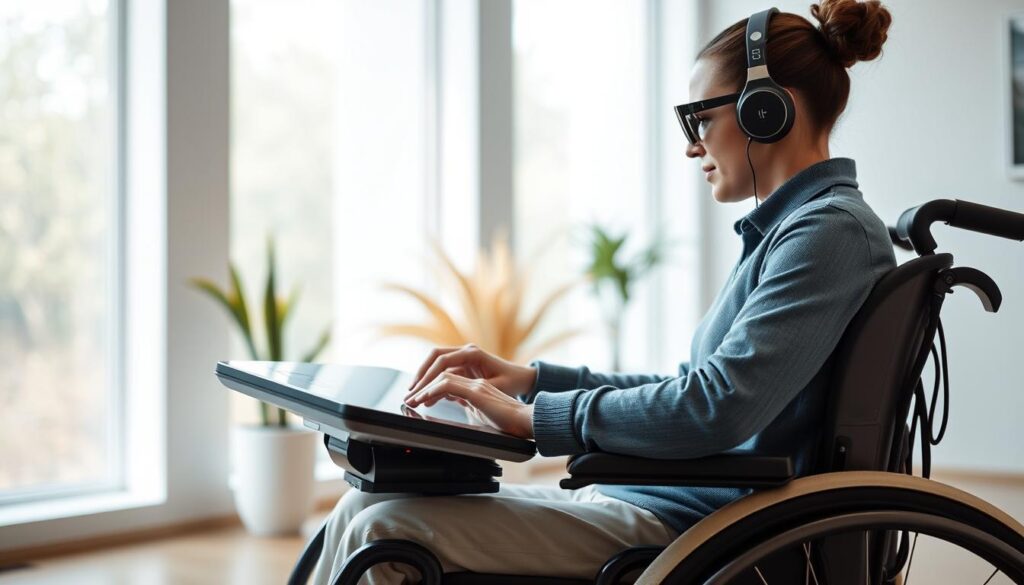
Groundbreaking tech is changing how paralyzed people communicate. Brain-computer interfaces (BCIs) are opening new doors for those who can’t speak normally1. Stanford University has created amazing devices that let paralyzed folks type with their minds1.
This new device uses smart neural sensing tech. A tiny silicon chip with 100 electrodes reads brain activity, making a powerful speech tool1.
Users can type up to 39 correct characters per minute. They do this without any help from auto-complete features1.
These devices mark a big step in assistive tech. By reading brain signals directly, people can now use digital systems. This gives them more freedom and connection.
Key Takeaways
- Brain-computer interfaces enable direct communication through neural signals
- Advanced neural sensing technology allows precise brain signal interpretation
- Participants can achieve typing speeds up to 39 characters per minute
- Innovative devices provide new communication opportunities for paralyzed individuals
- Stanford University leads breakthrough research in neural interface systems
Overview of Communication Challenges for Paralyzed Individuals
Communication is vital for paralyzed individuals. Expressing thoughts becomes complex when movement is limited. Innovative assistive technology is crucial for addressing these communication challenges.
Paralysis can severely disrupt effective communication. People with speech impairments face numerous obstacles. These barriers hinder smooth interactions with their environment and loved ones.
Understanding the Impact of Paralysis on Communication
Paralyzed individuals face various communication challenges. Limited muscle control affects speech production. Neurological conditions can impair verbal expression.
- Limited muscle control interrupts speech production
- Neurological conditions can impair verbal expression
- Traditional communication methods become difficult
Lip reading is challenging, with only 30% of spoken words typically understood. This highlights the need for AAC devices for nonverbal individuals2.
Barriers to Effective Communication
Communication barriers appear in several ways:
| Communication Challenge | Potential Impact |
|---|---|
| Physical Speech Limitations | Reduced ability to articulate words |
| Cognitive Processing | Difficulty formulating complex thoughts |
| Technological Constraints | Limited access to adaptive communication tools |
Developing specialized communication strategies is crucial. This may involve asking short questions that require brief answers. Such methods help individuals with speech disabilities express themselves more easily2.
“Communication is not just about speaking, but being understood.”
Innovative assistive technologies offer hope for those with paralysis. These tools transform communication from a challenge into an achievable goal.
Introduction to Innovative Communication Devices
Technology has transformed communication for people with disabilities. Advanced devices offer new hope to those facing speech challenges. These tools are crucial for the 2.2 million people with communication difficulties3.
Augmentative and alternative communication (AAC) aids help people overcome speech issues. These tools range from specialized equipment to adaptable technology. They’re powerful electronic communication aids for paralysis3.
Types of Communication Devices
Modern communication devices offer diverse options for different needs:
- Vocally Output Communication Aids (VOCAs) with digitized and synthesized speech3
- Touchscreen-operated devices with advanced features3
- Specialized software for computers and mobile devices3
Key Features to Consider
When choosing an advanced communication device, look for these key features:
- Customization options for personal communication preferences
- Multiple input methods (buttons, touchscreens, switches)
- Connectivity features like Bluetooth and internet access3
“Communication technology empowers individuals to express themselves freely and confidently.”
Lingraphica offers innovative devices for people with developmental disabilities. These tools provide multiple communication pathways. They come in various sizes with pre-programmed words and phrases4.
Advanced electronic communication aids help people regain independence. They improve quality of life for those with paralysis.
How These Devices Work
New tech helps people with speech problems talk better. It turns brain signals into words. This opens up a whole new world for those who can’t speak.
Brain-computer interface (BCI) tech is changing how paralyzed people communicate. These smart systems use complex methods to read brain signals. They then turn these signals into text that makes sense.
Technology Behind Communication Devices
These new talking tools use complex brain mapping. Scientists have made amazing systems that can read brain activity very well.
- Tiny neural sensors capture brain signals
- AI-powered algorithms process neural recordings
- Sophisticated software translates signals into text
Recent research shows how precise these tools are. Scientists made a device that turns brain activity into words for very paralyzed people5. It can decode about 15 words per minute, with a 25% error rate5.
User-Friendly Interfaces
New tech for speech problems aims to be easy to use. These systems get better over time through machine learning. They become more accurate and personal as you use them.
| Device Capability | Performance Metrics |
|---|---|
| Initial Vocabulary | 50 words (99% accuracy) |
| Expanded Vocabulary | 125,000 words (90% accuracy) |
| Long-Term Accuracy | 97.5% word decoding after 16 hours |
“The future of communication is not about limitations, but about innovative solutions that bridge gaps and restore connection.”
These new technologies show amazing potential. They keep getting better, promising even smarter ways for paralyzed people to talk.
Case Studies of Successful Device Implementation
Breakthrough technologies transform communication for people with paralysis. Assistive devices open new horizons of hope and connection. These tools help many facing communication challenges.
Communication technology has yielded remarkable success stories. These stories show the potential of innovative solutions for paralyzed communication.
Pioneering Communication Breakthroughs
Recent case studies highlight the power of advanced communication technologies:
- A Stanford Medicine study revealed groundbreaking results with an innovative brain-computer interface (BCI)6.
- Neuralink’s clinical trials offer promising insights into thought-based communication devices6.
- Patients have achieved remarkable communication rates using cutting-edge assistive technologies7.
Real-World Impact and Achievements
“Technology has the power to reconnect what paralysis seems to disconnect.”
The potential of these devices is extraordinary. Brain-computer interfaces now enable people with paralysis to control devices using thoughts6.
| Technology | Communication Capability | Patient Impact |
|---|---|---|
| BCI Devices | Thought-based Control | Enhanced Independence |
| Voice Output Devices | Sentence Building | Social Interaction |
User Experiences and Transformations
Communication devices are life-changing tools, not just technological marvels. They empower individuals to express themselves and reconnect with the world7.
These assistive devices are becoming more sophisticated and user-friendly. Continuous advancements make them increasingly personalized for those with paralysis.
Benefits of Communication Devices for Paralyzed Individuals
Paralysis creates unique communication hurdles. A communication device can restore connection and independence for paralyzed individuals. These innovative tools offer hope and empowerment for those with limited expression.
Increased Independence and Autonomy
Communication devices transform lives by enabling interaction with the world. A speech device for paralysis allows users to express needs and preferences.
It helps them voice medical concerns quickly. Users can maintain social connections and participate in work and education.
- Communicate basic needs and preferences
- Express medical concerns immediately
- Maintain social connections
- Participate in work and educational environments
Enhancing Quality of Life
These advanced tools offer benefits beyond basic communication. Specialized devices can help individuals regain a sense of control and dignity.
Communication technologies are evolving rapidly. They provide sophisticated options for people with different mobility levels8.
Technology is not just about communication—it’s about reconnecting with life itself.
| Device Type | Key Benefit | User Impact |
|---|---|---|
| Eye-Tracking Devices | Hands-Free Communication | Maximum Independence |
| Speech Generating Devices | Verbal Expression | Enhanced Social Interaction |
| Brain-Computer Interfaces | Direct Thought Communication | Revolutionary Interaction |
Almost 80% of people with communication challenges could benefit from assistive technologies9. These devices are pathways to renewed independence and personal empowerment10.
Customization Options for Users
AAC devices have transformed communication for those with challenges. Modern tech offers personalized options for nonverbal individuals. These tools empower users to interact more effectively with the world11.
Choosing the right adaptive device depends on your specific needs. Personalization is crucial for effective communication. Over 6.8 million Americans with disabilities use these devices to enhance their lives11.
Personalizing Communication Preferences
Communication devices now offer multiple customization features:
- Voice selection and modification
- Vocabulary customization
- Interface adaptation
- Sensitivity adjustments
Adaptive Technology for Individual Needs
Adaptive switches provide flexible solutions for various physical abilities12. These innovative technologies empower users in new ways.
- Control devices with minimal movement
- Customize activation methods
- Improve independent communication
| Device Type | Customization Options |
|---|---|
| Eye-tracking devices | Calibration for individual eye movements |
| Brain-computer interfaces | Personalized signal recognition |
| Switch-based systems | Adaptable activation sensitivity |
Every individual deserves a communication solution that truly reflects their unique personality and abilities.
The right assistive technology can transform communication from a challenge into an opportunity for connection and expression.
Accessibility in Communication Devices
Communication devices have revolutionized how people with disabilities interact. Advanced devices can greatly enhance life quality for those with paralysis13. In the UK, about 50,000 people live with spinal cord injuries13.
Importance of Inclusive Designs
Inclusive design ensures technologies meet diverse user needs. People with disabilities require flexible, adaptive communication solutions14.
Key considerations include:
- Customizable interface options
- Multiple input methods
- Compatibility with existing devices
- Adaptive technology integration
Affordability and Insurance Coverage
Accessing advanced communication tech can be tough. Many insurers now see these devices as essential medical equipment13.
Cost-effective solutions include:
- Voice recognition software
- Touchscreen interfaces
- Eye-tracking controls
- Head movement interfaces
| Device Type | Accessibility Features | Estimated Cost Range |
|---|---|---|
| Grid Pad | Eye Gaze Control | $2,000-$5,000 |
| Smart Home Integration | Voice/App Control | $500-$2,500 |
| Adaptive Keyboard | Customizable Input | $100-$500 |
Organizations like the Spinal Injuries Association help with device selection and funding options13. Better communication starts with knowing available tech and resources.
The Role of Healthcare Professionals
Healthcare professionals are vital in creating innovative communication solutions for paralysis. They bridge technology and patient needs, helping those with speech impairments communicate effectively. Their expertise ensures individuals maintain independence15.
Assistive technology is becoming crucial as global needs grow. By 2050, about 3.5 billion people will need some form of assistive tech15. This highlights the importance of healthcare pros in choosing communication devices.
Collaboration in Device Selection
Choosing the right communication tech requires a thorough approach. Healthcare professionals must consider several key factors.
- Patient’s specific communication challenges
- Severity of speech impairment
- Individual technological comfort level
- Potential for long-term adaptation
Training for Users and Caregivers
Proper training is key for successful technology use. Healthcare professionals offer crucial support in various ways.
- Demonstrating device functionality
- Teaching adaptive communication strategies
- Supporting ongoing skill development
- Offering emotional support to users and families
“Effective communication is not just about technology, but about understanding individual needs and empowering users.” – Assistive Technology Expert
The Americans with Disabilities Act requires healthcare providers to ensure effective communication for all patients16. This means selecting the right aids and services for each person’s unique needs16.
Healthcare professionals transform lives by combining medical expertise with cutting-edge tech. They create new possibilities for communication and connection for those with speech impairments15.
Community Support and Resources
Finding the right communication device for paralyzed individuals can be challenging. Support communities offer connections, resources, and hope for users of assistive devices. These networks can make a big difference in your journey17.
Different communities offer unique benefits for users of Devices for Paralyzed Communication. They can help you get the most out of your device17.
Discovering Supportive Networks
Here are some valuable resources to consider:
- Local disability support groups
- National communication device organizations
- Professional assistive technology centers
- Online forums dedicated to communication challenges
Online Communities and Forums
Digital platforms have changed how people with communication disabilities connect. Virtual communities offer easy access to support and information18. These online spaces provide:
- Real-time advice from experienced users
- Emotional support and understanding
- Technology recommendations
- Personal success stories
“Technology connects us beyond physical limitations” – Communication Device User
Your communication journey is unique. Engaging with supportive communities can provide valuable insights and encouragement. These groups can help you make the most of assistive communication technologies17.
Future Trends in Communication Technology
Communication tech for paralyzed people is rapidly evolving, bringing hope and innovative solutions. AI is transforming these devices, creating new opportunities for connection and expression.
Innovations on the Horizon
New tech is changing speech devices for paralysis. It focuses on more intuitive and responsive communication methods. Researchers are developing groundbreaking approaches to bridge communication gaps.
- Brain-computer interfaces (BCIs) with advanced signal interpretation
- AI-powered predictive communication systems
- Gesture-based text prediction technologies
Potential for AI in Communication Devices
AI techniques support communication technologies in key areas:
| AI Category | Communication Support |
|---|---|
| Augmentative and Alternative Communication (AAC) | Enhanced communication strategies |
| Machine Learning | Personalized communication prediction |
| Natural Language Processing | Improved speech interpretation |
AI supports improved communication, accessibility, and independent living for paralyzed individuals. The future of these devices looks bright and promising.
“Technology is breaking down communication barriers, offering new hope for individuals with paralysis.”
We can expect more intuitive and responsive communication solutions soon. These will empower people to express themselves with greater ease and confidence.
Addressing Common Concerns
Users and families often worry about privacy, security, and device reliability in AAC devices. These complex solutions for nonverbal individuals need careful thought. Users must weigh the benefits against potential risks.
Privacy is crucial for communication device users. The Americans with Disabilities Act protects individuals using these technologies19. Key areas include secure data transmission and personal information protection.
- Secure data transmission
- Personal information protection
- User consent protocols
Privacy and Security Safeguards
Modern assistive tech has strong security to protect users’ data. Different aids offer varying levels of privacy protection20. New features in electronic devices include:
- Encrypted communication channels
- Personalized access controls
- Comprehensive user authentication
Maintenance and Reliability Factors
Reliability is vital for AAC devices supporting those with communication disorders. Consistent performance affects how well the device works in daily life. Special centers offer equipment checks and training for best results20.
Technological advancements continue to enhance the reliability and user experience of communication support devices.
Regular upkeep, software updates, and expert advice help get the most from communication devices. Staying informed about new tech helps users make smart choices20.
NHS Communication Aid Research19Americans with Disabilities Act Regulations
Conclusion: Embracing Technology for Better Communication
Advanced communication devices open new doors for people with disabilities. These innovative aids help overcome physical limitations, promoting independence and connection. Eye gaze tech, voice recognition, and specialized interfaces are unlocking potential for users21.
Cutting-edge technologies offer personalized solutions that adapt to individual needs. Users can now combine multiple assistive technologies for better communication and interaction. This empowers them to work and socialize with unprecedented freedom21.
When commercial devices fall short, custom adaptations like 3D printing come to the rescue. These personalized solutions ensure that everyone has access to effective communication tools21.
Encouraging Innovation and Acceptance
Your journey is important. See these tech advancements as chances for connection and self-expression. The future of communication tech depends on ongoing research and teamwork.
Technologists, medical pros, and users must collaborate to drive progress. By supporting these innovations, we create a world where every voice can be heard.
Call to Action for Improved Accessibility
It’s time to take action. Discover available communication technologies and join support communities. Advocate for continued development of assistive devices to make a difference.
Your involvement pushes progress forward. It helps make advanced communication devices more accessible and affordable for those with disabilities22.
FAQ
What are Brain-Computer Interfaces (BCIs) and how do they help people with paralysis?
Brain-Computer Interfaces (BCIs) record brain activity and convert neural signals into device commands. These technologies help paralyzed individuals restore communication. They capture brain signals from speech attempts and turn them into text or spoken words.
The Stentrode is a minimally invasive BCI. It’s implanted through the jugular vein. This device allows users to control digital devices with their thoughts.
How accurate are these communication devices for paralyzed individuals?
Communication devices are becoming more accurate. Pat Bennett, an ALS patient, reached 62 words per minute using an iBCI. These devices use AI algorithms and language models to improve word prediction.
Ongoing research enhances the speed and precision of these technologies. The goal is to make communication easier for paralyzed individuals.
Are these communication devices covered by insurance?
Insurance coverage may be similar to current augmentative communication technologies. Many insurers already cover interventions that help patients communicate. The Stentrode’s minimally invasive procedure may improve insurance coverage and patient access.
What types of conditions can benefit from communication devices?
Communication devices help those with speech production issues. This includes ALS, spinal cord injuries, brain injuries, and stroke. They also aid other neurological disorders causing paralysis or speech impairments.
These devices benefit people who can still think but can’t speak or move. They open new paths for expression and interaction.
How long does it take to learn to use these communication devices?
Learning time varies for each person. Users typically go through multiple training sessions to personalize the device. Pat Bennett saw significant improvements after four months of training.
These devices use adaptive AI. They learn the user’s unique brain activity patterns. Over time, they become more accurate and efficient.
What are the privacy concerns with brain-computer interfaces?
Privacy and security are key concerns for communication devices. Research focuses on protecting users’ thoughts and intentions. Developers are creating strong security measures to keep neural data confidential.
Long-term studies examine the reliability and data protection of these technologies. The goal is to ensure user privacy while enabling effective communication.
Can these devices help users do more than just communicate?
Yes, these devices can do more than basic communication. They can control digital devices and environmental settings. Some may even assist with computer interactions.
Developers are creating devices to help users work and maintain social connections. These technologies can also communicate critical health information, improving overall quality of life.
Source Links
- Brain-computer interface advance allows fast, accurate typing by people with paralysis – https://med.stanford.edu/news/all-news/2017/02/brain-computer-interface-allows-fast-accurate-typing-by-people-with-paralysis.html
- Communicating with People with Disabilities – https://www.nln.org/education/teaching-resources/professional-development-programsteaching-resourcesace-all/ace-d/additional-resources/communicating-with-people-with-disabilities-e030c45c-7836-6c70-9642-ff00005f0421
- Communication Aids | AbilityNet – https://abilitynet.org.uk/factsheets/communication-aids-0
- AAC Devices For A Developmental Disability – https://lingraphica.com/aac-devices/disabilities-aac-device/
- Device allows paralyzed man to communicate with words – https://www.nih.gov/news-events/nih-research-matters/device-allows-paralyzed-man-communicate-words
- Neuralink Paralysis: Brain-Computer Interface Trials Offer Hope for Quadriplegics – https://www.mountbonnell.info/neural-nexus/mind-over-paralysis-neuralinks-brain-chip-sparks-neural-revolution-for-the-immobilized
- CASE STUDIES – https://assistedtechnology.weebly.com/case-studies.html
- Communication Devices for Individuals with Special Needs | Top 5 – https://top5accessibility.com/blog/communication-devices-for-individuals-with-special-needs/
- Communication Devices for Cerebral Palsy | Learn How They Can Help – https://www.cerebralpalsyguide.com/blog/communication-devices/
- Assistive technology for spinal cord injury – https://www.mayoclinic.org/tests-procedures/assistive-technology-for-spinal-cord-injury/about/pac-20392986
- Guide to Adaptive Devices for People with Disabilities | UDS – https://udservices.org/blog/adaptive-devices-people-disabilities/
- Different Types of Adaptive Switches for Individuals With Disabilities – https://enablingdevices.com/blog/different-types-of-adaptive-switches-for-individuals-with-disabilities/?srsltid=AfmBOoqkwWVH2jNYiAtUV4ITQ2HE58RgH4oWfOvetorT5fraKUQPWIkX
- How technology can help you if you have had a spinal cord injury – https://abilitynet.org.uk/factsheets/how-technology-can-help-you-if-you-have-had-spinal-cord-injury
- Accessible Communication Supports – Accessibility Hub – https://accessibility.mcmaster.ca/digital-accessibility/communication-supports/
- Assistive technology – https://www.who.int/news-room/fact-sheets/detail/assistive-technology
- Manual – https://www.cds.udel.edu/wp-content/uploads/2017/02/effective-communication.pdf
- Communicators — AAC Devices Archives – https://enablingdevices.com/product-category/communication-devices/?srsltid=AfmBOor1UTgAWlxo0qrpfrqMSXdMYqkPMOVzm_ovbRKy3-etY-LCWKIg
- Assistive Technology | ACL Administration for Community Living – http://acl.gov/programs/assistive-technology/assistive-technology
- ADA Requirements: Effective Communication – https://www.ada.gov/resources/effective-communication/
- PDF – https://www.stroke.org.uk/sites/default/files/Communication aids & computer therapy.pdf
- Assistive Technology – Living With Spinal Cord Injury – https://livingwithsci.ca/assistive-technology/
- Assistive Technology for Students with Learning Disabilities – LD@school – https://www.ldatschool.ca/assistive-technology/

