
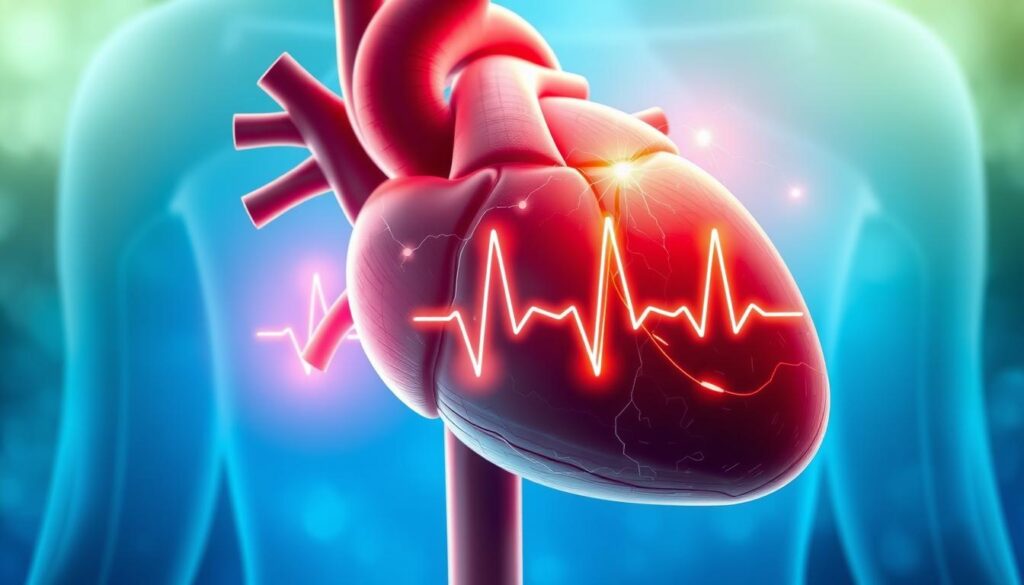
Atrial fibrillation (AFib) is a complex heart rhythm disorder. It causes irregular, often rapid heartbeats. This can lead to serious health issues, including blood clots and stroke1.
Knowledge about AFib is vital for heart health. Different groups face varying risks. Europeans are more likely to develop AFib. Black individuals may face more severe complications2.
Women are diagnosed with AFib more often. Age is a key factor, with risk rising after 652. Family history can also increase your chances of AFib2.
Surprisingly, one in three people with AFib don’t know they have it. This makes regular medical check-ups crucial2. Early detection can help manage the condition effectively.
Key Takeaways
- AFib is a complex heart rhythm disorder affecting heart function
- Risk varies by age, gender, and ethnic background
- One in three people may have undiagnosed AFib
- Regular heart monitoring is crucial for early detection
- Family history can increase your susceptibility to this condition
What is Atrial Fibrillation?
Atrial fibrillation is a complex heart rhythm disorder affecting millions worldwide. It disrupts the heart’s normal electrical signaling, causing chaos in the upper chambers. Understanding this condition is vital for managing your heart health.
Understanding the Heart’s Electrical System
In a healthy heart, electrical signals follow a precise path. During atrial fibrillation, multiple spots in the heart’s atria fire signals at once. This causes an irregular and often rapid heartbeat.
Your heart can race between 100 to 175 beats per minute during an episode3.
Impact on Your Heart
Atrial fibrillation greatly affects your cardiovascular system. Over 5 million Americans live with this heart rhythm disorder4. The condition raises your risk of serious complications.
- Stroke risk increases fivefold4
- Potential blood clot formation3
- Higher chance of heart-related deaths4
Types of Atrial Fibrillation
Atrial flutter and atrial fibrillation are closely related heart rhythm problems. The condition is grouped into four stages:
- At-risk stage
- Pre-AFib stage
- Active AFib stage
- Permanent AFib stage4
“Understanding your heart’s rhythm is the first step to managing atrial fibrillation effectively.”
Your risk of this condition rises with age, family history, and certain lifestyle choices. Excessive alcohol, smoking, and some medications can trigger AFib episodes3.
Symptoms of Atrial Fibrillation
Atrial fibrillation (AFib) shows up in different ways. Symptoms can be mild or severe. Knowing these signs helps catch and manage heart issues early5.
Common Symptoms to Look Out For
Heart palpitations are often the main sign of AFib. You might feel:
- Irregular heartbeats that feel like a flutter or rapid thumping6
- Persistent fatigue and weakness5
- Shortness of breath, especially during physical activity6
- Dizziness or lightheadedness5
- Chest discomfort or pressure5
When to Seek Medical Attention
Not everyone with AFib has symptoms. Some people might not notice any signs at all5.
But, certain situations need immediate medical help:
- Severe chest pain that resembles a heart attack
- Prolonged heart palpitations
- Sudden weakness or difficulty speaking
“Early detection of AFib can significantly reduce stroke risk and improve overall heart health.”
An Electrocardiogram (ECG) is the main test for diagnosing AFib7. Your doctor might suggest other devices to track your heart’s activity.
These tools can also check your potential stroke risk6.
| Symptom | Potential Significance |
|---|---|
| Irregular Heartbeat | High risk of stroke |
| Chest Discomfort | Possible heart complications |
| Persistent Fatigue | Reduced heart efficiency |
Remember, timely medical intervention can help manage AFib effectively and reduce potential complications.
Treatment Options for Atrial Fibrillation
Atrial fibrillation management requires a mix of medical care and lifestyle changes. Your healthcare team will help create an effective plan. This strategy aims to control heart rhythm and reduce complications.
Lifestyle Changes for Better Heart Health
Improving your heart health starts with smart lifestyle choices. Here are key recommendations:
- Maintain a heart-healthy diet
- Engage in regular physical activity
- Manage stress levels
- Quit smoking
- Control underlying conditions like diabetes and high blood pressure
Medical Treatments and Medications
Doctors may prescribe various medications to manage atrial fibrillation. Anticoagulants are vital in preventing blood clots and lowering stroke risk8.
Your condition may require medications such as:
- Beta blockers
- Calcium channel blockers
- Anti-arrhythmic drugs like flecainide
“Choosing the right medication is a personalized process that depends on your individual health profile and AFib characteristics.”
Advanced Procedures and Interventions
If medications aren’t enough, your doctor might suggest more advanced treatments:
| Procedure | Description | Potential Benefits |
|---|---|---|
| Cardioversion | Electrical shock to restore normal heart rhythm8 | Reestablish regular heart rhythm |
| Ablation Therapy | Destroying abnormal heart tissue causing irregular signals8 | Long-term rhythm management |
| Pacemaker Implantation | Device to regulate heart rhythm | Stabilize heart rate, especially in older patients8 |
Your atrial fibrillation treatment journey is unique. Team up with your healthcare providers to find the best approach.
Discover more about atrial fibrillation management to better understand your options9.
Living with Atrial Fibrillation
Atrial fibrillation management requires a holistic approach to protect heart health and lower stroke risk. About 30 percent of AFib patients may not notice symptoms10. Taking proactive steps can help manage heart palpitations and boost overall well-being11.
Lifestyle changes are crucial in managing AFib. Experts recommend 150 minutes of moderate exercise weekly10. A healthy diet and limited alcohol intake can also make a big difference.
Eat more fruits, vegetables, whole grains, and lean proteins. Cut back on unhealthy fats and salt11. Regular exercise helps control weight, strengthens the heart, and improves sleep11.
Mental health matters too. Feeling in control and having support benefits those with atrial fibrillation10. Stress management techniques can help control AFib episodes11. Try relaxation methods or join support groups.
The American Heart Association offers resources and support. Check it out for more guidance.
Your AFib journey is unique. Work with your doctor to create a personalized plan. Take medications regularly and monitor symptoms. Prioritize your heart health to live well with atrial fibrillation1011.
FAQ
What exactly is atrial fibrillation (AFib)?
AFib is an irregular heart rhythm disorder. The heart’s upper chambers beat chaotically, out of sync with the lower chambers. This causes rapid, irregular electrical signals that can lead to a fast heart rate.
AFib can increase your risk of blood clots, stroke, and other heart-related complications. The heart rate may reach 100 to 175 beats per minute.
What are the main symptoms of AFib?
Common symptoms include heart palpitations, chest pain, and dizziness. Fatigue, lightheadedness, and reduced exercise capacity may also occur. Some people might experience shortness of breath and weakness.
However, some individuals may not notice any symptoms. That’s why regular medical check-ups are crucial for early detection.
How is atrial fibrillation diagnosed?
Diagnosis typically involves a thorough medical evaluation. This includes a physical exam, medical history review, and electrocardiogram (ECG). Your doctor might recommend additional tests to assess your heart’s condition.
These tests may include blood work, chest X-rays, or echocardiograms. They help identify potential underlying causes of AFib.
What are the different types of atrial fibrillation?
There are four main types of AFib: occasional, persistent, long-standing persistent, and permanent. Each type varies in duration and response to treatment.
Some people might also experience atrial flutter. This is a related heart rhythm problem with similar characteristics.
What treatment options are available for AFib?
Treatment aims to control heart rate, restore normal rhythm, and prevent blood clots. Options include lifestyle changes and medications like anticoagulants and heart rate controllers.
Cardioversion, which uses electrical shock to reset heart rhythm, may be recommended. Ablation therapy and surgical procedures are also potential treatments.
Can I live a normal life with atrial fibrillation?
Yes, many people with AFib lead full, active lives. Effective management involves taking prescribed medications and making heart-healthy lifestyle changes. Regular check-ups and doctor-approved exercise are important.
Eating a balanced diet, managing stress, and avoiding tobacco and excessive alcohol also help. With proper care, AFib can be well-managed.
What are the biggest risks associated with untreated AFib?
Untreated AFib can significantly increase your risk of stroke and heart failure. It may also lead to chronic fatigue and other serious heart-related complications.
The irregular heart rhythm can cause blood to pool in the heart’s chambers. This can form clots that may travel to the brain or other body parts.
How can I reduce my risk of AFib?
Maintain a healthy lifestyle to reduce your risk. Manage chronic conditions like high blood pressure and diabetes. Keep a healthy weight and exercise regularly.
Eat a balanced diet low in salt and saturated fats. Quit smoking and limit alcohol and caffeine intake. Practice stress management through relaxation techniques.
When should I seek immediate medical attention?
Seek immediate help if you have severe chest pain or prolonged heart palpitations. Sudden weakness or difficulty breathing are also red flags.
Watch for signs of a potential stroke, such as sudden numbness or confusion. These symptoms could indicate a serious heart-related emergency.
Source Links
- What Is Afib? – https://www.hopkinsmedicine.org/health/conditions-and-diseases/atrial-fibrillation
- What Are the Symptoms of Afib? – https://my.clevelandclinic.org/health/diseases/16765-atrial-fibrillation-afib
- Atrial fibrillation – Symptoms and causes – https://www.mayoclinic.org/diseases-conditions/atrial-fibrillation/symptoms-causes/syc-20350624
- What is Atrial Fibrillation? – https://www.heart.org/en/health-topics/atrial-fibrillation/what-is-atrial-fibrillation-afib-or-af
- Atrial Fibrillation Symptoms – https://www.hopkinsmedicine.org/health/conditions-and-diseases/atrial-fibrillation/afib-symptoms
- What are the Symptoms of Atrial Fibrillation? – https://www.heart.org/en/health-topics/atrial-fibrillation/what-are-the-symptoms-of-atrial-fibrillation-afib-or-af
- Diagnosing Atrial Fibrillation & Atrial Flutter – https://nyulangone.org/conditions/atrial-fibrillation-atrial-flutter/diagnosis
- Atrial fibrillation – Treatment – https://www.nhs.uk/conditions/atrial-fibrillation/treatment/
- Atrial fibrillation – Diagnosis and treatment – https://www.mayoclinic.org/diseases-conditions/atrial-fibrillation/diagnosis-treatment/drc-20350630
- Expert tips on living with atrial fibrillation – https://www.bhf.org.uk/informationsupport/heart-matters-magazine/medical/living-with-atrial-fibrillation
- Tips for Living with AFib – https://www.webmd.com/heart-disease/atrial-fibrillation/tips-for-living-with-afib

