
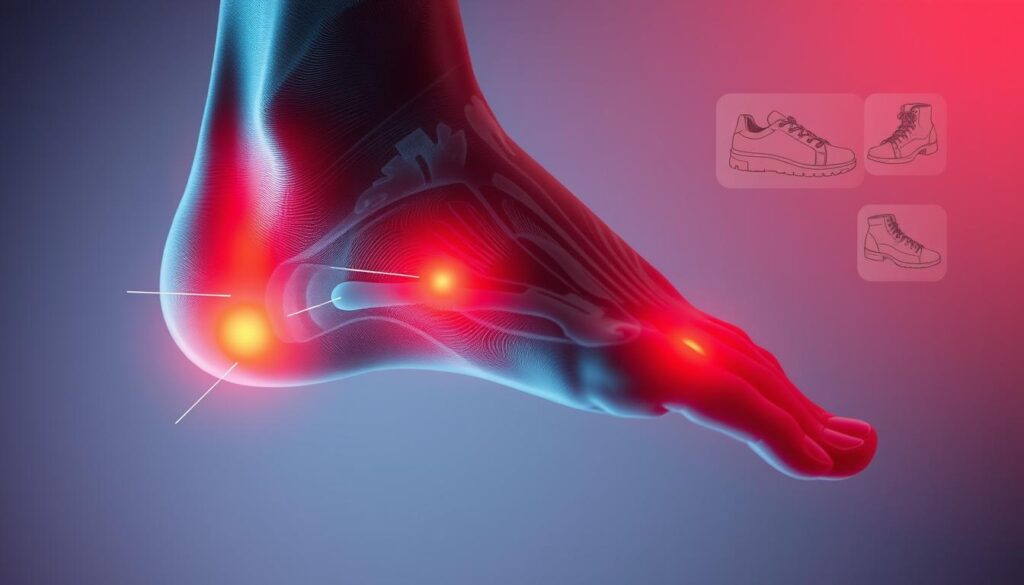
Persistent ball of foot pain can make walking a challenge. Metatarsalgia causes sharp or aching sensations in the forefoot area. This condition can make each step feel like walking on pebbles.
Metatarsalgia develops slowly, usually over weeks. It can affect one or both feet. Athletes and active people are more likely to experience this foot pain.
High-impact sports increase the risk of developing metatarsalgia. Understanding this condition is key to finding relief and managing symptoms effectively.
Key Takeaways
- Metatarsalgia is not a specific disease but a symptom of underlying foot problems
- High-impact activities and improper footwear can trigger forefoot pain
- Pain in the ball of the foot can worsen with standing and walking
- Various treatment options exist, from home remedies to professional interventions
- Proper footwear and weight management can help prevent metatarsal pain
Understanding Metatarsalgia
Metatarsalgia causes pain in the ball of your foot, beneath the metatarsal bones. This condition can affect your daily life and comfort. Various factors contribute to its development.
What Exactly is Metatarsalgia?
Metatarsalgia involves pain and swelling in the front part of your foot. It can make walking, running, and standing uncomfortable. Distance runners and athletes often develop this painful foot syndrome3.
Common Causes of Metatarsalgia
Several factors contribute to metatarsalgia development:
- High-impact sports participation3
- Wearing ill-fitting or worn-out shoes3
- Unique foot structures like high arches3
- Specific foot deformities such as hammertoes3
Who is Most at Risk?
Women who often wear high heels are at higher risk. These shoes shift extra weight to the front of the foot3.
Excess body weight can increase pressure on the metatarsals. This added pressure may trigger pain3.
“Understanding your foot’s unique characteristics is key to preventing metatarsalgia.”
Medical conditions like Morton’s neuroma can complicate this foot condition4. Untreated metatarsalgia might lead to other foot and ankle problems. It can cause changes in walking patterns4.
Classification of Metatarsalgia
Experts group metatarsalgia into three main types:
- Primary Metatarsalgia: Issues directly related to metatarsal bone relationships4
- Secondary Metatarsalgia: Triggered by underlying health conditions4
- Iatrogenic Metatarsalgia: Complications from previous foot surgeries4
Knowing these risk factors helps you prevent and manage metatarsalgia. Understanding your foot’s unique traits is crucial for effective treatment.
Recognizing Symptoms of Metatarsalgia
Spotting metatarsal pain signs helps tackle ball of foot pain early. Your feet are complex and signal health issues when something’s off.
Typical Symptoms You Might Experience
Metatarsalgia shows distinct symptoms that can affect your daily life. It often causes sharp, burning pain in your foot’s ball.
The pain may feel like walking on a pebble5. Here are key symptoms to watch for:
- Shooting or burning pain near your toes6
- Numbness or tingling sensations6
- Pain that worsens when standing or walking
- Feeling of a lump or extra tissue under your foot5
When to See a Doctor
Not all foot pain needs immediate medical care. But seek help if pain lasts over two weeks.
Persistent forefoot pain that doesn’t improve needs professional evaluation7. See a doctor if you have:
- Severe, constant pain
- Difficulty performing daily activities
- Pain that significantly impacts sleep
Differentiating Metatarsalgia from Other Conditions
Some foot conditions can look like metatarsalgia. Knowing the subtle differences helps get the right diagnosis.
| Condition | Key Characteristics |
|---|---|
| Morton’s Neuroma | Sharp, shooting pain near toes7 |
| Bunions | Bony bump at big toe base |
| Arthritis | Widespread joint inflammation |
Your feet are your foundation—listen to their signals and seek professional guidance when persistent pain disrupts your life.
Finding Relief from Metatarsalgia
Foot pain can be tough, but metatarsalgia treatment offers hope. Understanding the right strategies is key to managing this condition. Effective treatment combines home remedies, lifestyle changes, and professional help8.
Home remedies can provide quick relief for foot pain. Rest after high-impact activities that worsen symptoms. Use ice packs and elevate your feet to reduce swelling9.
Over-the-counter pain relievers can help manage discomfort. For metatarsal calluses, try specialized padding or insoles. These can help spread pressure across your foot89.
Professional treatments offer targeted solutions for stubborn metatarsalgia. A podiatrist can provide custom orthotics for your unique foot structure. They may suggest physical therapy to strengthen foot muscles89.
In severe cases, medical interventions like injections or surgery might be needed. These are options when conservative treatments don’t work8.
Prevention is crucial for long-term foot health. Choose supportive shoes with wide toe boxes and low heels. This helps reduce pressure on your metatarsal bones9.
Maintain a healthy weight to lessen stress on your feet. Be mindful of your activity levels, especially during high-impact exercises. These steps can lower the risk of metatarsalgia coming back8.
FAQ
What exactly is metatarsalgia?
Metatarsalgia causes pain in the ball of your foot. It’s under the metatarsal bones. The pain can be sharp, aching, or burning.
It often gets worse when standing, walking, or running. The discomfort usually develops slowly. It can affect one or both feet.
What are the most common causes of metatarsalgia?
High-impact sports and ill-fitting shoes can cause metatarsalgia. Being overweight and foot problems like hammer toe or bunions are also factors.
Health issues such as arthritis or diabetes may contribute. Stiff ankles and past foot surgery can increase your risk too.
How can I tell if I have metatarsalgia?
Sharp pain in your foot’s ball is a key sign. You might feel like you’re walking on pebbles.
Numbness or tingling in your toes can occur. Pain that gets worse with activity is common.
If pain lasts more than a few days, see a doctor. This is especially true if changing shoes doesn’t help.
Can I treat metatarsalgia at home?
Yes, you can often manage metatarsalgia at home. Rest your feet and use ice packs to reduce pain.
Wear low-heeled shoes with a wide toe area. Metatarsal pads or orthotics can help too.
Over-the-counter pain relievers may ease discomfort. If pain persists, consider seeing a podiatrist.
Are there ways to prevent metatarsalgia?
Absolutely! Wear properly fitted shoes, especially for high-impact activities. Maintain a healthy weight to reduce foot stress.
Manage any underlying health conditions. Stretch your ankles and feet regularly to lower your risk.
When should I see a doctor about my foot pain?
See a doctor if foot pain lasts more than a few days. Seek help if it impacts your daily activities.
Get checked if you notice severe swelling, redness, or signs of infection. A doctor can run tests to find the cause.
Can metatarsalgia be a sign of a more serious condition?
Metatarsalgia is often not serious. However, it can signal other health issues like diabetes or arthritis.
It might relate to stress fractures or foot deformities. A medical exam can rule out more serious problems.
How long does it typically take to recover from metatarsalgia?
Recovery time varies based on the cause and treatment. Many people feel better within a few weeks.
Rest, proper footwear, and addressing contributing factors help. Consistent care can speed up your recovery.
Source Links
- Metatarsalgia – https://patient.info/foot-care/heel-and-foot-pain-plantar-fasciitis/metatarsalgia-metatarsal-injury
- Metatarsalgia – https://www.webmd.com/a-to-z-guides/metatarsalgia
- Metatarsalgia-Metatarsalgia – Symptoms & causes – Mayo Clinic – https://www.mayoclinic.org/diseases-conditions/metatarsalgia/symptoms-causes/syc-20354790
- Kick Metatarsalgia to the Curb – https://my.clevelandclinic.org/health/diseases/15890-metatarsalgia
- Everything You Need to Know About Metatarsalgia – Mobility Bone & Joint Institute – https://mobilityboneandjoint.com/everything-you-need-to-know-about-metatarsalgia/
- How to Treat Metatarsalgia and Pain on Ball of the Foot – https://ankleandfootcenters.com/metatarsalgia/
- Pain in the ball of the foot – https://www.nhs.uk/conditions/foot-pain/pain-in-the-ball-of-the-foot/
- How to Treat Pain in the Ball of the Foot from Metatarsalgia – https://ankleandfootcenters.com/pain-in-the-ball-of-the-foot/
- Finding Relief From Metatarsalgia – https://www.footankle-clinic.com/blog/281653-finding-relief-from-metatarsalgia

