
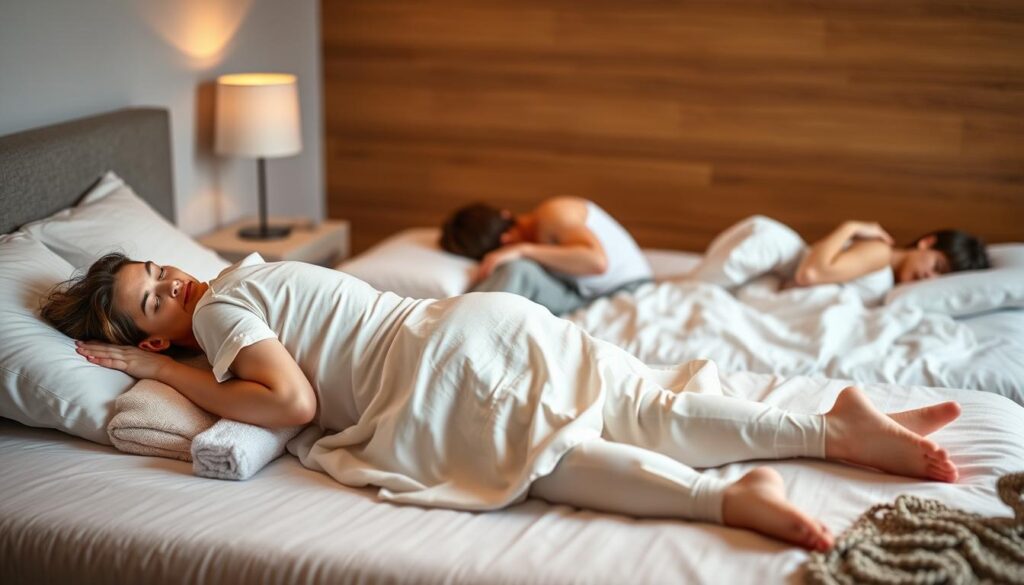
Back pain disrupts sleep and daily life for millions worldwide. The right sleeping positions can transform your rest and support spine alignment1. Eight out of ten people experience back pain, making it vital to find ways to reduce discomfort1.
Your sleep posture greatly impacts back pain management. Research shows that certain positions can either ease or worsen your discomfort2. Small changes in how you sleep may reduce pain and boost sleep quality.
The key is maintaining proper spine alignment while sleeping. Different positions offer unique benefits for back pain relief. Lying flat on your back with a neutral spine is often considered ideal2.
Key Takeaways
- Back pain affects 80% of people during their lifetime
- Sleeping position significantly impacts back pain management
- Neutral spine alignment is crucial for pain reduction
- Side sleeping can be beneficial with proper leg positioning
- Stomach sleeping is the least recommended position
Understanding Back Pain and Its Causes
Back pain affects millions worldwide. It’s a complex condition that can be chronic or occasional. Knowing its causes can help you find effective relief strategies3.
84% of people experience lower back pain at some point4. Various factors can cause back pain. It can greatly affect your daily life and sleep quality.
Common Causes of Back Pain
How Sleep Affects Back Pain
Your sleeping position is key in managing sciatic nerve pain. It can reduce pressure on your spine. The National Sleep Foundation suggests 8 hours of sleep nightly5.
Sleep quality is just as important as quantity. Good sleep helps your body and spine recover.
“Sleep is not just rest, it’s recovery for your body and spine.”
Importance of Proper Sleeping Positions
Good sleeping positions can ease chronic back pain. They keep your spine aligned and reduce muscle stress. Medium-firm mattresses can cut back pain symptoms by nearly half4.
Knowing these facts can help you manage your back pain. It can also improve your overall sleep quality.
Ideal Sleeping Positions for Back Pain Relief
The right sleeping position can ease back pain and boost comfort. Good sleep posture aligns your spine and improves overall wellness6. Your sleep position affects muscle tension, joint stress, and pain.
Side Sleeping: The Most Popular Position
Over 60% of people prefer side sleeping7. This position offers great benefits for back pain relief6.
- Promotes proper spine alignment
- Reduces pressure on the lumbar region
- Recommended for pregnant women and individuals with specific health conditions7
Pro Tip: Put a pillow between your knees to align your spine and reduce back strain8.
Back Sleeping: Supporting Natural Spine Curvature
Back sleeping is the second most popular position7. It helps maintain spine alignment and offers unique advantages.
- Evenly distributes body weight
- Supports the spine’s natural curve
- Reduces pressure on joints and muscles6
Elevating your legs with a pillow can further relax lower back muscles and improve circulation6.
Pillow Placement Strategies
Smart pillow placement can greatly improve your sleep comfort. Try these ergonomic sleeping techniques:
- Use a thin pillow under your head
- Place a supportive pillow under your knees when sleeping on your back
- Try a pillow between your knees when side sleeping8
Finding your ideal sleep position is personal. Listen to your body and adjust for the best comfort and pain relief.
Adjusting Your Sleeping Environment
Your sleep setup is key for managing back pain. A good environment helps your spine and overall comfort9.
The right mattress can ease your back pain. A medium-firm mattress often helps with lower back issues10. Your body type and needs determine the best choice.
Mattress Selection Strategies
When choosing a mattress, consider these key factors for Ergonomic Sleeping:
- Body width and hip structure impact mattress firmness10
- People with wider hips might benefit from softer mattresses
- Narrower-hipped individuals may require firmer surfaces
Pillow Support Essentials
Pillow Support keeps your spine aligned. Different sleep positions need different pillow approaches:
| Sleeping Position | Recommended Pillow Strategy |
|---|---|
| Side Sleepers | Thicker pillows for better neck support10 |
| Back Sleepers | Small pillow under knees to reduce lower back pressure11 |
Additional Supportive Accessories
Boost your sleep setup with these items:
- Body pillows for side sleepers
- Wedge pillows for elevation
- Adjustable bed frames
Pick the right mattress, pillows, and extras. This creates an ergonomic sleep environment that supports your back and helps healing9.
“Your sleeping environment is a powerful tool in managing back pain and promoting overall wellness.”
Tips for Better Sleep Hygiene
Good sleep is vital for managing back pain and overall health. Your bedtime habits can affect how well you rest and recover. A consistent sleep environment helps your body prepare for restful slumber through smart sleep practices12.
Using phones or tablets before bed can mess up your sleep. It may also make your back pain worse. Try to avoid screens before bedtime. Instead, do gentle stretches or meditate to get ready for sleep.
Establishing a Sleep Routine
Your bedroom setup matters for easing back pain. Keep your bedding clean to avoid allergens that might wake you up12. Replace your mattress every 6 to 8 years for the best support13.
Doctors suggest choosing a mattress that helps with your specific back issues13. A good mattress can make a big difference in how you feel.
Stretching and Strengthening Exercises
Do gentle stretches before bed to ease muscle tension. Focus on moves that target your lower back and core muscles. This can help reduce chronic back pain and improve sleep quality.
Always check with a physical therapist first. They can create a stretching plan just for you and your back pain.
When to Seek Professional Help
If your back pain won’t go away or keeps you from sleeping, see a doctor. They can figure out what’s wrong and help you find ways to feel better. With the right help, you can sleep better and ease your back pain.
FAQ
What sleeping position is best for back pain?
Side sleeping with slightly bent knees is ideal for back pain. It balances your body and eases pressure on the spine. A pillow between your knees can provide extra support and comfort.
Can sleeping position really impact back pain?
Your sleep posture greatly affects back pain management. Poor positioning can worsen pain and stiffness. Proper alignment reduces pressure on your lower back. Many people experience back pain, making good sleep posture crucial.
Is it bad to sleep on my stomach if I have back pain?
Stomach sleeping can be tough for those with back pain. If you prefer it, use a thin pillow under your head. Add a supportive pillow under your hips to prevent lower back sinking. Side or back sleeping is usually better for spine support.
What type of mattress is best for back pain?
A medium-firm mattress often helps combat lower back pain. However, comfort preferences vary among individuals. Find a mattress that supports you well and feels comfortable. An adjustable bed can also help reduce back strain.
How can I improve my sleep with chronic back pain?
Create a consistent sleep routine and a cozy bedroom environment. Try relaxation techniques and gentle exercises to ease back pain. Use supportive pillows and maintain good sleep posture. Seek medical advice if pain continues or gets worse.
When should I see a doctor about my back pain?
See a doctor if your back pain persists or worsens. Seek help if you experience numbness, weakness, or fever. A healthcare provider can diagnose and suggest treatments for chronic or severe back pain.
Can poor sleep make my back pain worse?
Sleep and back pain are closely linked. Poor sleep can increase pain, while pain disrupts sleep. Break this cycle by improving sleep quality and managing pain. Use proper positioning, supportive mattresses, and seek medical help if needed.
Source Links
- How to Sleep with Lower Back Pain: Finding Comfort and Relief – https://www.sleepfoundation.org/physical-health/how-to-sleep-with-lower-back-pain
- The Best — and Worst — Sleep Positions for Back Pain – https://www.keckmedicine.org/blog/the-best-and-worst-sleep-positions-for-back-pain/
- Back pain – Symptoms and causes – https://www.mayoclinic.org/diseases-conditions/back-pain/symptoms-causes/syc-20369906
- Waking Up with Back Pain: Causes and Tips for Relief – https://www.sleepfoundation.org/physical-health/waking-up-with-lower-back-pain
- How Your Sleeping Position is Affecting Your Back Pain: Pain Specialty Group: Pain Management – https://www.painspecialtygroup.com/blog/how-your-sleeping-position-is-affecting-your-back-pain
- What Are the Best Sleeping Positions for Lower Back Pain? – https://theadvancedspinecenter.com/what-are-the-best-sleeping-positions-for-lower-back-pain/
- Best Sleeping Positions – https://www.sleepfoundation.org/sleeping-positions
- Sleeping Positions to Help With Low Back Pain – https://www.rwjbh.org/blog/2021/december/sleeping-positions-to-help-with-low-back-pain/
- How to Sleep with Lower Back Pain – https://www.painmedicineconsultants.com/blog/how-to-sleep-with-lower-back-pain-4-best-sleeping-positions-for-lower-back-pain-relief-and-comfort
- Best sleeping positions for lower back pain – https://www.medicalnewstoday.com/articles/320870
- Best Sleeping Positions for Pain – https://health.clevelandclinic.org/best-sleeping-positions-for-pain
- Choosing the Best Sleep Position – https://www.hopkinsmedicine.org/health/wellness-and-prevention/choosing-the-best-sleep-position
- Good Sleeping Posture Helps Your Back – https://www.urmc.rochester.edu/encyclopedia/content?ContentTypeID=1&ContentID=4460

