
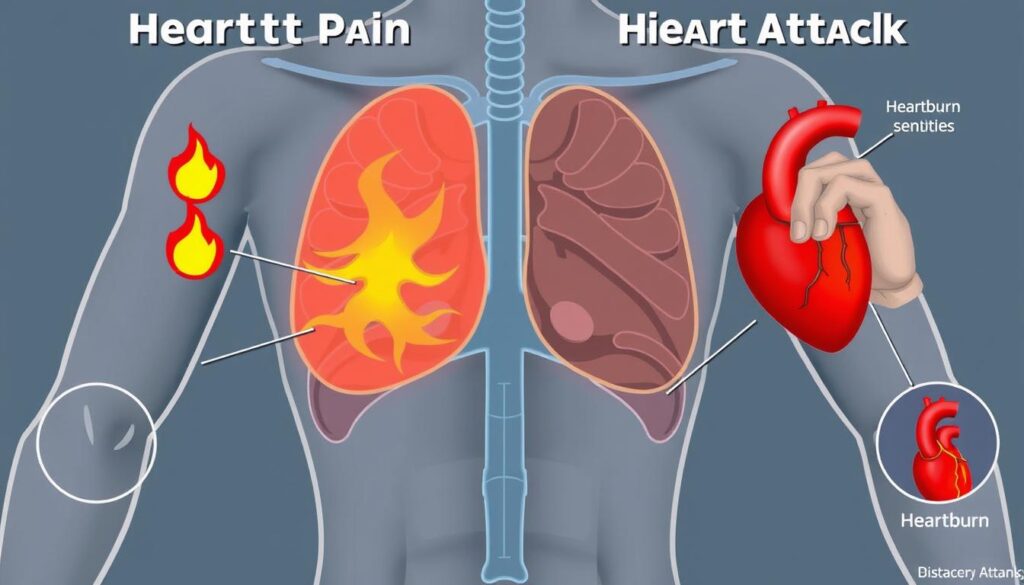
Chest pain can be a sign of heartburn or a heart attack. Both feel similar, but their causes and risks differ greatly12. Knowing the difference is vital for your health.
Your body sends important signals during acid reflux or a potential heart attack. Some symptoms can be subtle, making it hard to tell them apart3. Pay close attention to these signs.
In the U.S., someone has a heart attack every 40 seconds3. This fact highlights why understanding these health issues is so important. Spotting the signs could save a life.
Key Takeaways
- Chest pain can signal different health conditions
- Heartburn and heart attacks have distinct symptom profiles
- Immediate medical attention is crucial if symptoms are unclear
- Understanding your body’s signals can prevent serious health risks
- Regular health check-ups are essential for early detection
Understanding Heartburn and Its Symptoms
Heartburn is a common digestive problem. It causes a burning feeling in your chest. Despite its name, it’s not related to your heart.
Defining Heartburn
Acid reflux happens when stomach acid flows back into the esophagus. This creates an uncomfortable burning sensation. We call this sensation heartburn4.
Heartburn is different from a heart attack. It’s a digestive issue that causes temporary pain and irritation.
Common Causes of Heartburn
- Eating large meals
- Consuming spicy or acidic foods
- Lying down immediately after eating
- Being overweight
- Pregnancy
Frequent heartburn might be a sign of GERD. GERD is a more serious condition that needs medical attention4.
Recognizing Heartburn Symptoms
Typical heartburn symptoms include:
- Burning sensation in the chest
- Chest pain or pressure
- Bloating
- Belching
- Sour taste in the mouth
Antacids can help with mild heartburn symptoms. If you often have severe heartburn, talk to your doctor.
“Understanding your body’s signals is key to managing digestive discomfort.”
Identifying Heart Attack Symptoms
A heart attack can be life-threatening. Knowing its signs is crucial for survival. Immediate medical attention is necessary for this critical emergency5.
Understanding Cardiac Emergencies
Almost half of all heart attacks show minimal or no noticeable symptoms5. Recognizing potential signs is vital for emergency care.
Men and women may experience different warning signs. Men are more likely to show classic cardiac symptoms5.
Common Signs of a Heart Attack
Cardiac symptoms can manifest in various ways, including:
- Chest pressure or squeezing sensation6
- Pain radiating to arms, neck, or jaw
- Shortness of breath
- Sudden fatigue
- Unexplained sweating
Risk Factors for Heart Attacks
Several key factors increase your chances of cardiac arrest or heart attack5:
- High blood pressure
- Diabetes or prediabetes
- High cholesterol levels
- Smoking history
- Family history of heart disease
Millions seek emergency medical care for chest pain each year. This shows how important it is to understand cardiac symptoms7.
If chest discomfort lasts more than 15 minutes, get medical help right away7.
Remember, your body’s signals could be life-saving – never ignore potential heart attack symptoms.
How to Differentiate Between Heartburn and Heart Attack
Chest pain can be tricky to diagnose. It might be heartburn or a heart attack. Heartburn often occurs after eating spicy or fatty foods. It’s usually a burning feeling in your chest.
Heart attacks have more severe symptoms. These include pain spreading to other body parts and shortness of breath. Cold sweats may also occur. If you have sudden, unexplained chest pain, seek emergency care right away.
Women might experience different heart attack symptoms. Only 30% show typical chest pain8. This makes recognizing heart attacks in women more challenging.
To protect your heart, make smart lifestyle choices. Eat a diet low in saturated fats. Exercise regularly and manage stress effectively. These habits can lower your risk of heart problems9.
Cardiac rehab programs help people recover from heart events. They offer support to prevent future complications. Your health is in your control. Stay alert to symptoms and maintain healthy habits9.
FAQ
What’s the difference between heartburn and a heart attack?
Heartburn and heart attacks both cause chest discomfort. Heartburn feels like burning in the chest due to stomach acid. A heart attack feels like pressure or squeezing pain in the chest.
Heart attack pain may spread to the arm, shoulder, or neck. It happens when blood flow to the heart is blocked.
Can heartburn be confused with a heart attack?
Yes, the symptoms can be similar. Heart attacks often come with extra symptoms like shortness of breath and sweating. They may also cause dizziness and pain spreading to other body parts.
If you’re unsure or have severe chest pain, seek medical help right away.
What are the most common triggers for heartburn?
Heartburn is often triggered by certain foods and large meals. Eating close to bedtime or lying down after eating can cause it. Lifestyle factors like obesity, smoking, and stress also play a role.
Common food triggers include spicy foods, citrus, tomatoes, chocolate, caffeine, and alcohol.
When should I be concerned about chest pain?
Seek immediate medical help if you have sudden, severe chest pain. Be especially concerned if it comes with other symptoms.
These include pain spreading to the arm or jaw, shortness of breath, and sweating. Nausea, dizziness, or a squeezing chest sensation are also warning signs.
Don’t wait more than 15 minutes. Call 911 if you think it might be a heart attack.
How can I manage heartburn at home?
To manage heartburn, eat smaller, more frequent meals and avoid trigger foods. Don’t lie down right after eating and wear loose clothes.
Maintain a healthy weight and use over-the-counter antacids when needed. Raising your bed’s head can also help.
If heartburn persists or gets worse, talk to your doctor.
What are the primary risk factors for a heart attack?
Key heart attack risk factors include high blood pressure, high cholesterol, and diabetes. Smoking, obesity, and a sedentary lifestyle also increase risk.
Advanced age and family history of heart disease are factors too. Chronic stress can also contribute to heart attack risk.
Lifestyle changes and medical care can help reduce your chances of a heart attack.
Are heart attack symptoms different for women?
Yes, women often experience different heart attack symptoms than men. Women may have jaw or back pain, nausea, or vomiting.
Extreme fatigue and shortness of breath are common in women. They might also have less noticeable chest discomfort.
These differences can make heart attacks harder to spot in women.
Source Links
- Heartburn vs. Heart Attack: Similarities, Differences, and Quiz – https://www.healthline.com/health/heart-attack/heartburn-or-heart-attack
- Is it heartburn or heart attack? – https://womanshospital.com/blog/entry/is-it-heartburn-or-heart-attack-
- When in Doubt, Check it Out: Heartburn vs. Heart Attack – https://www.adventhealth.com/hospital/adventhealth-orlando/blog/when-doubt-check-it-out-heartburn-vs-heart-attack
- Heart attack or heartburn? Differences between types of chest pain – https://www.medicalnewstoday.com/articles/312964
- Heartburn or heart attack? How to tell the difference – https://healthy.kaiserpermanente.org/health-wellness/healtharticle.heartburn-or-heart-attack-how-to-tell-the-difference
- GERD and chest pain: Heartburn or heart attack? – https://www.medicalnewstoday.com/articles/325019
- Chest Pain: Sign of a Heart Attack or Something Else? – https://www.massgeneralbrigham.org/en/about/newsroom/articles/chest-pain-sign-of-a-heart-attack-or-something-else
- Is It Indigestion or a Heart Attack? – https://www.scripps.org/news_items/5348-is-it-indigestion-or-heart-attack
- Heart attack or heartburn? When to worry – https://intermountainhealthcare.org/blogs/heartburn-or-heart-attack-when-to-worry

