
Shoulder pain can severely impact your daily life. Rotator cuff injuries affect millions, causing discomfort and limiting movement1. Understanding your injury is crucial for recovery, regardless of your lifestyle1.
Rotator cuff tears often stem from sudden injuries or gradual wear1. Falls, repetitive activities, and aging can all cause these injuries1. Early recognition and proper medical guidance can greatly improve your healing process.
Your shoulder’s complex structure allows for amazing movement. However, it’s also prone to damage. A torn rotator cuff can hinder everyday tasks.
It can affect your ability to reach for objects. It may also limit your participation in sports or work activities.
Key Takeaways
- Rotator cuff injuries affect millions of Americans annually
- Injuries can result from sudden trauma or gradual wear
- Early diagnosis and treatment are crucial for recovery
- Multiple treatment options exist, from conservative to surgical approaches
- Professional medical advice is essential for proper management
What is a Rotator Cuff Injury?
Your shoulder relies on a group of muscles and tendons called the rotator cuff. Understanding these injuries can help protect your shoulder health. Knowing about rotator cuff problems can prevent long-term damage.
Rotator cuff injuries are common, especially as you get older. People over 40 are more likely to have these painful conditions. These injuries can make daily activities much harder23.
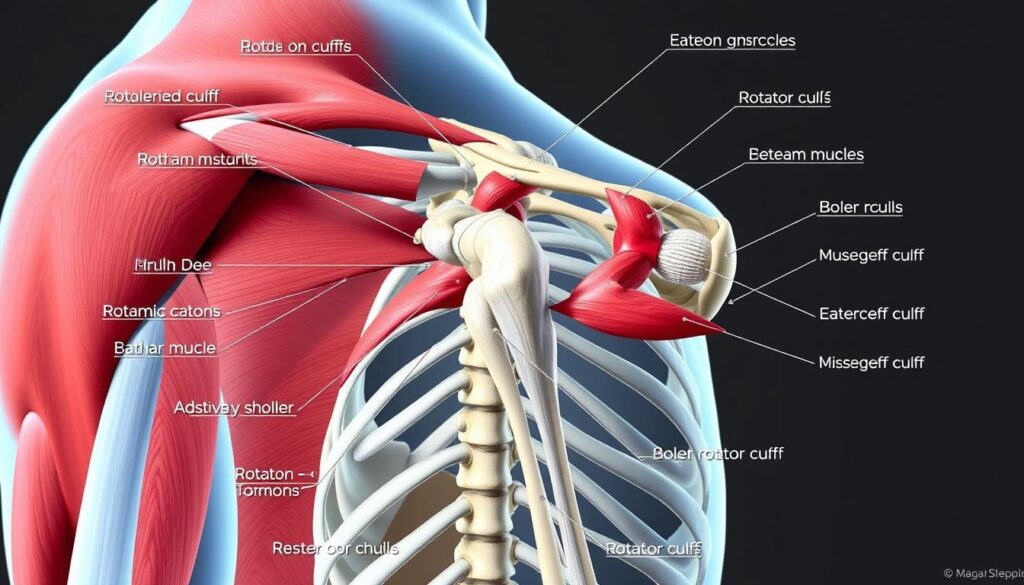
Anatomy of the Rotator Cuff
The rotator cuff has four main muscles that work together. These muscles help keep your shoulder joint stable. They let you lift and rotate your arm with strength and control.
When these muscles or tendons get hurt, moving your shoulder becomes hard. It can also be very painful to use your shoulder.
Common Causes of Injury
- Repetitive overhead arm movements2
- Sports activities like baseball and tennis4
- Occupational hazards for painters and carpenters2
- Sudden traumatic injuries or falls3
Signs and Symptoms
Spotting shoulder problems early can stop more damage from happening. Look out for these warning signs:
- Persistent shoulder pain
- Weakness when lifting or rotating your arm
- Limited range of motion
- Discomfort when sleeping on the affected side4
“Early detection and treatment are crucial in preventing permanent shoulder joint damage” – Sports Medicine Research
| Age Group | Rotator Cuff Injury Risk |
|---|---|
| Under 40 | Low |
| 40-60 | Moderate |
| Over 60 | High3 |
Without proper care, these injuries can cause long-term pain and less movement. It’s important to see a doctor for the right diagnosis. A good treatment plan is key for fixing and healing your rotator cuff3.
Diagnosing Your Rotator Cuff Injury
Grasping the diagnostic process for rotator cuff injuries is key to effective treatment. Your medical team will use a thorough approach to identify your shoulder condition. This process is vital for your recovery5.
Medical Evaluation Process
Diagnosis starts with a detailed medical history and physical exam. Your doctor will check your shoulder’s motion, strength, and tender areas. They may use special tests to find the injury’s location and severity5.
- Jobe test for supraspinatus muscle evaluation
- Drop arm test to check muscle integrity
- Bear hug test for specific muscle assessment
- Lift-off test to examine shoulder muscle function
Imaging Tests Explained
Imaging tests are crucial in confirming rotator cuff injuries. Your doctor may suggest several types to get a full view of your shoulder6.
- X-rays: Rule out bone spurs or arthritis
- Ultrasound: Provides real-time muscle and tendon information6
- MRI Scans: Detailed soft tissue imaging to determine tear severity6
“Accurate diagnosis is the first step towards effective shoulder injury prevention and recovery.”
The diagnostic process helps identify the specific type of rotator cuff injury. A torn rotator cuff can be partial or complete. It may affect different muscles within the shoulder7.
About 2 million people face these injuries yearly. Knowing your specific condition is key to creating the right treatment plan7.
Your age, job, and activity level are important factors in diagnosis. Repetitive overhead motions, sports, and muscle weakness can increase injury risk7.
Treatment Options for Rotator Cuff Injury
Rotator cuff tear treatment depends on your injury’s severity and overall health. Understanding your options is key to recovery8.
Conservative Treatment Approaches
Non-surgical treatments offer various ways to manage rotator cuff injuries. Your doctor might suggest these strategies:
- Rest and activity modification9
- Nonsteroidal anti-inflammatory drugs (NSAIDs) for pain management9
- Ice therapy to reduce inflammation9
- Physical therapy to improve shoulder strength and flexibility8
Steroid injections can provide significant pain relief for many patients10. They offer an 80% chance of pain improvement with formal physical therapy10.
Surgical Interventions
Surgery becomes necessary when conservative treatments don’t work. Rotator cuff repair surgery offers 80-85% chance of good to excellent pain relief10.
Surgical techniques include:
- Arthroscopic repair
- Mini-open repair
- Open surgery8
Recovery after rotator cuff repair typically involves:
| Recovery Stage | Duration |
|---|---|
| Sling Protection | 4-6 weeks |
| Range of Motion Therapy | 6-8 weeks |
| Strengthening Exercises | 3 months |
Your surgeon may recommend specific shoulder rehabilitation techniques for your injury. Follow your doctor’s guidance and commit to exercises for successful recovery.
Healing takes time, patience, and dedicated effort in shoulder rehabilitation.
Pro tip: Smokers should consider quitting before surgery. Tobacco can negatively impact the healing process9.
Tips for Recovery and Prevention
Shoulder recovery requires smart rehab and prevention strategies. With the right approach, you can overcome pain and regain strength. A solid rotator cuff program usually takes 4-6 weeks, focusing on gradual progress11.
Consistent effort is key for preventing shoulder injuries. Do targeted exercises 2-3 days weekly. Stretch 5-6 days a week for best results11.
Your rehab routine should include 2 sets of 10 reps for each strengthening exercise. This builds muscle endurance without overworking your shoulder11.
Professional guidance is vital for proper recovery. Regular stretching can greatly reduce rotator cuff injury risks12. Modify activities if you feel shoulder discomfort.
Always use proper technique during physical movements12. If pain or weakness persists, see a sports medicine specialist for thorough shoulder care12.
Long-term shoulder health needs ongoing rehab and lifestyle changes. Follow structured exercise plans and listen to your body. This helps manage and prevent future shoulder problems1112.
FAQ
What is a rotator cuff injury?
A rotator cuff injury affects the muscles and tendons around your shoulder joint. These parts help stabilize your shoulder and allow smooth arm movements. Injuries can happen from sudden trauma, repetitive motions, or aging.
Damage to the rotator cuff can cause pain, weakness, and limited shoulder movement. It’s important to seek medical advice if you suspect this type of injury.
What are the most common symptoms of a rotator cuff injury?
Key symptoms include shoulder pain, especially when lifting your arm. You might also feel weakness and have trouble with overhead activities. Many people experience increased pain at night, particularly when lying on the affected side.
Some individuals report a clicking or popping sound when moving their shoulder. If you notice these signs, consider consulting a doctor.
How do doctors diagnose a rotator cuff injury?
Doctors start with a thorough medical history review and physical exam. They check your shoulder’s range of motion, strength, and tender areas. Imaging tests like X-rays, ultrasound, or MRI may be used to confirm the diagnosis.
These tests help rule out other conditions and show soft tissue damage. Your doctor will use this information to create an effective treatment plan.
What are the treatment options for a rotator cuff injury?
Treatment varies based on the injury’s severity. Initial approaches often include rest, ice or heat therapy, and pain medications. Physical therapy exercises can improve shoulder strength and flexibility.
For severe cases, doctors might recommend corticosteroid injections. Surgical repairs may be needed for significant tears that don’t respond to other treatments.
How long does recovery from a rotator cuff injury typically take?
Recovery time depends on the injury’s severity and your overall health. Minor injuries might improve in a few weeks with proper care. More significant tears could require several months of rehabilitation.
Surgical repairs often need 4-6 months of structured recovery. This includes gradual strengthening exercises and physical therapy. Your doctor will guide you through the recovery process.
Can I prevent rotator cuff injuries?
You can lower your risk by keeping your shoulder strong and flexible. Regular shoulder exercises, good posture, and ergonomic workspaces help prevent injuries. Avoid repetitive overhead motions when possible.
Warm up before physical activities and use proper technique during sports or work tasks. These strategies can significantly reduce your chance of injury.
When should I see a doctor about my shoulder pain?
Consult a doctor if you have ongoing shoulder pain, weakness, or limited mobility. These symptoms can interfere with daily activities. Seek immediate care if your pain results from a sudden injury or comes with severe swelling.
Also, get help if you can’t move your arm at all. Early diagnosis and treatment can prevent further damage and speed up recovery.
Source Links
- Rotator Cuff Injury – https://www.hopkinsmedicine.org/health/conditions-and-diseases/rotator-cuff-injury
- Rotator cuff injury – Symptoms and causes – https://www.mayoclinic.org/diseases-conditions/rotator-cuff-injury/symptoms-causes/syc-20350225
- Rotator Cuff Tears – OrthoInfo – AAOS – https://orthoinfo.aaos.org/en/diseases–conditions/rotator-cuff-tears/
- Rotator Cuff Injuries | MedlinePlus – https://medlineplus.gov/rotatorcuffinjuries.html
- Rotator Cuff Tear: Causes, Symptoms, Treatments | HSS – https://www.hss.edu/condition-list_rotator-cuff-tear-injury.asp
- Diagnosing Torn Rotator Cuff – https://nyulangone.org/conditions/torn-rotator-cuff/diagnosis
- Rotator Cuff Tear Causes, Symptoms, and Treatments – https://www.upmc.com/services/orthopaedics/conditions/rotator-cuff-tears
- Rotator Cuff Injury Treatment | UVA Health – https://uvahealth.com/services/sports-medicine/rotator-cuff-injury
- Nonsurgical Treatments for Torn Rotator Cuff – https://nyulangone.org/conditions/torn-rotator-cuff/treatments/nonsurgical-treatments-for-torn-rotator-cuff
- Treatment Options for Rotator Cuff Tears – The Orthopaedic Institute – https://www.toi-health.com/physician-articles/treatment-options-rotator-cuff-tears/
- Rotator Cuff and Shoulder Conditioning Program – OrthoInfo – AAOS – https://orthoinfo.aaos.org/en/recovery/rotator-cuff-and-shoulder-conditioning-program/
- Rytel Sports Medicine – https://www.rytelsportsmedicine.com/blog/6-tips-for-rotator-cuff-injury-prevention-from-your-pittsburgh-sports-medicine-specialist-2

