
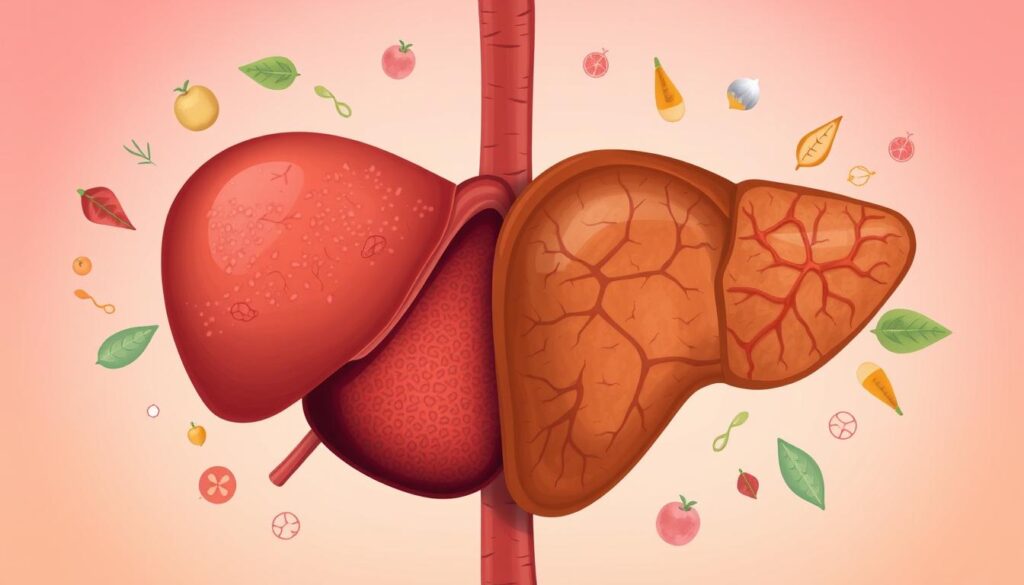
Your liver is vital for your health. Liver disease can damage this organ without you knowing. Cirrhosis is a serious condition that develops through liver scarring1.
About 1 in 400 adults in the U.S. have this challenging liver disease1. Liver scarring happens slowly over time. It stems from various health issues, mainly alcohol use and viral hepatitis2.
Knowing your risk factors can help protect your liver’s health1. Some people are more likely to get cirrhosis. These include heavy drinkers, obese individuals, and those with type 2 diabetes.
Men and people over 40 are also at higher risk1. Understanding these risks can help you take steps for liver wellness.
Key Takeaways
- Cirrhosis affects approximately 1 in 400 U.S. adults
- Multiple factors contribute to liver scarring
- Early awareness can help prevent liver damage
- Lifestyle choices significantly impact liver health
- Regular health screenings are crucial for liver monitoring
What is Cirrhosis and How Does it Develop?
Liver health is vital for preventing serious medical conditions. Cirrhosis is a critical stage of liver damage. It replaces healthy tissue with scars, affecting your body’s normal functions3.
Defining Cirrhosis
Cirrhosis is a chronic liver disease with irreversible scarring. It disrupts normal liver function. Healthy cells are replaced by non-functioning scar tissue, causing significant liver problems3.
Common Causes of Liver Damage
The primary triggers for cirrhosis include:
- Long-term alcohol abuse4
- Chronic viral hepatitis (hepatitis B and C)5
- Nonalcoholic fatty liver disease3
- Autoimmune disorders3
Stages of Liver Damage
Liver damage progresses from inflammation to fibrosis and finally cirrhosis. Portal hypertension can develop as scar tissue blocks normal blood flow.
This creates additional health complications3.
“Prevention is always better than cure when it comes to liver health.” – Medical Experts
Each stage of liver damage presents unique challenges. Understanding these stages helps you take proactive steps to protect your liver.
Potential Complications
Untreated cirrhosis can lead to severe health issues, including:
- Kidney failure
- Easy bruising
- Increased bleeding risk
- Potential liver cancer
Spotting early signs is crucial for managing liver health. Maintaining a healthy lifestyle can prevent liver damage from getting worse.
Recognizing the Symptoms of Cirrhosis
Liver health changes can be subtle. Understanding cirrhosis warning signs is crucial. Your body signals when something’s wrong with your liver. Early recognition can make a big difference in managing cirrhosis.
Recognizing these signs early is key. It can greatly impact how you handle the condition. Check out more about liver health symptoms for detailed information.
Early Warning Signs to Watch For
Early cirrhosis often has mild symptoms. Many people might miss these subtle signs. Be alert to these early indicators:
- Persistent fatigue and weakness
- Unexplained weight loss
- Loss of appetite
- Mild abdominal discomfort
- Itchy skin
Advanced Symptoms You Should Know
As cirrhosis worsens, serious complications can arise. Here are key advanced symptoms to watch for:
- Ascites: Fluid buildup in your abdomen, causing significant swelling6
- Esophageal varices: Enlarged veins in the esophagus that can potentially bleed
- Hepatic encephalopathy: Confusion and cognitive difficulties6
- Jaundice: Yellowing of skin and eyes
| Symptom | Potential Indication |
|---|---|
| Ascites | Advanced liver scarring |
| Esophageal Varices | Portal hypertension |
| Hepatic Encephalopathy | Toxin buildup in brain |
When to Seek Medical Help
Your health matters most. Seek immediate medical help for persistent symptoms. These include unexplained weight loss, severe abdominal pain, or jaundice signs.
About 2% of American adults have liver disease. This makes awareness crucial6. Don’t ignore potential liver problems.
“Early detection can significantly improve your liver health and treatment outcomes.”
Managing Cirrhosis for Better Health
Liver scarring requires a proactive approach to your health. Strategic lifestyle changes and medical management can slow liver damage progression. A healthy diet is vital for supporting your liver’s function7.
Adjust your diet to manage liver fibrosis. Limit salt to less than two grams daily. Choose lean proteins like beans and lentils7.
Avoid alcohol completely to improve liver function7. Consult a dietitian specializing in liver health for a personalized nutrition plan.
Preventive care is crucial for managing liver damage. Get vaccinations for hepatitis A, B, pneumococcal, and annual flu shots7. Antiviral treatments can slow or reverse liver damage, especially for hepatitis C patients7.
Regular check-ups and comprehensive monitoring help track liver health and detect complications early8. Your treatment may include medications, lifestyle changes, and possibly liver transplantation.
Weight loss can improve fatty liver disease7. Stay informed and work closely with your healthcare team. Maintain a positive outlook while managing your liver health.
FAQ
What exactly is cirrhosis?
Cirrhosis is a severe liver condition where scar tissue replaces healthy liver tissue. This scarring stems from long-term damage caused by various liver diseases. As damage progresses, the liver struggles to filter toxins and produce proteins.
What are the most common causes of cirrhosis?
The main causes of cirrhosis include chronic alcoholism, Hepatitis C, and Hepatitis B. Metabolic Dysfunction-Associated Steatotic Liver Disease (MASLD) is another common cause. Bile duct diseases and genetic disorders can also lead to cirrhosis.
What are the early warning signs of cirrhosis?
Early symptoms can be subtle or nonexistent. Watch for fatigue, loss of appetite, nausea, and unexpected weight loss. Abdominal pain and spider-like blood vessels on your skin are also signs.
Regular medical check-ups are crucial if you’re at risk. Early detection can help manage the condition more effectively.
How is cirrhosis diagnosed?
Diagnosis involves medical history review, physical examination, and blood tests. Imaging studies like ultrasound or CT scans may be used. Sometimes, a liver biopsy is necessary.
Healthcare providers look for signs of liver damage and assess liver function. They also determine the underlying cause of your condition.
Can cirrhosis be treated or reversed?
Cirrhosis involves permanent scarring and cannot be completely reversed. However, its progression can be slowed or stopped with proper management. Treatment focuses on addressing the underlying cause and managing symptoms.
Preventing complications and making lifestyle changes are crucial. This includes avoiding alcohol, maintaining a healthy diet, and managing underlying health conditions.
What complications can arise from cirrhosis?
Advanced cirrhosis can lead to serious complications. These include portal hypertension and ascites (fluid buildup in the abdomen). Esophageal varices and hepatic encephalopathy are also possible.
Jaundice and increased risk of liver cancer are other potential complications. Early detection and management can help prevent these issues.
How can I prevent cirrhosis?
Limit alcohol consumption and maintain a healthy weight. Get vaccinated against Hepatitis A and B. Practice safe sex and avoid sharing needles.
Eat a balanced diet and manage underlying health conditions like diabetes and obesity. Regular medical check-ups can help detect liver issues early.
Is a liver transplant always necessary for cirrhosis?
A liver transplant isn’t immediately necessary for all cirrhosis patients. It’s typically considered in advanced stages when other treatments haven’t been effective. Your healthcare team will evaluate your condition and recommend the most appropriate treatment.
Source Links
- Definition & Facts for Cirrhosis – NIDDK – https://www.niddk.nih.gov/health-information/liver-disease/cirrhosis/definition-facts
- Cirrhosis of the Liver: Symptoms, Causes & Treatments – https://liverfoundation.org/liver-diseases/complications-of-liver-disease/cirrhosis/
- Chronic Liver Disease/Cirrhosis – https://www.hopkinsmedicine.org/health/conditions-and-diseases/chronic-liver-disease-cirrhosis
- Cirrhosis – NIDDK – https://www.niddk.nih.gov/health-information/liver-disease/cirrhosis
- Cirrhosis – https://www.nhs.uk/conditions/cirrhosis/
- Cirrhosis – Symptoms and causes – https://www.mayoclinic.org/diseases-conditions/cirrhosis/symptoms-causes/syc-20351487
- Cirrhosis – Diagnosis and treatment – https://www.mayoclinic.org/diseases-conditions/cirrhosis/diagnosis-treatment/drc-20351492
- Cirrhosis: Diagnosis and Management – https://www.aafp.org/pubs/afp/issues/2019/1215/p759.html

