
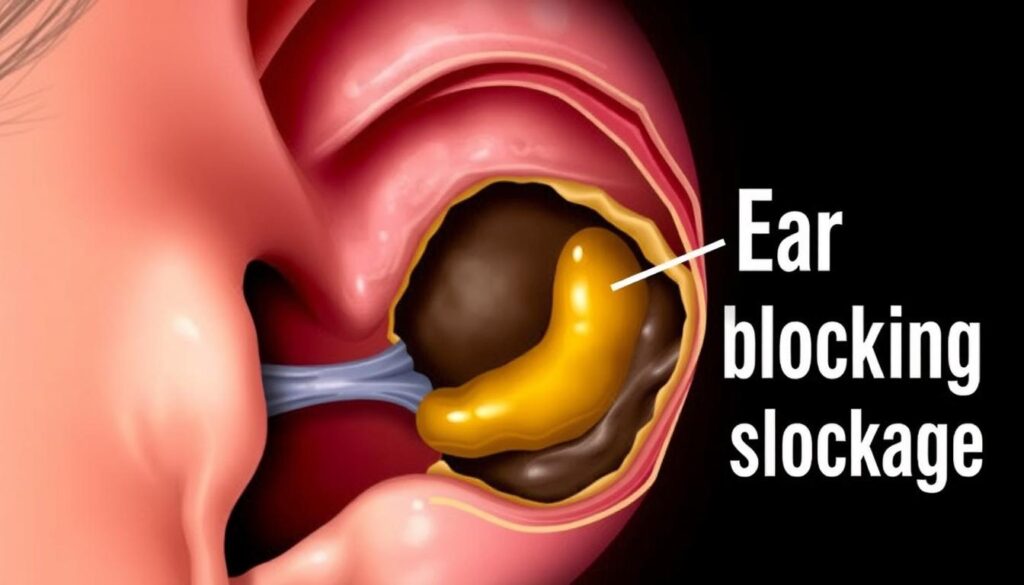
Earwax protects your ear canal and keeps it healthy. Usually, it clears on its own. But sometimes, earwax can build up and cause problems. This happens more often in people who make too much earwax.
Older folks and those with certain ear shapes are more likely to get earwax blockages1. Two special glands in the outer ear canal make cerumen, the medical name for earwax2.
When too much earwax builds up, it can block your ear. This can affect your hearing and make your ears feel uncomfortable. Some things make you more likely to get blocked ears.
These include having narrow or hairy ear canals, dry earwax, or using hearing aids often12. Putting things like cotton swabs, earplugs, or hearing aids in your ears can also cause wax buildup12.
Key Takeaways
- Earwax is a natural protective substance in the ear canal
- Some individuals are more susceptible to earwax blockage
- Elderly people and those with specific ear characteristics have higher risks
- Frequent use of hearing aids can increase earwax production
- Avoid inserting objects into your ear to prevent blockage
Understanding Earwax Blockage and Its Impact on Hearing
Earwax protects your ears, but it can affect your hearing. Knowing how earwax impacts hearing helps maintain ear health3.
What Causes Cerumen Impaction
Blocked ear canals can happen for several reasons. Here are the most common causes:
- Overproduction of earwax4
- Narrow or unusual ear canal shapes
- Excessive use of earphones4
- Improper cleaning techniques4
Common Signs of Blocked Ear Canal
Knowing the signs of ear wax issues is key. Look out for these warnings:
Remember, it’s rare for both ears to be blocked simultaneously3.
When to See a Healthcare Provider
Wax-related hearing loss is often temporary. However, sometimes you need a doctor’s help.
See a medical professional if you have:
- Persistent symptoms
- Sudden hearing loss4
- Severe ear pain
- Ear drainage
Caution: Never use cotton swabs or objects to remove earwax. This can worsen blockage and harm your eardrum4.
Safe Treatment Methods for Ear Wax Removal
Ear wax buildup can be frustrating, but safe cleaning methods exist. Professional ear wax removal offers effective approaches to address cerumen impaction5. Several options are available for managing this common issue.
When considering ear wax removal, you have several options to choose from:
- Earwax softening drops containing mineral oil or hydrogen peroxide5
- Gentle ear irrigation techniques6
- Commercial saline solutions for ear cleaning5
Over-the-counter products can help manage ear wax effectively. Look for solutions with carbamide peroxide or mineral oil to dissolve earwax blockages5.
Pro tip: Use 2-3 drops of room-temperature solution twice daily. Apply for up to 5 days in the affected ear.
Always approach ear wax removal with caution and patience.
Some effective home methods include:
- Warm water hydrotherapy5
- Simple massage techniques around the ear5
- Using olive oil to soften earwax5
Certain conditions can lead to ear wax buildup. These include having lots of ear canal hair or scalp inflammation6.
For persistent issues or pain, seek professional help. A healthcare expert can provide specialized ear irrigation or microsuction treatments6.
Warning: Don’t use cotton swabs or insert objects into your ear canal. This can push wax deeper and possibly harm your eardrum5.
Conclusion
Managing ear wax is vital for your hearing health. Earwax protects, but too much can cause problems. Studies show excessive ear wax affects 7% to 35% of people7.
Prioritize safety when removing ear wax. Seek professional guidance to avoid complications. Specialized ear care techniques can help prevent issues.
Older adults and those with certain medical conditions face higher risks. Cerumen impaction affects 5% of healthy adults and up to 57% of nursing home residents89.
Prevent earwax buildup with gentle care. Don’t insert objects into your ear canal. It can worsen impaction.
Regular check-ups help monitor ear health. Address potential issues early. Stay informed and proactive to maintain clear, healthy ears and protect your hearing.
FAQ
What is earwax and why is it important?
Earwax is a natural substance that protects your ear canal. It traps dust, debris, and microorganisms, keeping them out. Earwax usually drains on its own, acting as a crucial shield for your ears.
What causes earwax blockage?
Earwax blockage can happen due to overproduction or narrow ear canals. Improper cleaning techniques, like using cotton swabs, can push wax deeper. This can lead to cerumen impaction and potential blockage.
What are the common symptoms of a blocked ear canal?
Signs of earwax blockage include earache and a feeling of fullness. You might also experience partial hearing loss or tinnitus. Dizziness and a persistent cough can occur too.
If these symptoms persist, it’s best to see a doctor.
How can I safely remove earwax at home?
Use over-the-counter earwax softening drops with mineral oil or glycerin. Apply 2-3 drops twice daily for up to 5 days. The wax may come out naturally during a warm shower.
For stubborn wax, try gentle irrigation with body-temperature water using an ear syringe.
When should I see a healthcare provider about earwax?
Seek professional help if you have persistent symptoms or sudden hearing loss. See a doctor if you experience ear pain or home treatments don’t work.
A healthcare provider can safely remove earwax using specialized tools and techniques.
What should I avoid when dealing with earwax?
Never use cotton swabs, fingers, or bobby pins to remove earwax. These can push wax deeper and damage your ear canal or eardrum.
Always use gentle, safe removal methods or get professional help.
Can earwax buildup lead to serious complications?
Untreated earwax buildup can cause persistent irritation and increase infection risk. It may also lead to hearing problems, dizziness, and tinnitus.
Regular ear care and check-ups can help prevent these issues.
How often should I clean my ears?
Your ears are usually self-cleaning, so avoid frequent or aggressive cleaning. If you have recurring earwax issues, talk to a doctor.
They can suggest a personalized ear wax management plan for you.
Source Links
- Earwax build-up – https://www.nhsinform.scot/illnesses-and-conditions/ears-nose-and-throat/earwax-build-up/
- Ear Wax Blockage – American Academy of Audiology – https://www.audiology.org/consumers-and-patients/hearing-and-balance/ear-wax-blockage/
- Earwax Blockage: Overview, Causes & Symptoms – https://www.healthline.com/health/wax-blockage
- Earwax Buildup and Blockage: Causes, Symptoms, Treatments – https://www.healthline.com/health/earwax-buildup
- 5 TIPS FOR GOOD EAR WAX REMOVAL – https://www.lescentresmasliah.com/en/5-tips-for-good-ear-wax-removal/
- Earwax build-up – https://www.nhs.uk/conditions/earwax-build-up/
- Ear wax – PMC – https://pmc.ncbi.nlm.nih.gov/articles/PMC4356173/
- Earwax problems: Symptoms, causes, risk factors, and treatment – https://www.medicalnewstoday.com/articles/248934
- Cerumen Impaction: Diagnosis and Management – https://www.aafp.org/pubs/afp/issues/2018/1015/p525.html

