
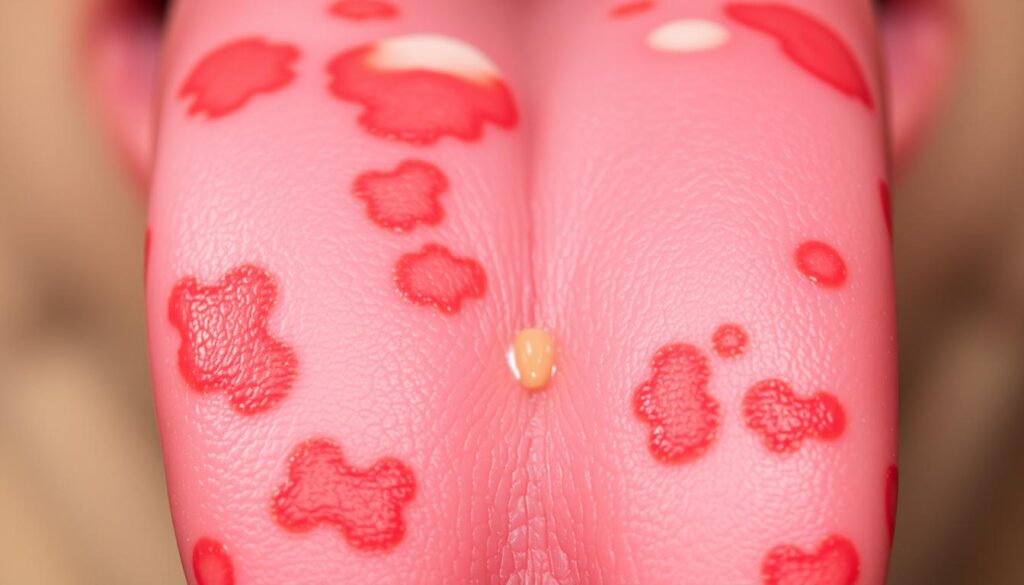
Ever seen odd red patches on your tongue that move around? This could be geographic tongue, a harmless condition affecting oral tissues. It causes tongue inflammation and creates unique patterns on the surface12.
Geographic tongue usually affects middle-aged adults. It’s not a widespread health issue and doesn’t signal a serious medical problem13. Women are twice as likely to develop this oral lesion as men23.
The condition forms smooth, red patches where tiny papillae vanish temporarily. These patches shift shape and location, creating a map-like look2. This appearance gives geographic tongue its name.
Key Takeaways
- Geographic tongue affects 1-3% of the global population
- The condition is benign and non-contagious
- Symptoms can vary and may include mild discomfort
- Women are more likely to develop geographic tongue
- Most cases resolve without medical intervention
Understanding Geographic Tongue and Its Symptoms
Geographic tongue is a unique oral condition affecting many people worldwide. It creates distinctive red patches on the tongue’s surface. This harmless condition looks like a map on your tongue4.
What Geographic Tongue Looks Like
Your tongue may develop smooth, red areas with slightly raised borders. These patches can change location, size, and shape over time. The irregular patterns might look worrying, but they’re usually harmless5.
- Smooth, red patches resembling sores
- Irregular borders with changing configurations
- Potential burning or sensitive sensations
Common Symptoms to Watch For
Most people experience shifting lesions without much discomfort. This condition affects about 1-3% of the population4. You might notice occasional tongue sensitivity, especially with certain foods.
When to Seek Medical Attention
While usually harmless, see a doctor if symptoms persist or cause discomfort5. They can examine your tongue and check for other possible issues.
“Geographic tongue is an intriguing condition that may look alarming but is generally harmless.” – Oral Health Experts
Knowing your symptoms and keeping good oral hygiene can help manage this condition6. Regular check-ups with your dentist are also important.
Geographic Tongue Causes and Risk Factors
Geographic tongue is a complex condition with multiple potential triggers. Researchers have found several factors that may contribute to its development. Understanding these causes can help you manage the condition better.
Your genes might play a big role in geographic tongue. It affects about 1 to 3 percent of people. Families with a history of it may see a pattern of inheritance.
- Potential risk factors include:
- Family history of geographic tongue
- Presence of a fissured tongue
- Psoriasis or related autoimmune conditions
Lack of certain nutrients can affect how geographic tongue looks. Scientists have found links between the condition and specific vitamin and mineral shortages.
- Vitamin B6
- Vitamin B12
- Folate (Vitamin B9)
- Vitamin D
- Zinc
- Iron
A 2016 study found that 15% of people with geographic tongue had celiac disease7. Those with psoriasis are more likely to get this condition. It often looks map-like with yellowish-white borders7.
“Your tongue tells a story about your overall health, and geographic tongue is just one chapter,” says dermatological experts.
You can’t fully prevent geographic tongue. But knowing these risk factors can help you manage symptoms. It’s important to seek medical advice when needed.
Treatment Options and Management Strategies
Managing oral lesions from geographic tongue can be simple. Several approaches can help you find relief and improve comfort8.
Medical Treatments
Your doctor might suggest these medical interventions for geographic tongue:
- Over-the-counter pain relievers to manage discomfort
- Anesthetic mouth rinses for temporary relief9
- Topical corticosteroid gels to reduce inflammation
- Zinc supplements to potentially address nutritional deficiencies8
Natural Remedies and Home Care
You can use these home strategies to manage your symptoms:
- Practice stress management techniques like meditation9
- Maintain excellent oral hygiene
- Use sensitive toothpaste without harsh additives
Dietary Modifications
Your diet is key in managing geographic tongue. Try these tips:
- Avoid spicy, acidic, or extremely hot foods9
- Limit alcohol consumption
- Stay hydrated
If symptoms persist or become uncomfortable, see your doctor. Check out Mayo Clinic’s geographic tongue resource for more info8.
Remember, most cases of geographic tongue are benign and do not require extensive medical intervention.
Conclusion
Geographic tongue, or benign migratory glossitis, is an intriguing oral condition10. It affects a small percentage of people. Rest assured, it’s usually harmless and doesn’t cause serious health issues10.
This condition has complex links to various health factors. Genetic predispositions and family history play a significant role11. It’s also connected to systemic diseases like asthma, stress, and hormonal changes11.
Understanding these connections can offer valuable insights into your overall health10. Most cases don’t need extensive medical treatment. Doctors usually recommend monitoring the condition10.
Sometimes, minor treatments like topical anesthetics might help manage discomfort10. Learning about this condition can improve your oral health. It can also give you peace of mind.
FAQ
What exactly is geographic tongue?
Geographic tongue affects the tongue’s surface, causing smooth, red patches of various shapes and sizes. It happens when tiny papillae are lost, creating a map-like appearance. This harmless condition affects 1-3% of people and can last for varying periods.
Is geographic tongue contagious?
No, geographic tongue isn’t contagious. It’s not linked to infections or cancer. The condition can be uncomfortable but poses no serious health risks.
What causes geographic tongue?
The exact cause remains unknown. It may be linked to conditions like psoriasis, eczema, and type 1 diabetes. Risk factors include family history, fissured tongue, and nutritional deficiencies.
Stress, hormone changes, and allergies may also play a role. These factors can contribute to the development of geographic tongue.
What are the typical symptoms of geographic tongue?
Symptoms include smooth, red patches on the tongue with slightly raised borders. These patches can change location, size, and shape. Some people feel occasional pain or burning, while others have no symptoms.
How is geographic tongue diagnosed?
A healthcare provider can diagnose geographic tongue through visual examination and symptom review. Most diagnoses are straightforward due to the distinctive map-like appearance on the tongue’s surface.
Are there any treatments for geographic tongue?
Geographic tongue often doesn’t require treatment. However, options exist for those experiencing discomfort. These include pain relievers, anesthetic mouth rinses, and corticosteroid ointments.
Zinc supplements may also help. Home care strategies involve avoiding irritants like spicy foods and certain toothpastes.
Who is most likely to develop geographic tongue?
Geographic tongue is more common in young adults and women. It often runs in families, suggesting a genetic component. People with certain health conditions or nutritional deficiencies may be more prone to it.
Can geographic tongue be prevented?
Unfortunately, geographic tongue can’t be prevented. Understanding your risk factors and triggers can help manage symptoms effectively. Good oral hygiene, stress management, and proper nutrition might reduce outbreak frequency or severity.
Source Links
- Everything you need to know about geographic tongue – https://www.medicalnewstoday.com/articles/319342
- What is Geographic Tongue? – https://oralb.com/en-us/oral-health/conditions/geographic-tongue
- Geographic Tongue | What it is, Causes, Symptoms and Treatments – KIN – https://www.kin.es/en/patologias/lengua-geografica/
- Geographic Tongue: Causes and Treatments – https://www.webmd.com/oral-health/geographic-tongue
- Geographic tongue – Symptoms and causes – https://www.mayoclinic.org/diseases-conditions/geographic-tongue/symptoms-causes/syc-20354396
- Geographic Tongue – https://www.aaom.com/geographic-tongue
- Geographic Tongue: Symptoms, Causes, and More – https://www.healthline.com/health/geographic-tongue
- 8 Reasons for Geographic Tongue & How To Treat It – https://www.teethtalkgirl.com/dental-health/geographic-tongue/
- Geographic Tongue: Causes, Symptoms Connection to COVID-19 – https://www.medicoverhospitals.in/diseases/geographic-tongue/
- Geographic tongue – https://en.wikipedia.org/wiki/Geographic_tongue
- Paediatric Geographic Tongue: A Case Report, Review and Recent Updates – https://pmc.ncbi.nlm.nih.gov/articles/PMC4800664/

