
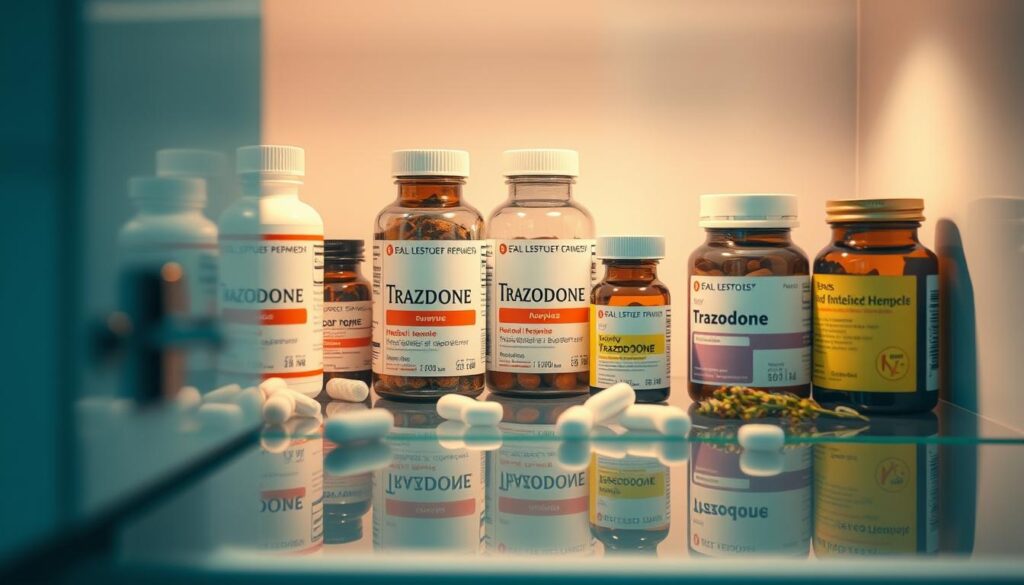
Trazodone is a powerful serotonin modulator that tackles depression and sleep issues. It tweaks brain chemistry to boost mental health and overall well-being1. Doctors may suggest this drug when other treatments fall short2.
This medication targets specific brain chemicals to balance mood and improve sleep. Research shows it’s great for depression therapy and other mental health challenges1.
Doctors often prescribe low doses of 50-100 mg for sleep problems2. In the U.S., up to one-third of medications are used off-label, including trazodone2.
Key Takeaways
- Trazodone is a versatile serotonin modulator for depression and sleep management
- Effective at low doses with minimal daytime drowsiness
- Helps improve sleep quality and mood regulation
- Can be prescribed for various patient populations
- Offers an alternative when other antidepressants fail
What is Trazodone and How Does It Work
Trazodone is a vital mental health medication. It’s a unique serotonin modulator that helps patients manage complex mental health issues. Trazodone offers benefits for various conditions3.
The Science Behind Serotonin Modulation
Your brain’s chemical balance affects emotional well-being. Trazodone blocks serotonin reuptake, increasing this important neurotransmitter’s availability. This process improves mood and supports mental health3.
- Increases serotonin availability
- Promotes emotional stability
- Supports neurotransmitter balance
Common Uses in Depression and Anxiety Treatment
The FDA approved trazodone for treating major depressive disorder. It’s a valuable second-line treatment when first-line options don’t work3. Trazodone can help patients with depression through its targeted mood regulation approach4.
| Condition | Typical Dosage |
|---|---|
| Depression | 150-400 mg daily |
| Insomnia | 50-150 mg at bedtime |
Role as a Sleep Aid
Trazodone has gained attention as an insomnia treatment. Its sedative effects provide relief for sleep disorders5. About 30% of people worldwide struggle with sleep issues, making trazodone a potential solution5.
Patients may experience sedative effects within 30 minutes of taking trazodone4.
Trazodone is widely used for insomnia. However, medical guidelines suggest caution. A 2018 Cochrane Library review found little evidence for its primary use in insomnia5.
Talk to your doctor about trazodone. They can help decide if its serotonin modulator properties suit your mental health and sleep needs3.
Essential Safety Guidelines and Precautions with Trazodone
Taking trazodone requires understanding its potential side effects and safety guidelines. Your well-being depends on careful attention to medication interactions and dosage management6.
- Avoid combining trazodone with MAO inhibitors to prevent dangerous interactions6
- Monitor for potential changes in mental health, especially during initial treatment7
- Watch for signs of serotonin syndrome8
Dosage management is crucial. Never change your medication without professional advice. Gradual dosage changes help minimize withdrawal symptoms67.
“Your safety is paramount when managing medication,” says Dr. Emily Rodriguez, psychiatric pharmacology expert.
Discuss these potential side effects with your healthcare provider:
| Side Effect Category | Specific Symptoms |
|---|---|
| Mental Health | Suicidal thoughts, mood changes78 |
| Physical Reactions | Dizziness, low blood pressure, weight changes8 |
| Neurological | Coordination issues, alertness reduction8 |
Be careful when driving or using machinery. Trazodone can cause drowsiness6. Tell your doctor about all medications and supplements you take.
This helps prevent potential interactions7.
Remember, your safety depends on open communication with medical professionals and careful medication management.
Conclusion
Trazodone is a versatile antidepressant and sleep aid. It tackles multiple mental health issues with proven effectiveness. This medication helps those struggling with mood and sleep problems.
Trazodone treats more than just depression. It’s also used for anxiety and cognitive disorders. Dosages vary from 50-150 mg for insomnia to 150-400 mg for depression.
This drug works quickly to improve symptoms. It can help with anxiety and irritability. Clinical studies support its effectiveness9.
Working with healthcare professionals is key. They can help monitor potential side effects like drowsiness. Trazodone’s off-label use has grown, showing its wide-ranging benefits.
This antidepressant offers hope for complex mental health challenges. With medical guidance, you can create a tailored treatment plan. Trazodone can improve your overall well-being and quality of life.
FAQ
What is Trazodone primarily used for?
Trazodone treats depression and anxiety disorders. It’s also prescribed as a sleep aid. This medication helps people with insomnia or sleep issues.
How does Trazodone work in the body?
Trazodone regulates serotonin levels in the brain. It’s a serotonin antagonist and reuptake inhibitor (SARI). By boosting serotonin and noradrenaline, it improves mood, focus, and sleep.
How long does it take for Trazodone to start working?
Initial effects may appear within 1-2 weeks of starting treatment. Full benefits typically develop after 4-6 weeks of consistent use. Stay patient and follow your doctor’s instructions.
What are the common side effects of Trazodone?
Common side effects include dizziness, dry mouth, and blurred vision. Some people may experience drowsiness or changes in heart rhythm. Report any unusual or severe side effects to your doctor right away.
Can Trazodone be used for sleep problems?
Trazodone is often prescribed at lower doses for sleep issues. It can improve sleep quality and duration. This makes it useful for insomnia related to depression or anxiety.
Are there any important precautions when taking Trazodone?
Watch for interactions with other medications, especially monoamine oxidase inhibitors (MAOIs). Avoid alcohol and be alert for signs of serotonin syndrome. Take care when driving or using machinery due to possible drowsiness.
How should I take Trazodone?
Always follow your doctor’s instructions carefully. Trazodone comes in tablet, capsule, and liquid forms. Gradually reduce the dosage when stopping to minimize withdrawal effects. Never stop suddenly without medical guidance.
Can Trazodone be used to treat both depression and anxiety?
Trazodone effectively treats both depression and anxiety disorders. It addresses low mood, poor concentration, and sleep issues. Its unique action helps with symptoms associated with these conditions.
Source Links
- Trazodone for Insomnia: A Systematic Review – https://pmc.ncbi.nlm.nih.gov/articles/PMC5842888/
- Trazodone for Sleep: Dosage, Benefits, Risks, and More – https://www.healthline.com/health/sleep/trazodone-for-sleep
- What Is Trazodone Used For? – https://www.buzzrx.com/blog/what-is-trazodone-used-for
- Trazodone: Antidepressant, Sleeping Pill, or Both? – https://www.hazeldenbettyford.org/articles/trazodone
- Should Trazodone Be First-Line Therapy for Insomnia? A Clinical Suitability Appraisal – https://pmc.ncbi.nlm.nih.gov/articles/PMC10146758/
- Trazodone (oral route) – https://www.mayoclinic.org/drugs-supplements/trazodone-oral-route/description/drg-20061280
- Trazodone: MedlinePlus Drug Information – https://medlineplus.gov/druginfo/meds/a681038.html
- Trazodone: Uses, Side Effects, Interactions, Pictures, Warnings & Dosing – WebMD – https://www.webmd.com/drugs/2/drug-11188/trazodone-oral/details
- The effects of trazodone on human cognition: a systematic review – European Journal of Clinical Pharmacology – https://link.springer.com/article/10.1007/s00228-021-03161-6

