
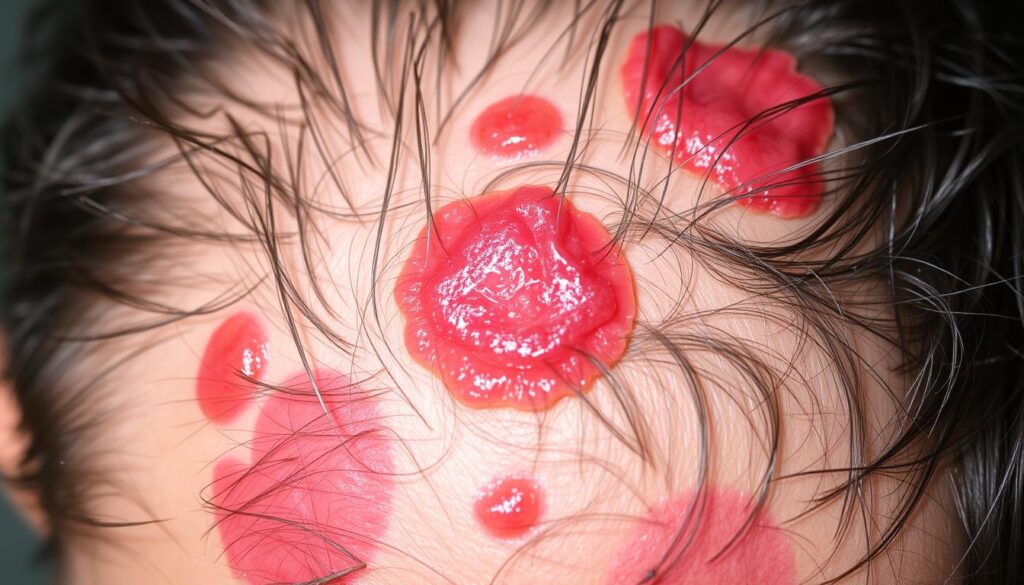
Ringworm of the scalp, or Tinea Capitis, is a tough fungal infection. It mainly affects kids, causing bald spots and discomfort1. Despite its name, it’s not caused by worms but by fungus attacking hair follicles.
The infection spreads fast through contact with infected people, animals, or objects1. It creates round, scaly patches on the scalp where hair breaks off. This results in noticeable bald areas.
Most cases can be treated with proper medical care. Doctors usually prescribe oral antifungal meds for 4 to 8 weeks1. Shampoos with ketoconazole can help slow the infection’s spread2.
Untreated Ringworm (Scalp) might cause lasting hair loss and scarring1. Spotting early signs and getting quick treatment is key. This helps prevent long-term problems.
Key Takeaways
- Ringworm of the scalp primarily affects children
- The infection spreads through direct contact
- Oral medications and medicated shampoos are primary treatments
- Early detection prevents potential permanent hair loss
- Professional medical consultation is essential for effective management
What is Ringworm (Scalp) and Its Common Causes
Ringworm of the scalp is a fungal infection that can cause discomfort and hair loss. It’s contagious and often affects children, creating challenges for parents and caregivers.
Understanding the Fungal Infection
Ringworm isn’t a worm, but a fungal infection attacking the scalp and hair follicles. About 40 different fungi species can cause this skin condition3.
The infection thrives in warm, moist environments. It mainly targets children between 1 to 7 years old4.
- Primarily affects children aged 3-7 years5
- Rare in adults4
- Can lead to itchy scalp and potential hair loss
How Ringworm Spreads
This fungal infection spreads through direct contact. You can get ringworm by:
- Touching an infected person’s head or hair
- Sharing personal items like combs, brushes, or towels
- Interacting with infected animals
- Contact in crowded environments3
Risk Factors and Susceptibility
Some conditions increase your chances of getting ringworm. Antifungal treatment is crucial for people with specific risk factors:
| Risk Factors | Impact |
|---|---|
| Weakened immune system | Higher infection probability3 |
| Living in tropical climates | Increased fungal growth potential |
| Poor personal hygiene | Enhanced transmission risk |
“Prevention is always better than cure when dealing with scalp ringworm infections.”
Knowing these factors helps protect you and your family from this uncomfortable infection. Stay aware and take steps to prevent ringworm’s spread.
Essential Signs, Symptoms, and Treatment Options
Ringworm of the scalp often affects children. It’s a fungal infection that requires proper understanding for effective management.
Typical symptoms of scalp ringworm include:
- Itchy patches on the scalp
- Scaly red areas
- Hair breakage near the scalp
- Bald spots with black dots where hair has broken off
Severe cases may lead to kerion. These are soft, raised swellings that can drain pus6. Children find these symptoms especially upsetting.
Treating scalp ringworm involves good scalp hygiene and antifungal medication. Doctors usually prescribe oral antifungals like griseofulvin or terbinafine hydrochloride7. These medications are typically taken for about six weeks.
Medicated shampoos are crucial in treatment:
- Ketoconazole-based shampoos
- Selenium sulfide shampoos
These shampoos help stop the infection from spreading. They also support overall scalp health6.
“Prevention and early treatment are key to managing scalp ringworm effectively”
Treatment can be slow, often taking over a month to show results7. Medications may cause digestive issues. In rare cases, they can lead to liver problems.
To lower your risk, wash your scalp regularly. Avoid sharing personal items. Keep your skin clean and dry6.
Conclusion
Managing scalp ringworm requires a thorough approach to fungal infection control. Early detection and consistent treatment are key to prevention. Your doctor will likely prescribe oral antifungal medications to fight the infection effectively8.
Protect your scalp health by being aware of transmission risks. Avoid sharing personal items like combs, towels, or hats8. Dermatophyte research shows that children are more at risk, so extra care is needed8.
Sticking to your treatment plan is crucial to avoid long-term issues. Untreated scalp ringworm can cause permanent scarring and hair loss8. Follow your full treatment plan and use prescribed medicated shampoos9.
Healing takes time, so be patient. Follow your doctor’s advice and stay alert to prevent reinfection. With proper care, you can overcome scalp ringworm successfully.
FAQ
What exactly is ringworm of the scalp?
Ringworm of the scalp is a fungal infection affecting the scalp and hair follicles. It’s not caused by a worm, but by fungi that thrive on dead tissue. The infection appears as circular, scaly patches causing hair breakage and bald spots.
How does ringworm of the scalp spread?
The infection spreads through direct contact with infected people, animals, or contaminated objects. Sharing personal items like combs or hats can spread the infection. Children in schools or daycares are at higher risk due to close contact.
Contact with infected pets or farm animals can also cause ringworm of the scalp.
What are the most common symptoms of scalp ringworm?
Key symptoms include itchy scalp patches, hair breakage, scaly red areas, and bald spots. Severe cases may develop kerion – soft swellings that can drain pus. The infection can cause discomfort and temporary hair loss.
How is ringworm of the scalp treated?
Treatment involves oral antifungal medications like griseofulvin or terbinafine hydrochloride for about six weeks. Medicated shampoos are often prescribed to prevent spread. Improvement can be slow, taking over a month to show results.
Treatment may have side effects like upset stomach or diarrhea.
Who is most at risk for scalp ringworm?
Children, especially toddlers and school-age kids, are most susceptible. Risk factors include exposure to infected children or pets and poor hygiene. Young children are more vulnerable due to less developed immune systems.
Can ringworm of the scalp be prevented?
Prevention involves practicing good hygiene and avoiding sharing personal items. Regular hand washing and keeping personal items clean can reduce infection risk. Teaching children about proper personal care is also important.
How long does treatment for scalp ringworm typically take?
Treatment usually lasts about six weeks, with oral antifungal medications taken consistently. Improvement is gradual, and completing the entire prescribed course is crucial. Follow-up with a healthcare provider ensures the infection is fully resolved.
Source Links
- Ringworm of the scalp: MedlinePlus Medical Encyclopedia – https://medlineplus.gov/ency/article/000878.htm
- Ringworm (Tinea Corporis): What It Looks Like, Causes & Treatment – https://my.clevelandclinic.org/health/diseases/4560-ringworm
- Ringworm:Symptoms, Causes, Treatments – https://www.webmd.com/skin-problems-and-treatments/what-you-should-know-about-ringworm
- Ringworm of the Scalp (Tinea Capitis) – https://www.nationwidechildrens.org/conditions/tinea-capitis
- Scalp Ringworm (Tinea Capitis) Condition, Treatments and Pictures for Children – https://skinsight.com/skin-conditions/tinea-capitis-ringworm-of-scalp/child/
- Ringworm (scalp): How to treat this skin condition-Ringworm (scalp) – Symptoms & causes – Mayo Clinic – https://www.mayoclinic.org/diseases-conditions/ringworm-scalp/symptoms-causes/syc-20354918
- Ringworm of the Scalp (Tinea Capitis): Causes, Symptoms, and Treatment – https://www.healthline.com/health/tinea-capitis
- Suffering From Scalp Ringworm (Tinea Capitis): Know Its Treatment & Prevention – https://www.ckbhospital.com/blogs/scalp-ringworm-tinea-capitis-treatment-prevention/
- Ringworm: What it looks like, symptoms, and more – https://www.medicalnewstoday.com/articles/158004

