
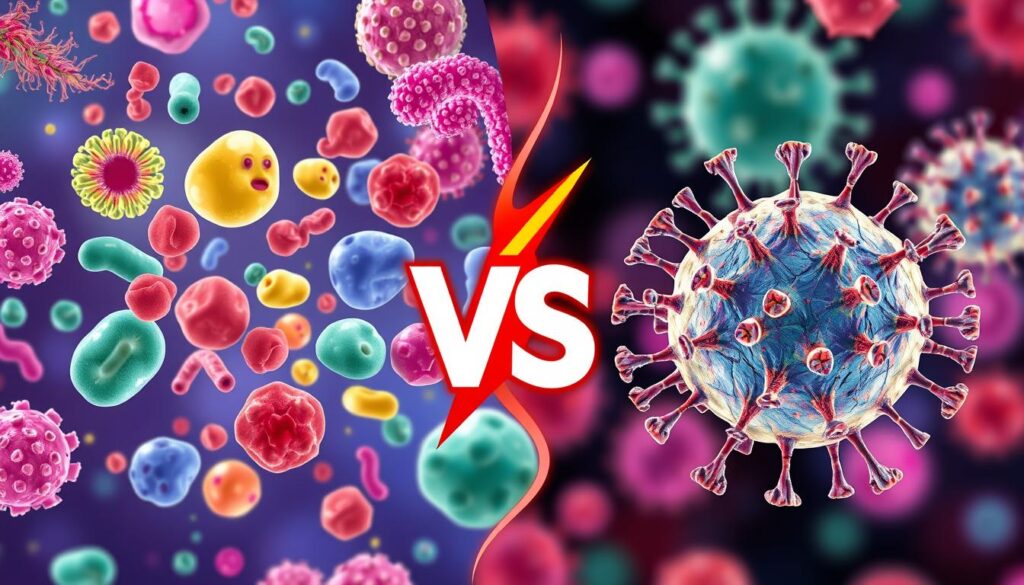
Bacterial and viral infections are tiny invaders that can seriously affect your health1. These contagious diseases have unique traits that influence how they spread and how your body fights back1.
Infections can disrupt your routine, causing absences from work and school. Kids are especially at risk. Colds lead to 22 million missed school days and 20 million parental work absences yearly2.
Your immune system is key in battling these microscopic threats. Different germs need different tactics. Antibiotics work on bacteria but not on viruses1.
Microbes keep changing, creating new challenges for doctors1. Knowing the difference between bacterial and viral infections is vital for proper treatment and prevention.
Key Takeaways
- Bacterial and viral infections are distinct types of contagious diseases
- Immune response varies depending on the type of pathogen
- Children are more susceptible to frequent infections
- Accurate pathogen identification is crucial for proper treatment
- Vaccines play a significant role in preventing serious infections
Understanding the Key Differences Between Bacterial and Viral Infections
Infections can greatly affect your health. Knowing the differences between bacterial and viral infections is vital. This knowledge helps in proper treatment and prevention.
Structure and Basic Characteristics
Bacteria and viruses have very different structures. Bacteria are single-celled organisms that can reproduce on their own. Viruses are smaller and need a host cell to multiply3.
Most bacteria are harmless to humans. In fact, less than 1% of bacteria cause diseases4.
- Bacteria have a cell wall and membrane
- Viruses consist of genetic material (RNA or DNA) protected by a protein coat
- Bacteria can survive in various environmental conditions
Common Transmission Methods
Infections spread in many ways. Direct contact, airborne droplets, and dirty surfaces are main routes for both types3. Good hygiene can greatly lower your risk of infection5.
| Transmission Method | Bacterial Infections | Viral Infections |
|---|---|---|
| Direct Contact | Strep Throat | Common Cold |
| Airborne Droplets | Tuberculosis | Influenza |
| Contaminated Surfaces | E. Coli | Hepatitis |
Impact on the Human Body
Bacterial and viral infections affect the body in different ways. Both can cause respiratory illness, making symptoms hard to tell apart4. Antibiotics only work against bacterial infections5.
“Prevention is always better than cure when it comes to infections.”
Antimicrobial resistance is a big problem worldwide. Using antibiotics correctly and following doctor’s orders can help reduce this risk5.
Bacterial vs. Viral Infection: Symptoms and Diagnosis
Bacterial and viral illnesses often have similar symptoms. This makes identifying the infection type challenging. Proper Pathogen Identification requires careful medical evaluation to ensure effective treatment6.
Diagnostic methods for Contagious Diseases include several key strategies:
- Laboratory testing of specimens from throat, nose, blood, or body tissue6
- Nucleic acid amplification tests for viral detection6
- Complete blood count (CBC) to analyze white blood cell changes7
Understanding the cause of a Fever is crucial. Bacterial infections usually increase white blood cell count. Viral infections, however, tend to decrease it7.
Your doctor will consider many factors when deciding on Treatment Protocols. They’ll use specialized tests to tell bacterial and viral infections apart.
Accurate diagnosis requires specialized testing to differentiate between bacterial and viral infections.
Preventing infectious diseases is vital. Key strategies include:
- Frequent handwashing
- Proper food handling
- Vaccination for both children and adults7
- Covering coughs and sneezes
About 30% of U.S. antibiotic prescriptions are unnecessary. This contributes to growing antibiotic resistance8. Always seek professional medical advice for accurate diagnosis and treatment.
Conclusion
Knowing the differences between bacterial and viral infections is vital for good healthcare. Your immune system fights these infections differently. Only about 1% of microbes actually harm humans9.
Antibiotics work well against bacteria, but overuse can cause resistance. Bacteria can quickly adapt, doubling in numbers every 20 minutes to an hour9. We must use antibiotics wisely and only when needed.
Prevention is crucial for both types of infections. Vaccines, good hygiene, and understanding how germs spread can lower your risk. Talk to your doctor about the best treatment for infections. Staying informed helps protect you and others10.
Medical science keeps improving. New technologies are being developed to fight infectious diseases. Researchers are creating better vaccines and treatments for both bacterial and viral infections9.
FAQ
What’s the main difference between bacterial and viral infections?
Bacterial infections come from single-celled organisms that can reproduce on their own. Viral infections stem from smaller microorganisms needing host cells to multiply. Bacteria have cell walls and thrive in various settings. Viruses consist of genetic material within a protein coat.
How can I tell if I have a bacterial or viral infection?
Distinguishing between the two can be tricky without medical tests. Bacterial infections often last longer than two weeks. They may cause higher fevers or worsen after a few days.
Viral infections typically cause runny noses, low-grade fevers, and sore throats. These symptoms usually last up to two weeks. A doctor can perform tests to identify the specific infection type.
When should I see a doctor about an infection?
Seek medical help if you have signs of serious illness. These include dehydration, breathing difficulties, or decreased activity. For infants under three months, any fever requires medical attention.
Consult a doctor if symptoms persist beyond two weeks. Also, seek help if they worsen or become unusually severe.
How are bacterial and viral infections treated differently?
Doctors typically treat bacterial infections with antibiotics. These medicines target and kill bacteria. Viral infections usually require care to manage symptoms.
Some specific viral infections may need antiviral medications. It’s crucial to use antibiotics only when necessary to prevent resistance.
Can I prevent bacterial and viral infections?
Yes, you can take steps to prevent these infections. Practice good hygiene by washing hands often. Cover coughs and sneezes.
Get vaccinated for preventable diseases. Maintain a healthy immune system. Avoid close contact with infected individuals. Vaccines effectively prevent many viral and bacterial infections.
Are antibiotics effective against viral infections?
No, antibiotics don’t work on viral infections. They only target bacterial infections by killing or stopping bacteria growth. Using antibiotics for viruses can lead to resistance.
For viral infections, treatment focuses on managing symptoms. It also supports the body’s immune response.
How do bacterial and viral infections spread?
Both can spread through contact with infected people. They also spread via airborne droplets from coughing or sneezing. Contaminated surfaces, food, or water can transmit infections too.
Some infections spread through contact with infected animals or bodily fluids. Good hygiene and avoiding sick people help prevent transmission.
What are some common examples of bacterial and viral infections?
Bacterial infections include strep throat, Lyme disease, and C. difficile. Salmonella and E. coli are also bacterial. Viral infections often include colds, flu, and COVID-19.
Hepatitis and many respiratory and digestive illnesses are viral too. Some infections can become serious if left untreated.
Source Links
- Viral vs Bacterial Infections: Different Pathogens, Different Approaches – https://www.pfizer.com/news/articles/viral_vs_bacterial_infections_different_pathogens_different_approaches
- Is it a Bacterial Infection or Virus? – https://www.dukehealth.org/blog/it-bacterial-infection-or-virus
- What’s the Difference Between Viral and Bacterial Infections? – https://www.healthline.com/health/bacterial-vs-viral-infections
- Infection: Bacterial or viral? – https://www.mayoclinic.org/diseases-conditions/infectious-diseases/expert-answers/infectious-disease/faq-20058098
- What is the difference between bacterial and viral infections? – https://www.healthdirect.gov.au/bacterial-vs-viral-infection
- Viral vs. Bacterial Infection: What’s the Difference? – https://www.verywellhealth.com/viral-vs-bacterial-infection-what-s-the-difference-5442997
- Is Your Infection Bacterial or Viral? – https://www.uhhospitals.org/blog/articles/2022/12/is-your-infection-bacterial-or-viral
- Bacterial vs. Viral Infections – https://www.biofiredx.com/blog/bacterial-vs-viral-infections/
- What’s the difference between bacteria and viruses? – https://imb.uq.edu.au/article/2020/04/difference-between-bacteria-and-viruses
- Differentiating between bacterial and viral infections by estimated CRP velocity – https://pmc.ncbi.nlm.nih.gov/articles/PMC9728869/

