
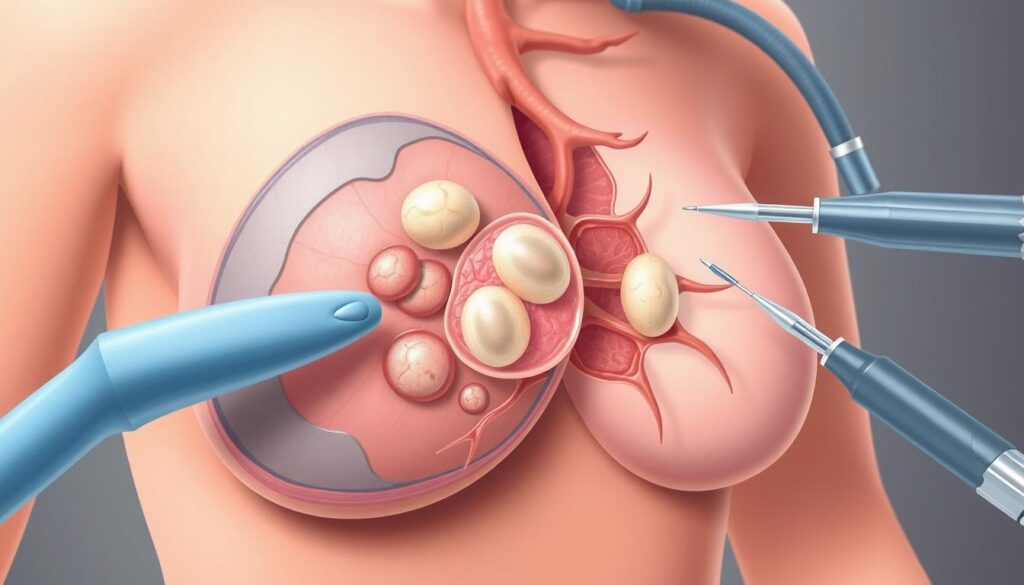
Breast lumps can be scary, but not all are harmful. Fibroadenomas are common benign tumors many women experience12. About 15% of women will have a fibroadenoma in their lifetime1.
These lumps often appear in younger women, aged 15 to 35. They feel smooth and rubbery, moving easily within breast tissue. Fibroadenomas range from marble-sized to golf ball-sized, but are usually harmless1.
Knowing your breast health is vital. If you find a lump, see a doctor for peace of mind. Most fibroadenomas don’t need treatment right away1.
Key Takeaways
- Fibroadenomas are common benign breast lumps
- Most prevalent in women aged 15-35
- Generally harmless and do not increase cancer risk
- Can be monitored or removed if growing
- Professional medical evaluation is recommended
What is Fibroadenoma and Its Causes
Fibroadenomas are common benign breast lumps that appear during reproductive years. Up to 10% of women experience these breast lesions. They typically develop between ages 15 and 353.
These non-cancerous growths contain glandular and stromal tissues. They can vary in size and characteristics.
Common Risk Factors and Triggers
Knowing fibroadenoma risk factors helps manage breast health. Key factors include:
- Age range of 20-35 years4
- Hormonal imbalance during reproductive years
- Genetic predisposition
- Family history of breast conditions
Hormonal Influences on Development
Hormones play a crucial role in fibroadenoma formation. Estrogen significantly impacts these breast changes4. Hormonal fluctuations during puberty, pregnancy, and menstrual cycles can increase fibroadenoma growth.
Genetic and Environmental Components
The exact cause of fibroadenomas remains unclear. Genetic mutations and environmental influences can trigger these benign breast lesions. Most fibroadenomas are simple and range from 1 to 3 cm4.
Breast cancer screening and regular checkups help monitor potential changes3. Early detection is vital for maintaining breast health.
“Understanding your breast health is key to early detection and peace of mind.”
Most fibroadenomas don’t increase cancer risk. However, complex fibroadenomas might slightly elevate future breast cancer risk34. Always consult healthcare professionals about any breast lumps you notice.
Signs, Symptoms, and Diagnosis Methods
Breast lumps can be worrying, but knowing about fibroadenomas can ease your mind. These benign growths have specific signs that doctors can spot5. They affect one in four premenopausal people, mostly those with a uterus aged 15-305.
During a self-exam, you might feel a fibroadenoma. It’s usually smooth, firm, and moves easily in the breast tissue. Most are painless too.
- Smooth, well-defined lump
- Firm, rubbery texture
- Easily movable within the breast tissue
- Typically painless
Doctors use various methods to confirm a fibroadenoma. Breast ultrasounds are often used for people under 306. Mammograms aren’t as effective for younger patients due to dense breast tissue6.
Your doctor might also suggest these steps:
- Clinical breast examination
- Breast ultrasound
- Core needle breast biopsy6
Most fibroadenomas don’t need immediate treatment. Your doctor might suggest watching or removing it if it’s large or causing discomfort7. Some may even shrink on their own over time7.
Remember, early detection through regular breast self-examinations and professional screenings is key to understanding your breast health.
Conclusion
Understanding fibroadenomas empowers you to make informed health decisions. Most are harmless and don’t significantly increase breast cancer risk8. Your doctor can help create a tailored management plan for your breast health assessment.
Treatment options vary from monitoring to surgery, based on size and growth patterns8. Fibroadenomas are common in women aged 15-35. They affect 27.6% of women between 18-40 years9.
Regular self-exams and check-ups are vital for tracking changes. They help ensure early detection of any issues. Staying proactive about breast health is crucial.
New research improves our understanding of benign breast tumors. Molecular studies and better diagnostic techniques promise more accurate evaluations. These advances may provide greater peace of mind.
Each person’s experience with fibroadenomas is unique. Working with a healthcare team ensures comprehensive, personalized care. This approach addresses your specific needs and concerns effectively.
FAQ
What exactly is a fibroadenoma?
A fibroadenoma is a common, non-cancerous breast lump. It’s often found in women aged 15 to 35. These lumps are firm, smooth, and rubbery with a round shape.
Fibroadenomas can vary in size from tiny to large. They’re usually painless and move easily when touched.
Am I at risk of developing a fibroadenoma?
Your risk is higher if you’re a woman between 15-35 years old. Hormonal changes during puberty, pregnancy, or menstruation can increase risk.
African descent and family history of benign breast diseases also raise risk. Early periods and not having children can contribute too.
How can I identify a fibroadenoma?
A fibroadenoma usually feels like a smooth, movable lump in your breast. It’s typically painless, but some women might feel tenderness before their period.
For a proper diagnosis, doctors use clinical exams and imaging tests. Sometimes, a biopsy might be needed.
Will a fibroadenoma increase my breast cancer risk?
Most fibroadenomas don’t significantly raise breast cancer risk. They’re usually benign. However, complex fibroadenomas or phyllodes tumors need closer watching.
Regular self-exams and check-ups are important to track any changes.
What are my treatment options for a fibroadenoma?
Treatment options range from watchful waiting to surgery. The choice depends on the lump’s size, growth rate, and your preference.
Many fibroadenomas don’t need extensive treatment. Your doctor can help you choose the best approach.
Can fibroadenomas change in size?
Yes, fibroadenomas can change size due to hormonal shifts. This can happen during your period, pregnancy, or while using hormone therapy.
Some may grow larger, while others might shrink or disappear over time.
How are fibroadenomas diagnosed?
Doctors use clinical breast exams and imaging tests to diagnose fibroadenomas. These may include ultrasound and mammography.
Sometimes, a biopsy is needed to confirm the diagnosis. These tests help rule out other breast conditions.
Are fibroadenomas painful?
Most fibroadenomas are painless. Some women might feel mild discomfort, especially before their period.
If you have significant breast pain, see your doctor. They can check for other possible issues.
Source Links
- No title found – https://www.thewomens.org.au/health-information/breast-health/fibroadenomas
- Understanding Fibroadenoma of the Breast: A Comprehensive Review of Pre-operative and Post-operative Clinicopathological Correlations – https://pmc.ncbi.nlm.nih.gov/articles/PMC10823311/
- Fibroadenoma – https://www.webmd.com/breast-cancer/what-are-fibroadenomas
- Fibroadenoma – https://breastcancernow.org/about-breast-cancer/breast-lumps-and-benign-not-cancer-breast-conditions/fibroadenoma/
- An Overview of Breast Fibroadenomas – https://www.verywellhealth.com/breast-fibroadenoma-treatments-430019
- Fibroadenoma – Diagnosis and treatment – https://www.mayoclinic.org/diseases-conditions/fibroadenoma/diagnosis-treatment/drc-20352756
- Fibroadenomas of the Breast – https://www.cancer.org/cancer/types/breast-cancer/non-cancerous-breast-conditions/fibroadenomas-of-the-breast.html
- Familial Fibroadenoma of Breast: A Case Series of Uncommon Presentation of a Common Disease – https://www.archbreastcancer.com/index.php/abc/article/view/477
- A Comprehensive Review of Breast Fibroadenoma: Correlating Clinical and Pathological Findings – https://pmc.ncbi.nlm.nih.gov/articles/PMC10765224/

