
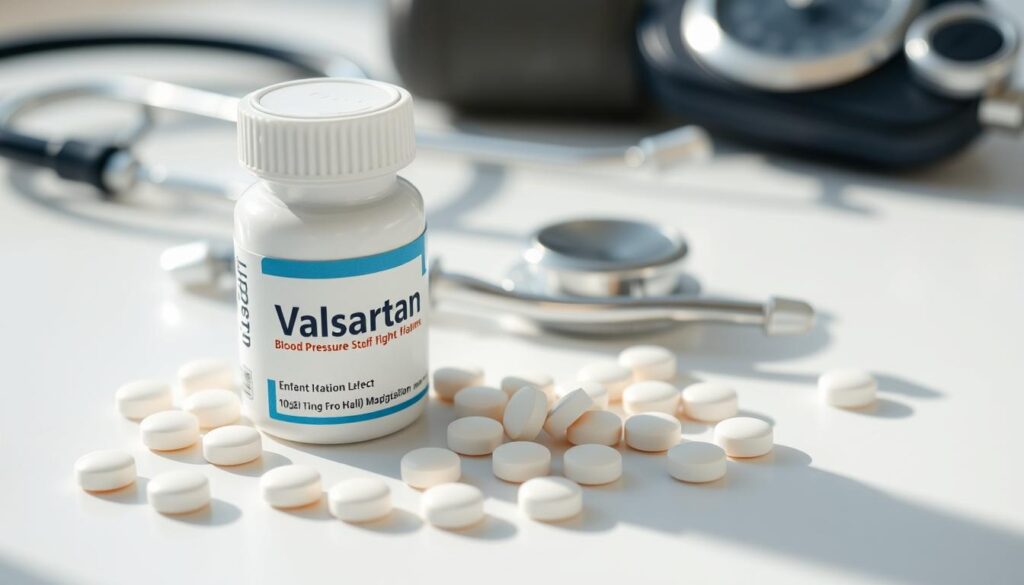
Valsartan is a powerful solution for high blood pressure and heart-related conditions. It offers a targeted approach to improving cardiovascular wellness1.
Known as Diovan, Valsartan is a prescription medication for controlling hypertension. It relaxes blood vessels, reducing pressure and enhancing blood flow1.
Doctors may prescribe Valsartan for high blood pressure, heart failure, or post-heart attack recovery. It comes in various strengths for personalized treatment plans1.
Key Takeaways
- Valsartan is a prescription medication for managing cardiovascular health
- Helps lower blood pressure and improve blood flow
- Available in multiple strengths for personalized treatment
- Can be used to treat high blood pressure, heart failure, and post-heart attack recovery
- Belongs to the angiotensin II receptor blockers (ARBs) drug class
What is Valsartan and How It Works
Valsartan is a powerful medication that supports cardiovascular health. It’s an angiotensin II receptor blocker (ARB) that manages hypertension and heart-related conditions2.
The Science Behind Angiotensin II Receptor Blockers
These medications target specific receptors in blood vessels. Valsartan blocks angiotensin II, helping to relax blood vessels. This improves blood flow and reduces blood pressure3.
The process is crucial for patients with cardiovascular challenges. It offers a targeted approach to managing complex heart-related issues.
Key Benefits for Cardiovascular Health
- Reduces risk of stroke and heart attack2
- Helps manage high blood pressure4
- Improves heart function after cardiac events3
- Supports overall cardiovascular wellness
Conditions Treated with Valsartan
Your doctor might prescribe valsartan for several critical conditions:
- Hypertension management2
- Heart failure treatment3
- Post-heart attack recovery4
- Left ventricular failure support
Valsartan offers a targeted approach to managing complex cardiovascular challenges.
Valsartan is suitable for adults and children aged 1 to 16 years. This makes it a versatile treatment for various cardiovascular health needs2.
Essential Guidelines for Taking Valsartan Safely
Proper Valsartan usage is vital for effective treatment and safety. Your doctor will decide the best dosage for your condition5. Always follow their instructions carefully for optimal health outcomes.
“Always follow your doctor’s instructions carefully when taking Valsartan to ensure optimal health outcomes.”
Valsartan, also called Diovan, treats high blood pressure and heart failure6. It works slowly, taking up to 4 weeks for full effects5.
Key Dosage Considerations
- Typical adult dosage ranges from 80 to 160 mg daily
- Maximum daily dose should not exceed 320 mg
- Pediatric dosage varies based on weight and specific condition6
Valsartan may interact with other medications. These include NSAIDs, diuretics, and potassium supplements6. Be cautious when taking these together.
| Medication Type | Potential Interaction |
|---|---|
| ACE Inhibitors | Increased risk of kidney problems |
| Lithium | Potential lithium toxicity |
| Potassium Supplements | Risk of high potassium levels |
Take Valsartan at the same time daily. Store it at room temperature between 68-77 degrees Fahrenheit6.
Visit your doctor regularly. They’ll monitor your progress and adjust treatment as needed7.
Special Precautions
- Avoid sudden position changes to prevent dizziness7
- Pregnant women should not take Valsartan due to potential fetal harm7
- Consult your doctor before taking any additional medications or supplements7
Follow these guidelines for safe Valsartan use. This will help minimize risks and ensure effective treatment5.
Managing Side Effects and Drug Interactions
Valsartan medication requires careful attention to side effects and drug interactions. Understanding these aspects is crucial for patient safety and effective medication management8.
Valsartan treats various cardiovascular conditions, with dosages from 40 mg to 320 mg8. Patients should be aware of potential reactions and interactions for optimal health outcomes.
Common Side Effects to Watch For
Most patients experience mild side effects when taking Valsartan. These typically include:
Serious Side Effects Requiring Medical Attention
Some Valsartan side effects demand immediate medical intervention, though rare. These include:
Important Drug and Supplement Interactions
| Interaction Type | Potential Interactions |
|---|---|
| Mild Interactions | Simvastatin, Noni juice8 |
| Moderate Interactions | Over 150 different drugs8 |
Patients should consult their healthcare provider about potential drug interactions. It’s crucial to disclose all medications and supplements they are taking8.
Your health is paramount. Always communicate openly with your medical professional about any concerns or unusual symptoms.
Special caution is needed for those with hereditary angioedema, volume depletion, and renal impairment8. These conditions require extra attention when taking Valsartan.
Conclusion
Valsartan plays a vital role in managing hypertension. It supports your heart’s health while allowing you to maintain an active lifestyle. Your medication journey involves understanding how this treatment benefits your cardiovascular wellness10.
Working closely with your healthcare provider is key when taking Valsartan. Regular check-ups help fine-tune your treatment for optimal blood pressure management. The FDA offers valuable guidance on medication safety to help you make smart choices10.
Lifestyle changes boost Valsartan’s effectiveness. A balanced diet and regular exercise can improve your heart health. Managing stress also supports your overall well-being10.
Understanding Valsartan’s role empowers you to take charge of your health. Stay informed and talk openly with your healthcare team. Stick to your treatment plan for the best results10.
FAQ
What is Valsartan used to treat?
Valsartan treats high blood pressure and heart failure. It helps reduce stroke and heart attack risks. The drug also manages left ventricular failure after heart attacks.
In some cases, doctors prescribe it for diabetic nephropathy. Valsartan is a versatile medication for various cardiovascular conditions.
How does Valsartan work in the body?
Valsartan is an angiotensin II receptor blocker (ARB). It blocks substances that tighten blood vessels. This action relaxes blood vessels and lowers blood pressure.
As a result, it improves blood and oxygen supply to the heart. Valsartan’s mechanism helps manage various cardiovascular issues effectively.
What is the typical dosage for Valsartan?
For adults with high blood pressure, the starting dose is 80 or 160 mg once daily. The maximum dose is 320 mg per day. Children’s dosage depends on their body weight.
Always follow your doctor’s prescribed dosage. Don’t stop taking Valsartan without consulting your healthcare provider first.
Can I take Valsartan with other medications?
Valsartan may interact with NSAIDs, potassium supplements, and certain antibiotics. Always tell your doctor about all medications and supplements you’re taking.
This helps avoid potential harmful interactions. Your healthcare provider can adjust your treatment plan if needed.
What are the common side effects of Valsartan?
Common side effects include headache, dizziness, tiredness, and stomach issues. Serious side effects require immediate medical attention.
Watch for swelling of the face, throat, or limbs. Also, look out for breathing difficulties or unexplained weight gain.
Can pregnant women take Valsartan?
Pregnant women should not take Valsartan due to potential fetal harm. If you’re pregnant or planning to be, talk to your doctor.
Your healthcare provider can suggest alternative treatment options. Protecting both mother and baby’s health is crucial.
How should I take Valsartan?
Take Valsartan at the same time each day. You can take it with or without food.
Follow your doctor’s instructions carefully. Keep up with regular blood pressure checks and follow-up appointments.
Are there any dietary considerations while taking Valsartan?
Avoid salt substitutes with potassium without talking to your doctor first. A healthy diet and regular exercise can boost Valsartan’s effects.
These lifestyle choices help manage your cardiovascular health better. Always consult your doctor about dietary changes while on Valsartan.
Source Links
- Valsartan | Side Effects, Dosage, Uses, and More – https://www.healthline.com/health/drugs/valsartan-oral-tablet
- Valsartan (oral route) – https://www.mayoclinic.org/drugs-supplements/valsartan-oral-route/description/drg-20067355
- Valsartan (Diovan): Uses, Side Effects, Interactions, Pictures, Warnings & Dosing – WebMD – https://www.webmd.com/drugs/2/drug-849/valsartan-oral/details
- Valsartan: MedlinePlus Drug Information – https://medlineplus.gov/druginfo/meds/a697015.html
- Valsartan | Veterans Affairs – https://www.veteranshealthlibrary.va.gov/medicationsva/203,a697015
- Valsartan Tablets – https://my.clevelandclinic.org/health/drugs/18635-valsartan-tablets
- Valsartan and hydrochlorothiazide (oral route) – https://www.mayoclinic.org/drugs-supplements/valsartan-and-hydrochlorothiazide-oral-route/description/drg-20062994
- Valsartan: Side Effects, Uses, Dosage, Interactions, Warnings – https://www.rxlist.com/valsartan/generic-drug.htm
- Understanding the Side Effects of Valsartan: A Comprehensive Guide – https://cabinethealth.com/blogs/journal/understanding-the-side-effects-of-valsartan-a-comprehensive-guide?srsltid=AfmBOop9YFZNyUk0NbmPE54LWPmkV1cbgf1BktSGDfaKWEMdAyrVD3zg
- Laboratory analysis of valsartan products – https://www.fda.gov/drugs/drug-safety-and-availability/laboratory-analysis-valsartan-products

