
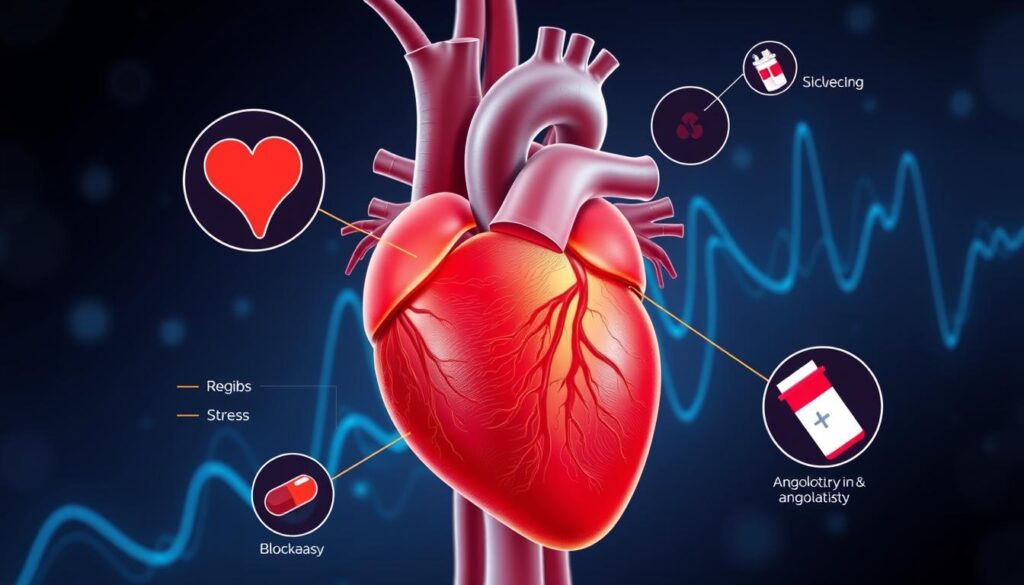
Myocardial ischemia is a serious heart condition that affects cardiovascular health. It happens when blood flow to the heart muscle is restricted. This can lead to heart attacks and coronary artery disease1.
Your heart needs constant oxygen and nutrients to work well. Narrowed or blocked coronary arteries can reduce blood flow. This creates a dangerous situation for your heart muscle1.
Several factors can raise your risk of this condition. These include smoking, diabetes, high blood pressure, and obesity1. These elements can lead to atherosclerosis, which narrows blood vessels1.
Key Takeaways
- Myocardial ischemia occurs when heart muscle receives inadequate blood flow
- Multiple risk factors can contribute to developing this condition
- Early detection and management are critical for heart health
- Lifestyle changes can help prevent and manage heart risks
- Regular medical checkups can identify potential heart issues early
What is Myocardial Ischemia and Its Impact on Heart Health
Myocardial ischemia is a serious heart condition that affects blood flow. It happens when the heart muscle doesn’t get enough blood. This can harm your most important organ2.
Understanding the Heart’s Blood Flow Mechanism
Your heart needs a steady supply of oxygen through coronary arteries. These arteries can become narrow or blocked, usually due to atherosclerosis. This makes it hard for the heart to get enough blood3.
The lack of blood flow can cause several problems:
- Chest pain (angina)
- Potential heart attack
- Irregular heart rhythm
- Potential heart failure
How Reduced Blood Flow Impacts Your Heart
Atherosclerosis limits blood flow to your heart. Plaque builds up in coronary arteries, making them narrow. This makes it tough for oxygen-rich blood to reach heart tissues2.
The Cardiovascular Risk Landscape
| Risk Factor | Impact on Heart Health |
|---|---|
| Tobacco Smoking | Increases myocardial ischemia risk3 |
| Diabetes | Linked to higher heart problem rates3 |
| High Blood Pressure | Accelerates arterial damage3 |
“Understanding your heart’s health is the first step in preventing serious cardiovascular complications.”
Knowing early signs of myocardial ischemia can save your life. Regular exercise helps protect your heart. Maintaining a healthy weight is also important. Managing health conditions is key to heart health3.
Common Signs and Risk Factors of Heart Ischemia
Spotting heart ischemia signs early can save lives. Knowing the risk factors helps prevent this serious heart condition. Regular check-ups are key to keeping your heart healthy.
Angina is a common heart ischemia symptom. You might feel chest pressure or pain. This discomfort can spread to your neck, jaw, shoulders, or arms4.
Some people have silent ischemia with no clear signs. That’s why regular doctor visits are so important.
Key Risk Factors
- Age: Men over 45 and women over 55 have increased heart attack risks5
- Tobacco use and secondhand smoke exposure5
- High blood pressure5
- Elevated cholesterol levels5
- Obesity5
- Diabetes5
ECG and cardiac enzyme tests help find heart ischemia. These tests let doctors check your heart health. They can spot risks before they become serious problems4.
Comprehensive Risk Assessment
| Risk Category | Impact on Heart Health |
|---|---|
| Family History | Increases risk if heart attacks occurred early in family members5 |
| Physical Inactivity | Linked to higher heart attack probability5 |
| Emotional Stress | Can trigger cardiovascular events5 |
In the U.S., someone has a heart attack every 40 seconds. This fact shows why managing heart risks is vital6.
You can boost your heart health with simple changes. Eat better, move more, and handle stress well. These steps can make a big difference6.
“Prevention is always better than cure when it comes to heart health.” – American Heart Association
Treatment Options and Medical Interventions
Your healthcare team will create a plan to manage your heart health. This approach aims to improve blood flow and prevent future problems. The focus is on your overall heart wellness.
Medication Management Strategies
Doctors may prescribe various medications for heart health. Anticlotting agents like aspirin and clopidogrel can stop new blood clots. These drugs help protect your heart.
- Beta-blockers to reduce heart strain
- Statins for cholesterol management
- ACE inhibitors to support heart function
- Nitrates to improve blood flow
Surgical Procedures and Interventions
Severe artery blockages may need medical interventions. Angioplasty and stent placement are options to restore blood flow7. These procedures are minimally invasive and can greatly help your heart.
| Procedure | Purpose | Recovery Time |
|---|---|---|
| Balloon Angioplasty | Open blocked coronary vessels | 1-2 weeks |
| Stent Placement | Keep arteries open | 1-2 weeks |
| Bypass Surgery | Create new blood flow pathways | 6-12 weeks |
Lifestyle Modifications for Better Outcomes
Your treatment goes beyond medical procedures. Lifestyle changes are crucial in managing Coronary Artery Disease7. These changes can make a big difference in your heart health.
- Quit smoking
- Maintain a heart-healthy diet
- Engage in regular exercise
- Manage stress effectively
- Control underlying conditions like diabetes
Your commitment to these changes can significantly improve your heart health and reduce future risks.
Conclusion
Understanding myocardial ischemia is key to managing heart health. Modern medicine offers powerful tools for detection and management. Cardiac imaging technologies help identify potential risks early8.
Stress/rest gated perfusion SPECT provides valuable insights for coronary artery disease patients8. New treatment strategies are changing heart health prevention. Remote ischemic conditioning (RIC) shows promise for cardiac procedure patients9.
RIC may reduce heart attack size through special techniques9. These advanced treatments, along with lifestyle changes, offer hope for preventing myocardial ischemia.
Your role in heart health management is crucial. Regular check-ups and following prescribed treatments are vital. Maintaining a heart-friendly lifestyle is also important.
Work closely with healthcare professionals to stay informed. Take steps to protect your heart and prevent ischemic conditions. Your commitment can make a significant difference in your cardiovascular well-being.
FAQ
What is myocardial ischemia?
Myocardial ischemia happens when your heart muscle doesn’t get enough blood. It’s usually caused by blocked coronary arteries. This can lead to chest pain, heart attacks, and other serious heart problems.
What are the common symptoms of myocardial ischemia?
Common signs include chest pressure or pain, often on the left side. You might feel pain in your neck, jaw, shoulder, or arm. Other symptoms are shortness of breath, nausea, sweating, and tiredness.
Some people have silent ischemia with no clear symptoms. That’s why regular check-ups are so important.
What are the primary risk factors for myocardial ischemia?
Smoking, diabetes, high blood pressure, and high cholesterol increase your risk. Being overweight, not exercising, and having a family history of heart disease also matter. These factors can lead to coronary artery disease and reduced heart blood flow.
How is myocardial ischemia diagnosed?
Doctors use several tests to check for myocardial ischemia. These include ECG, cardiac enzyme tests, and stress tests. They also use imaging studies like angiography.
These tests help doctors see how well blood flows to your heart. They can also find blockages in your coronary arteries.
What treatment options are available for myocardial ischemia?
Treatment aims to improve blood flow and manage symptoms. Doctors may prescribe medicines like antiplatelet agents, statins, and beta-blockers. Nitroglycerin can also help.
Sometimes, surgery is needed. This might include angioplasty and stent placement. In severe cases, you might need coronary artery bypass surgery.
Can lifestyle changes help manage myocardial ischemia?
Yes! Lifestyle changes are key in managing and preventing myocardial ischemia. Quit smoking and learn to manage stress. Eat a healthy diet and exercise regularly.
It’s also important to control diabetes and high blood pressure. Maintaining a healthy weight can make a big difference too.
Is myocardial ischemia preventable?
You can’t eliminate all risk, but you can lower your chances. Adopt a heart-healthy lifestyle. Exercise often, eat well, and manage stress.
Control chronic conditions like diabetes. Avoid smoking and don’t drink too much alcohol. These steps can help protect your heart.
What should I do if I suspect I’m experiencing myocardial ischemia?
If you have chest pain or trouble breathing, get medical help right away. Don’t wait or try to figure it out yourself. Call emergency services or go to the nearest hospital.
Quick action can prevent serious heart damage. It’s always better to be safe than sorry.
Source Links
- Myocardial ischemia-Myocardial ischemia – Symptoms & causes – Mayo Clinic – https://www.mayoclinic.org/diseases-conditions/myocardial-ischemia/symptoms-causes/syc-20375417
- Ischaemic Heart Disease: Symptoms, Causes & Treatment – Victor Chang Cardiac Research Institute – https://www.victorchang.edu.au/heart-disease/ischaemic-heart-disease
- Myocardial ischemia – https://middlesexhealth.org/learning-center/diseases-and-conditions/myocardial-ischemia
- Ischemic Heart Disease | Advocate Health Care – https://www.advocatehealth.com/health-services/advocate-heart-institute/conditions/ischemic-heart-disease
- Heart attack-Heart attack – Symptoms & causes – Mayo Clinic – https://www.mayoclinic.org/diseases-conditions/heart-attack/symptoms-causes/syc-20373106
- About Heart Attack Symptoms, Risk, and Recovery – https://www.cdc.gov/heart-disease/about/heart-attack.html
- Treatment Options – https://www.templehealth.org/services/conditions/heart-attack-myocardial-infarction/treatment-options
- Myocardial Ischemia – Nuclear Medicine and Risk Stratification: Practice Essentials, Determining the Pretest Probability of Myocardial Ischemia, Indications for Gated Myocardial Perfusion Single-Photon Emission CT – https://emedicine.medscape.com/article/352401-overview
- Myocardial ischemia-reperfusion injury: a neglected therapeutic target – https://www.jci.org/articles/view/62874

