
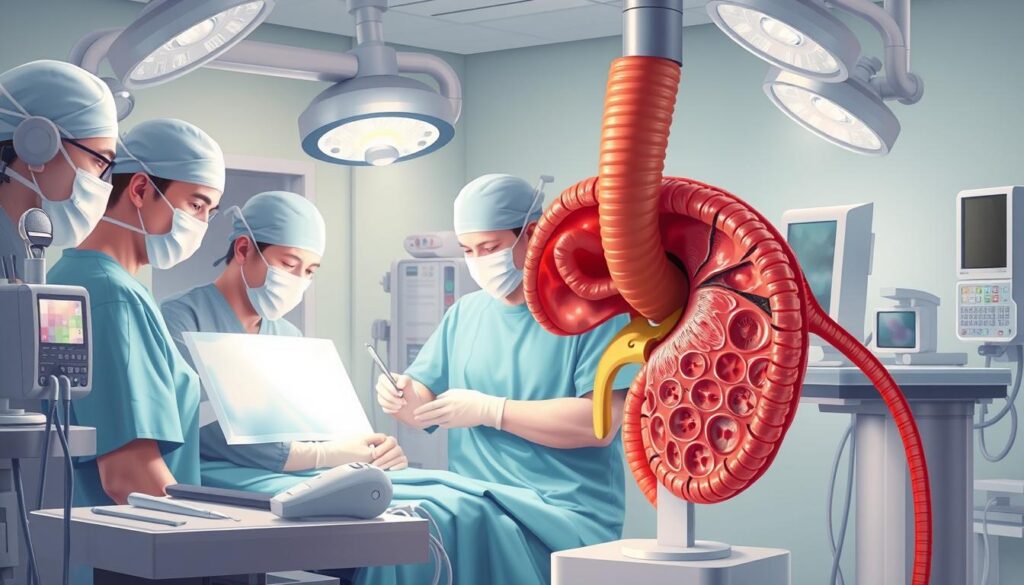
Prostatectomy is a key medical procedure for various prostate-related health issues. It can greatly affect men’s health and well-being1.
This surgery treats conditions like prostate cancer and benign prostatic hyperplasia (BPH). Robot-assisted techniques now offer more precise and potentially less painful options2.
Prostate cancer surgery has come a long way. It now provides advanced treatment options for patients. Men in good health with over 10 years life expectancy are often good candidates1.
Knowing about prostatectomy helps you make smart health choices. This guide covers everything from surgical methods to possible outcomes.
Key Takeaways
- Prostatectomy addresses multiple prostate-related health conditions
- Robot-assisted surgery offers more precise surgical techniques
- Surgical options depend on individual health circumstances
- Modern techniques focus on minimizing potential complications
- Patient health and life expectancy are crucial factors in determining surgical approach
What is Prostatectomy and Its Importance
Prostate health is vital for aging men. The prostate gland affects male reproduction and urination. Prostate removal becomes crucial when health issues arise.
Definition and Purpose of Prostate Surgery
Radical prostatectomy removes the prostate gland when medical conditions require it. This surgery tackles health challenges that impact a man’s life quality3.
Prostate removal is necessary when cancer or serious conditions threaten overall health.
The Prostate Gland’s Role in Male Health
The prostate is small but crucial for male reproduction. Its main functions include:
- Producing seminal fluid
- Supporting reproductive processes
- Assisting in urinary control
Common Reasons for Undergoing Prostatectomy
Men might need prostate removal for several key reasons:
- Prostate cancer, the most common cancer in men over 503
- Severe benign prostatic hyperplasia (BPH) affecting urination3
- Recurrent prostate bleeding
| Procedure Type | Duration | Hospital Stay |
|---|---|---|
| Robotic Prostatectomy | 2-4 hours | 1-2 days |
| Open Prostatectomy | 2-4 hours | 3-4 days |
Understanding your prostate health can be a life-changing decision for long-term wellness.
Recovery from prostate removal varies. Challenges may include urinary incontinence and sexual function issues3.
Talking with healthcare professionals helps navigate this important medical journey. They can provide guidance and support throughout the process.
Types of Prostatectomy Procedures
Prostate surgery offers several approaches to treat various conditions. Learning about these options helps you make a smart choice with your doctor4.
Prostate surgery methods have greatly improved over time. They now give patients many treatment choices. Each year, doctors perform about 90,000 prostatectomies in the United States5.
- Robotic Prostatectomy: The most advanced surgical approach, using robotic systems for precise incisions4. This method offers several advantages:
- Less blood loss during surgery
- Shorter hospital stays
- Faster recovery times
- Laparoscopic Prostatectomy: A minimally invasive technique involving small incisions and specialized instruments5.
- Open Prostatectomy: Traditional surgery with a larger abdominal incision, less commonly used now6.
Each procedure has its own unique features. Radical prostatectomy is often used to treat localized prostate cancer6. Your surgeon will suggest the best method for your health needs.
“Choosing the right surgical approach can significantly impact your recovery and long-term outcomes.” – Urology Experts
| Procedure Type | Key Characteristics | Recovery Considerations |
|---|---|---|
| Robotic Prostatectomy | Precise robotic-assisted surgery | Faster recovery, minimal scarring |
| Laparoscopic Prostatectomy | Minimally invasive technique | Shorter hospital stay |
| Open Prostatectomy | Traditional large incision method | Longer recovery time |
Keep in mind that surgery may cause urinary problems and affect sexual function5. It’s vital to talk about these risks with your doctor.
This discussion will help you make the best choice for your prostate surgery6.
Preparing for Your Prostate Surgery
Careful preparation is key for a successful prostate surgery. Your medical team will guide you through a thorough process. This ensures you’re ready for the procedure.
Pre-Surgery Medical Evaluations
Comprehensive medical evaluations are vital before your prostatectomy. Your healthcare provider will conduct several important tests. These ensure you’re fit for surgery7:
- Blood tests to assess overall health
- Urine analysis
- Radiologic exams
- Electrocardiogram (ECG)
Medication and Health Preparations
Medication management is crucial when preparing for prostate surgery. About 30 days before surgery, you’ll need to stop certain medications. These could interfere with the procedure7.
Your doctor will guide you on:
- Discontinuing blood thinners
- Stopping aspirin and NSAIDs
- Adjusting current medications
Pre-Surgery Lifestyle Adjustments
Your prostatectomy recovery starts before the actual surgery. Doctors recommend the following preparations:
| Preparation Area | Recommended Action |
|---|---|
| Hydration | Drink 8 (8-ounce) cups of water before surgery8 |
| Skin Preparation | Use 4% chlorhexidine gluconate (CHG) solution for skin cleansing8 |
| Exercise | Engage in moderate exercise to aid postoperative healing7 |
Hospital Stay Preparations
Follow these crucial instructions to prepare for your hospital stay:
- Stop eating at midnight the night before surgery8
- Arrange transportation home
- Prepare for potential 1-3 day hospital stay
- Pack comfortable clothing and essential items
“Proper preparation is key to a successful prostate surgery and smooth recovery.”
Have questions about your prostate surgery preparation? Contact your healthcare provider at 212-639-20008. Your care team is ready to support you throughout this journey.
Conclusion
Prostate cancer treatment is a personal journey. It needs careful thought and expert advice. Modern prostatectomy techniques have greatly improved outcomes, offering hope and effective solutions9.
Advanced surgical methods lead to better recovery. They also reduce long-term complications. Robotic prostatectomy has changed prostate cancer treatment10.
This precise method minimizes invasiveness. Studies show 97% of men regain urinary control within two years after surgery9. This proves how effective the procedure is.
Your prostatectomy results depend on several factors. These include cancer stage, overall health, and surgical technique. There may be challenges like side effects.
Medical advances keep improving surgical precision and recovery. Each patient’s experience is unique. Work closely with your healthcare team for the best care.
Understanding your options is crucial. Stay informed and keep a positive outlook. These can greatly impact your treatment journey.
Regular check-ups and active monitoring are important. A thorough treatment plan is key to achieving the best possible outcomes.
FAQ
What exactly is a prostatectomy?
A prostatectomy removes part or all of the prostate gland. It’s mainly used to treat prostate cancer or severe benign prostatic hyperplasia (BPH). The surgery can remove the entire prostate or just a portion, depending on your condition.
How many types of prostatectomy procedures are there?
Several types of prostatectomy procedures exist. These include radical prostatectomy, which removes the entire prostate gland. Robot-assisted and laparoscopic radical prostatectomies use advanced techniques for precision.
Open radical prostatectomy is a traditional surgical method. Simple prostatectomy partially removes the prostate. Nerve-sparing prostatectomy aims to preserve erectile function during surgery.
How should I prepare for a prostatectomy?
Preparation involves comprehensive medical evaluations, including blood tests and imaging studies. Review your current medications with your surgeon. Make lifestyle adjustments like quitting smoking and eating healthily.
Follow specific fasting instructions and potential bowel preparation. Arrange post-surgery care and transportation. Your surgeon will provide detailed guidance for your unique situation.
What are the potential risks of prostate surgery?
Potential risks include urinary incontinence, erectile dysfunction, and surgical complications. Infection and bleeding are also possible. However, modern surgical techniques have improved outcomes and shortened recovery times.
Your surgeon will discuss specific risks based on your health and procedure type. They’ll also explain how to minimize these risks.
How long is the typical hospital stay after a prostatectomy?
Most patients stay in the hospital for 1-3 days after a prostatectomy. The exact duration depends on the surgery type and your overall health. Your surgical team will monitor your progress closely.
They’ll determine when you’re ready to go home based on your recovery. Follow-up care instructions will be provided for a smooth transition.
What is a nerve-sparing prostatectomy?
A nerve-sparing prostatectomy preserves nerves responsible for erectile function during prostate removal. This technique aims to minimize sexual side effects while effectively treating prostate cancer. Not all patients qualify for this procedure.
Eligibility depends on the cancer’s location and stage. Your doctor will assess if you’re a suitable candidate.
How long is the recovery period after prostate surgery?
Recovery time varies based on surgery type and individual health factors. Most patients return to light activities within 2-3 weeks. Full recovery typically takes 6-8 weeks.
Your surgeon will give personalized guidance on activity levels and wound care. They’ll also recommend rehabilitation exercises to support your recovery process.
Will I experience sexual function changes after prostatectomy?
Prostate surgery can impact sexual function. Many men experience temporary or permanent changes in erectile function and fertility. Nerve-sparing techniques and advanced surgical methods have improved outcomes.
It’s crucial to discuss potential sexual side effects with your surgeon beforehand. They can explain possible outcomes and treatment options.
Source Links
- PDF – https://urology.ucsf.edu/sites/urology.ucsf.edu/files/uploaded-files/attachments/radical_prostatectomy_a_patient_guide_1.pdf
- Prostatectomy – Mayo Clinic – https://www.mayoclinic.org/tests-procedures/prostatectomy/about/pac-20385198
- Radical Prostatectomy – https://www.hopkinsmedicine.org/health/treatment-tests-and-therapies/radical-prostatectomy
- Surgery for Prostate Cancer | Prostatectomy – https://www.cancer.org/cancer/types/prostate-cancer/treating/surgery.html
- Prostatectomy: Surgery & Support | Aurora Health Care – https://www.aurorahealthcare.org/services/cancer/prostate-cancer/prostatectomy
- Understanding Prostate Surgery: Prostatectomy, TURP, HoLEP, and Beyond – http://urologyspecialist.com.au/types-prostate-surgery-prostatectomy-turp-holep/
- Before Robotic Prostate Surgery | Mount Sinai – https://www.mountsinai.org/care/urology/services/robotic-surgery/da-vinci/before-surgery
- About Your Prostate Surgery Checklist – https://www.mskcc.org/cancer-care/patient-education/about-your-prostate-surgery-checklist
- New Findings Suggest Men with Prostate Cancer are Living Longer & Maintaining Quality of Life – https://nyulangone.org/news/new-findings-suggest-men-prostate-cancer-are-living-longer-maintaining-quality-life
- Laparoscopic and Robotic Radical Prostatectomy: Practice Essentials, Preparation, Technique – https://emedicine.medscape.com/article/458677-overview

