
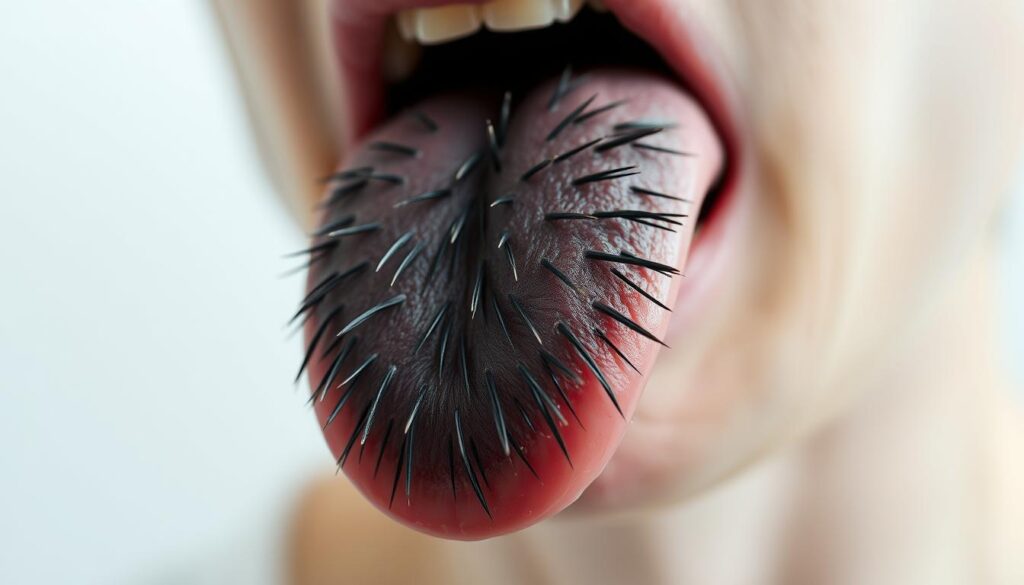
Ever noticed a dark, furry look on your tongue? This could be black hairy tongue. It’s an oral health condition that’s usually harmless. Dead skin cells build up on your tongue’s tiny bumps, causing discoloration12.
The condition can appear in various colors. These include black, brown, green, yellow, or white. Different staining factors cause these colors2.
Black hairy tongue is typically temporary. It can be fixed with good oral care13. Knowing the causes and symptoms helps manage it effectively.
Risk factors include poor oral hygiene and tobacco use. Certain medications and lifestyle habits can also affect your tongue’s appearance23.
Key Takeaways
- Black hairy tongue is a temporary oral health condition
- Multiple colors can indicate tongue discoloration
- Proper oral hygiene is key to prevention
- Most cases are harmless and treatable
- Lifestyle modifications can help resolve the condition
Understanding Black Hairy Tongue and Its Symptoms
Black hairy tongue is an uncommon oral condition with a startling appearance. It transforms your tongue’s surface, creating a hairy look. This unusual change is typically harmless4.
About 13 percent of people experience this condition once in their lifetime4. It involves keratin buildup, causing tongue papillae to elongate. This creates a furry texture on the tongue.
Visual Signs and Symptoms
The tongue discoloration can manifest in various hues, including:
- Black or brown
- Yellow
- Green
- Gray
- Pink
Typical symptoms associated with black hairy tongue include:
- Altered taste sensation
- Bad breath
- Burning sensation
- Occasional gagging feeling
Common Risk Factors
Several factors can increase your risk of developing this condition. Medications, poor oral hygiene, and lifestyle choices play key roles5.
| Risk Category | Contributing Factors |
|---|---|
| Lifestyle | Tobacco use, excessive coffee/tea consumption |
| Medical | Antibiotics, dry mouth, compromised immune system |
| Hygiene | Inadequate oral cleaning, soft diet |
Remember, black hairy tongue looks scary but is usually temporary. Proper oral care can effectively manage this condition6.
Common Causes and Risk Factors of Black Hairy Tongue
Black hairy tongue is an intriguing oral condition that affects mouth health. It occurs when tongue papillae grow longer, trapping bacteria and food particles7. Globally, its prevalence ranges from 0.6% to 11.3%7.
Key risk factors for black hairy tongue include:
Men are three times more likely to develop this condition than women7. The risk increases with age, affecting up to 40% of patients over 607.
Lifestyle factors that can trigger black hairy tongue include:
Your oral health is a window to your overall wellness.
The condition can appear in various colors, including black, brown, yellow, green, or blue7. Despite its alarming look, black hairy tongue is usually harmless.
Proper oral care can effectively manage this condition8.
| Risk Factor | Impact Level |
|---|---|
| Poor Oral Hygiene | High |
| Smoking | Very High |
| Antibiotic Use | Moderate |
| Dry Mouth | Moderate to High |
Prevention is always better than cure when it comes to your oral health.
Effective Treatment Methods and Prevention Strategies
Black hairy tongue needs a thorough approach to oral care. The right treatment can help manage and prevent this condition effectively. Let’s explore some strategies to keep your mouth healthy.
Daily Oral Care Routine
A strong oral hygiene routine is key for managing black hairy tongue. Tongue brushing should be part of your daily dental care9.
Here are important steps to follow:
- Gently brush your tongue with a soft-bristled toothbrush
- Use fluoride toothpaste to clean your entire mouth
- Floss daily to remove trapped food particles
- Rinse with an alcohol-free mouthwash
Lifestyle Modifications
Your daily habits affect black hairy tongue prevention. Here are key changes to make:
- Quit smoking and tobacco use10
- Reduce coffee and tea consumption9
- Stay adequately hydrated
- Maintain a balanced diet rich in fresh fruits and vegetables
Professional Care Options
If symptoms persist, seek professional help. Dental experts can offer targeted treatments for your condition.
| Treatment Option | Description |
|---|---|
| Dental Cleaning | Remove stubborn debris and stains10 |
| Antifungal Medication | Address potential yeast infections |
| Advanced Procedures | Surgical intervention if other methods fail10 |
Remember, consistent oral hygiene is your best defense against black hairy tongue.
Black hairy tongue rarely causes emergencies. However, lasting symptoms need professional advice10. Regular dental check-ups help maintain good oral health and prevent issues.
Conclusion
Black hairy tongue is a unique oral health condition. It may seem alarming but is largely treatable. Understanding risk factors and proper treatment can reduce the likelihood of experiencing this uncomfortable condition1112.
Your oral hygiene routine is crucial in preventing black hairy tongue. Regular brushing and tongue cleaning can help mitigate risks. Pay special attention to your oral health condition treatment by addressing medication use, smoking, and dietary habits12.
Consult a healthcare professional if persistent symptoms arise. Most cases resolve with simple interventions. Some may require targeted treatment strategies13.
Prevention is more effective than cure. Stay informed and proactive about your oral health. This approach can help you manage and avoid potential complications.
Smart lifestyle choices and diligent oral care practices are key. They can reduce your risk of black hairy tongue. These habits ensure long-term oral wellness.
FAQ
What exactly is Black Hairy Tongue?
Black Hairy Tongue is a temporary oral condition. It makes your tongue look dark and furry. This happens when dead skin cells and bacteria build up on your tongue’s surface.
The tiny bumps on your tongue, called papillae, grow longer. This traps stuff and makes your tongue look hairy. It might seem scary, but it’s usually harmless and easy to treat.
What are the common symptoms of Black Hairy Tongue?
Your tongue may change color, ranging from black to white. It might feel hairy or furry. You could notice a metallic taste or bad breath.
Sometimes, your tongue might burn or tickle. These changes can be worrying, but they’re usually not serious.
What causes Black Hairy Tongue?
Many things can lead to Black Hairy Tongue. Poor oral hygiene, smoking, and drinking too much coffee or tea are common causes.
Alcohol abuse, dry mouth, and certain medications can also play a role. Sometimes, a weak immune system can make it more likely to happen.
How can I treat Black Hairy Tongue at home?
The main treatment is better oral care. Gently brush or scrape your tongue daily. Brush your teeth with fluoride toothpaste and floss regularly.
Try to quit smoking and drink less caffeine. Stay hydrated and eat a balanced diet. These steps can help resolve the condition.
When should I see a healthcare professional?
See a dentist if the problem lasts more than a few weeks. Seek help if it causes discomfort or doesn’t improve with better oral care.
A healthcare provider can check for underlying issues. They might prescribe special treatments, like antifungal meds for yeast infections.
Is Black Hairy Tongue contagious?
No, Black Hairy Tongue isn’t catching. It’s not caused by a virus or bacteria you can pass on.
Instead, it’s due to personal health and environmental factors. Good oral hygiene is key to preventing it.
Can Black Hairy Tongue be prevented?
Yes, you can prevent Black Hairy Tongue. Keep your mouth clean and stay hydrated. Eat lots of fruits and veggies.
Avoid tobacco and limit caffeine and alcohol. Use a soft toothbrush to clean your tongue regularly. These habits will help keep your tongue healthy.
Source Links
- Black hairy tongue – Diagnosis and treatment – https://www.mayoclinic.org/diseases-conditions/black-hairy-tongue/diagnosis-treatment/drc-20356080
- Black hairy tongue – Symptoms and causes – https://www.mayoclinic.org/diseases-conditions/black-hairy-tongue/symptoms-causes/syc-20356077
- Black Hairy Tongue: Causes & Treatment – https://www.buzzrx.com/blog/black-hairy-tongue
- Hairy Tongue: Why It Happens and How to Treat It – https://www.healthline.com/health/dental-and-oral-health/hairy-tongue
- Black Hairy Tongue Causes, Symptoms, and Treatments – https://oralb.com/en-us/oral-health/conditions/bad-breath/black-hairy-tongue-causes-symptoms-treatments/
- Black Hairy Tongue: Causes, Symptoms & Treatment – https://www.medicoverhospitals.in/diseases/black-hairy-tongue/
- Black hairy tongue syndrome – PMC – https://pmc.ncbi.nlm.nih.gov/articles/PMC4138463/
- Hairy Tongue – https://www.aaom.com/hairy-tongue
- Black Hairy Tongue | Verified Learning – https://www.verifiedlearning.com/black-hairy-tongue
- Why Is My Tongue Black? | Centrum Dental Centre – https://centrumdental.ca/blog/why-is-my-tongue-black/
- A Case Report of Black Hairy Tongue (Melanotrichia Linguae or Lingua Pilosa Nigra) – https://pmc.ncbi.nlm.nih.gov/articles/PMC11186574/
- PDF – https://revistagastrocol.com/index.php/rcg/article/download/623/1330/8689
- Linezolid-induced black hairy tongue: a case report – Journal of Medical Case Reports – https://jmedicalcasereports.biomedcentral.com/articles/10.1186/1752-1947-7-46

