
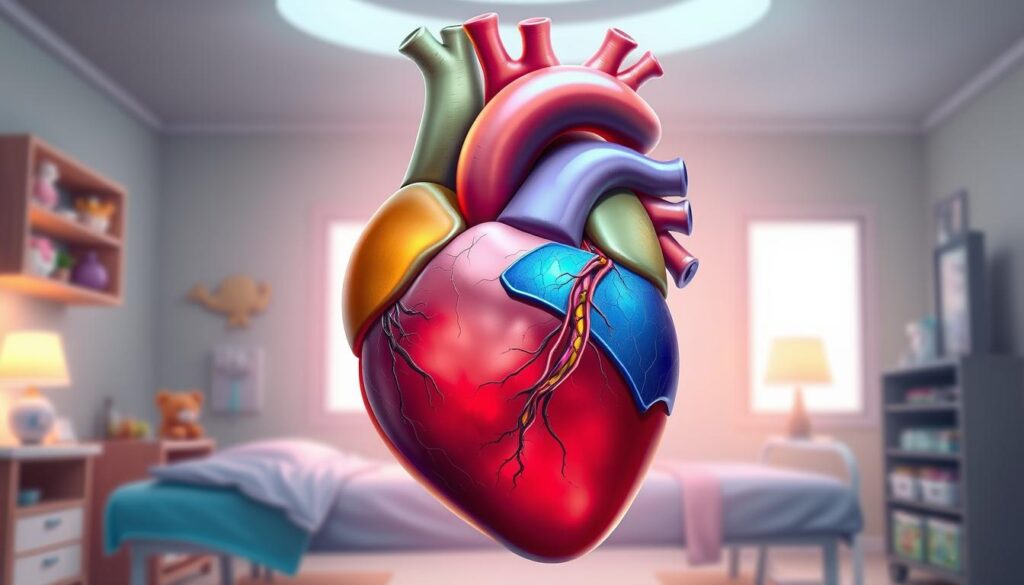
Hypoplastic left heart syndrome (HLHS) is a rare heart defect that affects newborns. It occurs when the left side of a baby’s heart doesn’t grow properly. In the U.S., about 1 in 3,955 babies are born with this serious condition12.
HLHS is a complex single ventricle defect. The heart’s left pumping chamber can’t work well. Babies with HLHS need special medical care right away1.
The exact cause of HLHS isn’t known. But genetic changes might play a big part. The syndrome starts to develop while the baby is still in the womb1.
Key Takeaways
- HLHS is a rare congenital heart defect affecting heart development
- Approximately 929 babies are born with HLHS annually in the US
- The condition requires immediate medical attention after birth
- Genetic factors may contribute to HLHS development
- Early diagnosis and treatment are crucial for patient outcomes
What is Hypoplastic Left Heart Syndrome
Hypoplastic Left Heart Syndrome (HLHS) is a complex heart defect. It affects the left side of a baby’s heart. This rare condition causes big problems for newborns3.
HLHS impacts how the heart works. It changes the way blood flows through the body. Let’s explore what makes this condition unique.
Anatomy of an HLHS Heart
An HLHS heart has several underdeveloped parts. These parts don’t work as they should. Here are the main features:
- Extremely small or absent left ventricle3
- Underdeveloped or blocked aorta3
- Compromised mitral and aortic valves
- Potential atrial septal defect
Common Characteristics and Features
HLHS is a single ventricle defect. Only one heart chamber can pump blood effectively3. Babies with HLHS need special surgery to survive4.
After initial surgeries, 75 percent or more of newborns with HLHS survive4. This shows how important early treatment is.
Role of the Left Ventricle in Normal Heart Function
A healthy left ventricle pumps oxygen-rich blood to the body. In HLHS, this function doesn’t work well. The right ventricle must do extra work3.
It pumps blood to both the lungs and body. This puts extra strain on the heart.
| Characteristic | HLHS Heart | Normal Heart |
|---|---|---|
| Left Ventricle Function | Severely compromised | Fully functional |
| Blood Pumping Capacity | Single ventricle dependent | Two-ventricle system |
| Surgical Intervention | Required for survival | Typically not needed |
Early prenatal diagnosis through ultrasound and fetal echocardiogram can help medical teams prepare for the complex management of HLHS4.
Early Signs and Detection of HLHS
Early detection of hypoplastic left heart syndrome (HLHS) is vital for successful treatment. Prenatal diagnosis helps identify this complex heart condition before birth5. The heart may not develop correctly during the first eight weeks of pregnancy5.
- Prenatal ultrasound screening
- Fetal echocardiogram
- Newborn pulse oximetry screening
Babies with HLHS show distinct symptoms soon after birth. These early warning signs include:
- Cyanosis (blue or gray skin color)
- Rapid and difficult breathing
- Poor feeding
- Cold hands and feet
- Weak pulse
“Early detection is the key to managing hypoplastic left heart syndrome effectively” – Pediatric Cardiology Experts
Doctors can spot potential heart issues during high-risk pregnancies using advanced imaging. If HLHS is suspected, a thorough evaluation helps prepare for possible neonatal surgery5.
After birth, special tests confirm the condition. These include echocardiograms, chest X-rays, and electrocardiograms5.
| Diagnostic Method | Timing | Purpose |
|---|---|---|
| Prenatal Ultrasound | During Pregnancy | Initial Heart Structure Assessment |
| Fetal Echocardiogram | Second/Third Trimester | Detailed Heart Evaluation |
| Newborn Screening | First Days of Life | Confirm Cardiac Anomalies |
Swift detection allows for quick intervention, potentially improving outcomes for children with HLHS5. Your healthcare team will guide you through diagnosis and help create a suitable treatment plan.
Treatment Options for Hypoplastic Left Heart Syndrome
Hypoplastic Left Heart Syndrome (HLHS) requires complex medical care. Your child’s treatment involves staged surgeries to support heart function. These procedures aim to improve long-term outcomes through staged surgical procedures.
Staged Surgical Procedures
The Norwood procedure is the first critical step for HLHS patients. It’s usually done within the first week of life6. This surgery changes the heart’s blood flow.
It ensures the right ventricle can pump blood throughout the body7. This is crucial for the baby’s survival.
- First Stage: Norwood Procedure (first week of life)
- Second Stage: Glenn Procedure (4-6 months old)
- Third Stage: Fontan Procedure (2-5 years old)
Medical Management Options
Palliative treatment is key in managing HLHS. Doctors prescribe medications to boost heart strength and control blood pressure7. These drugs also help manage fluid buildup.
Some babies need special nutrition plans. This might include high-calorie formulas or feeding tubes8.
Heart Transplantation Considerations
Sometimes, surgeries may not be enough. In these complex cases, heart transplantation becomes a vital option7. The survival rate for children with staged palliation is about 70%7.
This offers hope to families facing this tough diagnosis. Long-term care is essential for HLHS patients.
Long-term cardiac care remains essential for individuals with HLHS, requiring ongoing monitoring and potential additional interventions.
| Treatment Stage | Age | Primary Goal |
|---|---|---|
| Norwood Procedure | First week of life | Reconstruct blood flow |
| Glenn Procedure | 4-6 months | Improve oxygen circulation |
| Fontan Procedure | 2-5 years | Complete heart reconfiguration |
Conclusion
Hypoplastic Left Heart Syndrome (HLHS) presents unique challenges. However, incredible progress in pediatric cardiology offers hope9. Modern medicine has transformed HLHS from a high-risk condition into a manageable diagnosis10.
The three-stage surgical approach has revolutionized HLHS treatment. Surgeons work to help the right ventricle support blood circulation10. Many children with HLHS now have brighter futures, thanks to ongoing medical research and innovative treatments9.
Your child’s care will require lifelong medical attention. The prognosis continues to improve. Parents play a crucial role in this journey9.
Learn about HLHS and maintain detailed medical records. Seek support from organizations like the American Heart Association. Remember, you’re not alone in this experience.
The future of congenital heart defect treatment is promising. Research in pediatric cardiology explores genetic factors and develops advanced surgical techniques. Your understanding of HLHS will support your child’s health and potential9.
FAQ
What is Hypoplastic Left Heart Syndrome (HLHS)?
HLHS is a rare heart defect where the left side is underdeveloped. It affects 1 in 3,955 U.S. babies yearly. The condition requires immediate medical care after birth.
In HLHS, parts of the heart are too small or don’t work. The right ventricle must pump blood to both lungs and body.
How is HLHS diagnosed?
Doctors can spot HLHS before birth using ultrasound and fetal echocardiogram. After birth, they look for blue skin, fast breathing, and poor feeding.
A test called pulse oximetry checks blood oxygen levels in newborns. Finding HLHS early is key for quick treatment.
What are the treatment options for HLHS?
HLHS treatment usually involves three surgeries. The Norwood procedure happens in the first two weeks of life.
The Glenn shunt procedure follows at 4-6 months. Lastly, the Fontan procedure occurs between 18 months and 3 years.
These surgeries change how blood flows through the heart. In some cases, a heart transplant may be needed.
What are the early signs of HLHS in newborns?
Early signs of HLHS include blue skin, fast breathing, and poor feeding. Babies may have cold hands, weak pulse, and unusual sleepiness.
These signs often show up in the first few days of life. They appear as natural heart openings start to close.
Can children with HLHS live a normal life?
New treatments have improved life for kids with HLHS. Many can grow up with good medical care.
They’ll need lifelong heart check-ups. Some limits on physical activities may be necessary.
How does HLHS affect heart function?
In HLHS, the left side can’t pump blood well. The right side must work harder to pump blood everywhere.
This extra work puts stress on the heart. Surgery is needed to fix how blood flows.
What medical management is involved in HLHS treatment?
HLHS treatment includes medicine to help the heart. Doctors use drugs to lower blood pressure and manage fluid buildup.
Some babies need special formula or feeding tubes. Regular visits to a heart doctor are crucial.
Source Links
- Hypoplastic left heart syndrome – Symptoms and causes – https://www.mayoclinic.org/diseases-conditions/hypoplastic-left-heart-syndrome/symptoms-causes/syc-20350599
- About Hypoplastic Left Heart Syndrome – https://www.cdc.gov/heart-defects/about/hypoplastic-left-heart-syndrome.html
- Hypoplastic Left Heart Syndrome (HLHS) – https://www.chop.edu/conditions-diseases/hypoplastic-left-heart-syndrome-hlhs
- Hypoplastic Left Heart Syndrome | Symptoms, Diagnosis & Treatment – https://www.cincinnatichildrens.org/health/h/hlhs
- Hypoplastic Left Heart Syndrome (HLHS) in Children – https://www.stanfordchildrens.org/en/topic/default?id=hypoplastic-left-heart-syndrome-hlhs-in-children-90-P01798
- Our Approach to Treatment: Hypoplastic Left Heart Syndrome – https://www.hopkinsmedicine.org/all-childrens-hospital/services/heart-institute/heart-conditions-we-treat/hypoplastic-left-heart-syndrome-diagnosis-and-treatment
- Hypoplastic Left Heart Syndrome – https://www.ucsfbenioffchildrens.org/conditions/hypoplastic-left-heart-syndrome-hlhs
- Hypoplastic Left Heart Syndrome (HLHS): Overview and Hybrid Treatment – https://www.nationwidechildrens.org/conditions/hypoplastic-left-heart-syndrome
- Hypoplastic Left Heart Syndrome (HLHS) (for Parents) – https://kidshealth.org/en/parents/hypoplastic-heart.html
- Hypoplastic Left Heart Syndrome (HLHS) – https://www.luriechildrens.org/en/specialties-conditions/hypoplastic-left-heart-syndrome/

