
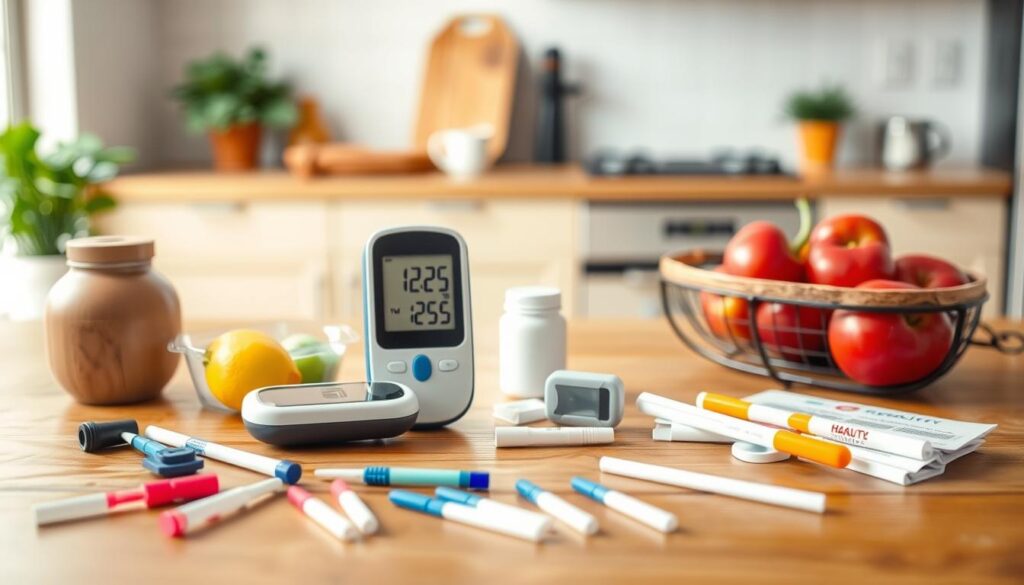
Effective diabetes management begins with understanding your diabetic supplies. Blood glucose meters are key tools for tracking sugar levels. Finding the right device means considering your lifestyle and medical needs, not just the price1.
Today’s glucose meters offer more than basic monitoring. Some can share readings with doctors through smartphone apps1. Others have large buttons, lit screens, and audio help1.
Test strips make up most of the long-term costs in blood sugar monitoring1. Your insurance may limit which meter models or strip quantities you can get1.
Key Takeaways
- Blood glucose meters are crucial for effective diabetes management
- Look for devices with user-friendly features and connectivity options
- Consider long-term costs, not just initial meter price
- Check your insurance coverage for potential limitations
- Choose a meter that matches your specific health monitoring needs
Understanding Blood Glucose Meters: Essential Features and Benefits
Managing diabetes requires precise self-monitoring of blood glucose levels. Glucose monitoring devices help people maintain optimal glycemic control. These tools assist in making informed decisions about diabetes care2.
What is a Blood Glucose Meter?
A blood glucose meter is a small, portable device. It tracks blood sugar levels quickly and accurately. These tools help people with diabetes understand how different factors impact their glucose readings3.
Key Benefits of Regular Blood Sugar Monitoring
- Helps identify blood sugar trends and patterns3
- Enables personalized diabetes management
- Tracks the impact of diet, exercise, and medications
Regular monitoring helps maintain blood sugar levels within recommended ranges. For adults with diabetes, target ranges are important.
Types of Glucose Monitoring Devices
Different glucose monitoring devices cater to various needs:
- Traditional Blood Glucose Meters (BGM): Use test strips for manual checking
- Continuous Glucose Monitors (CGM): Provide real-time tracking day and night3
- Flash Glucose Monitors: Offer quick and convenient scanning
Understanding your monitoring options is key to effective diabetes management.
Choosing the right device can improve your diabetes care. It helps maintain better overall health2.
Blood Glucose Meter Selection Criteria
Picking the right blood glucose meter is key for managing diabetes well. Your choice affects your daily monitoring and health tracking4. Let’s explore the main factors to consider for your ideal device.
Look for glucose meters that meet FDA standards. These devices should have 95% of results within +/- 15% of comparator results5. A reliable meter gives you good data for your diabetes care plan.
- Blood sample size matters for comfortable testing
- Connectivity options enhance data management
- Data capabilities help track your health trends
Meters come in different types with unique features. Invasive meters are most accurate, using blood samples from a lancing device6.
Continuous glucose monitoring (CGM) systems offer ongoing measurements without frequent finger pricks. These are great for those wanting advanced options.
| Meter Type | Key Features | Best For |
|---|---|---|
| Invasive Meter | Most accurate blood sampling | Precise daily monitoring |
| Non-Invasive Meter | Quick scanning results | Convenient testing |
| Continuous Glucose Monitor | Real-time tracking | Comprehensive management |
Your blood glucose meter is more than a device—it’s a tool for understanding and managing your health4.
Think about extras like wireless connectivity, speaking modes, and cloud uploads6. These features make tracking easier and help share health info with your doctors5.
The best glucose meter fits your lifestyle. It should give accurate, easy-to-use, and helpful health insights.
Conclusion
Choosing the right blood glucose meter is vital for managing diabetes effectively. Your choice impacts your ability to monitor and control blood sugar levels. Research shows modern glucose meters are crucial in diabetes care7.
These devices now provide rapid results, often in just 5 seconds7. When selecting a meter, consider accuracy, ease of use, and special features. Some require specific calibration codes, while others offer advanced tracking capabilities7.
Your healthcare provider can help you choose a meter that fits your needs. Different devices may require varying blood sample volumes, from 0.3 to 1 μl7. Stay informed about new technology in blood glucose monitoring.
Understanding your device’s capabilities and limits is key to maintaining accurate health records. Regular testing and proper maintenance will help you manage diabetes better. Selecting the right glucose meter is a step towards improved diabetes management.
FAQ
How often should I check my blood glucose levels?
Blood glucose monitoring frequency varies based on your diabetes type and treatment plan. Type 1 diabetics might check 4-10 times daily. Those with type 2 may check 1-3 times a day. Ask your doctor for personalized advice on monitoring frequency.
Are blood glucose meters covered by insurance?
Many health plans cover blood glucose meters and test strips. This includes Medicare and Medicaid. Coverage differs, so check with your insurance provider. Ask about in-network devices and potential out-of-pocket costs.
How accurate are blood glucose meters?
FDA-approved meters must provide readings within 15% of lab tests. Modern meters offer 95-99% accuracy when used correctly. Regular upkeep and proper storage help maintain accuracy.
What’s the difference between blood glucose meters and continuous glucose monitors?
Blood glucose meters need a finger-prick sample for immediate readings. Continuous glucose monitors (CGMs) use a skin sensor to track levels constantly. CGMs offer real-time data and alert you to quick blood sugar changes.
How do I store my blood glucose meter and test strips?
Keep your meter and strips in a cool, dry place away from sunlight. Avoid humidity and temperature changes that can affect accuracy. Always follow the manufacturer’s storage guidelines for your device.
Can I use the same test strips for different blood glucose meters?
No, test strips are designed for specific meter brands and models. Using incompatible strips can lead to inaccurate readings. This could potentially harm your diabetes management.
How do I clean my blood glucose meter?
Use a soft, slightly damp cloth to clean your meter. Avoid liquid cleaners or harsh chemicals. Follow the manufacturer’s cleaning instructions carefully. Never submerge the meter in water.
Ensure your hands are clean before testing to maintain accuracy.
What should I do if my meter gives inconsistent readings?
For inconsistent readings, first check your testing procedure. Make sure your test strips aren’t expired or damaged. Recalibrate your meter or contact the manufacturer if problems continue.
When in doubt, cross-check with your healthcare provider for guidance.
Source Links
- Blood glucose meter: How to choose – https://www.mayoclinic.org/diseases-conditions/diabetes/in-depth/blood-glucose-meter/art-20046335
- Blood Glucose Monitoring: How It Works – https://www.healthline.com/health/blood-glucose-monitoring
- No title found – https://www.urmc.rochester.edu/encyclopedia/content?contenttypeid=85&contentid=P00339
- Diabetes Tests | ADA – https://diabetes.org/living-with-diabetes/treatment-care/checking-your-blood-sugar
- Glucose Monitoring l Meter Selection l danatech – https://www.adces.org/education/danatech/glucose-monitoring/glucose-meters-(bgm)-monitoring/bgm-in-professional-practice/bgm-selection-monitoring
- Choosing the Right Blood Glucose Meter – Buying Guides MedicalExpo – https://guide.medicalexpo.com/choosing-the-right-blood-glucose-meter/
- Glucose meter – https://en.wikipedia.org/wiki/Glucose_meter

