
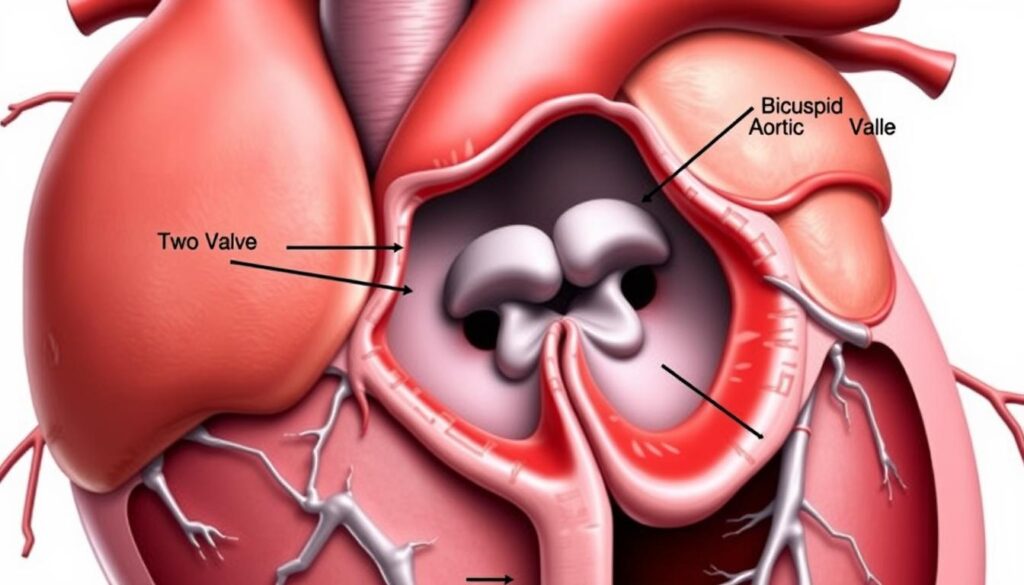
Your heart is an incredible organ. A Bicuspid Aortic Valve is a heart defect you’re born with. It affects how your heart works and can impact your health1.
Most people have aortic valves with three cusps. But with this condition, your valve has only two1. It’s more common in males and is a frequent birth-related heart defect2.
Many people with a Bicuspid Aortic Valve don’t have symptoms until adulthood. That’s why regular check-ups are so important12. Knowing about your heart’s structure can help you manage health risks.
Early awareness is key to keeping your heart healthy. Seek medical advice to stay on top of your heart health.
Key Takeaways
- Bicuspid Aortic Valve is a congenital heart condition affecting valve structure
- Symptoms often remain hidden until adulthood
- More common in males
- Regular medical monitoring is essential
- Professional medical advice can help manage potential complications
Understanding Bicuspid Aortic Valve: A Congenital Heart Defect
Bicuspid aortic valve is a unique heart condition affecting heart function. This congenital defect occurs when the aortic valve has two cusps instead of three. It can lead to potential complications in heart health3.
What Makes a Bicuspid Aortic Valve Different
This condition has a structural difference from a normal heart valve. Bicuspid aortic valves have only two leaflets instead of three. This can impact blood flow and potentially cause heart murmur4.
It affects about 1% to 2% of the population. The condition is twice as common in males3.
Common Symptoms and Warning Signs
- Chest pain
- Shortness of breath
- Difficulty exercising
- Potential fainting episodes
Many people with bicuspid aortic valve might not experience symptoms until adulthood. A heart murmur can often be detected during a routine physical exam4.
Risk Factors and Genetic Considerations
Bicuspid aortic valve often has a genetic component. It frequently runs in families. The condition can be linked to potential complications such as:
- Aortic stenosis
- Aortic regurgitation
- Potential aortic aneurysm
- Risk of endocarditis
Echocardiograms are crucial for identifying this condition early4. High cholesterol, high blood pressure, and smoking can worsen potential heart complications3.
“Early detection and regular monitoring are key to managing bicuspid aortic valve effectively.”
People with this condition need careful medical supervision. This helps prevent potential life-threatening situations. It also maintains optimal heart health3.
Diagnosis and Treatment Options for Heart Valve Disease
Detecting a bicuspid aortic valve needs precise diagnostic techniques. An echocardiogram is the main tool for finding heart valve issues. It creates detailed images of your heart’s structure and function5.
Your doctor might suggest multiple tests for a full evaluation. These tests ensure that nothing is missed in your diagnosis.
- Echocardiogram
- Electrocardiogram (ECG)
- Chest X-ray
- Cardiac MRI
- Exercise stress tests
Your treatment options depend on how severe your condition is5. Mild cases may need medication and lifestyle changes. More advanced stages could require cardiac surgery or valve replacement6.
| Treatment Stage | Recommended Approach |
|---|---|
| Mild Condition | Medication, Lifestyle Changes |
| Moderate Condition | Close Monitoring, Potential Interventions |
| Severe Condition | Valve Replacement Surgery |
Valve replacement techniques have made big strides. You can pick between mechanical valves and biological valves from animal tissue5. Each type has its own benefits.
Your surgeon will help you choose the best option for your specific case. They’ll consider your health needs and preferences.
“Early detection and personalized treatment are key to managing heart valve disease effectively.”
Recovery from valve replacement surgery usually takes 1-3 months. Following your doctor’s advice is crucial for long-term success6. Maintaining a heart-healthy lifestyle and regular check-ups are also important.
Conclusion
Managing a bicuspid aortic valve needs dedicated cardiac care and proactive lifestyle changes. This heart condition can be tough, but understanding it helps. Working with medical experts can lead to a fulfilling life7.
About 1%-2% of people have this congenital cardiac abnormality. You’re not alone in this journey7. Regular check-ups with a cardiologist are crucial.
People with this condition have a higher risk of aortic dissection. Monitoring is vital7. Advanced medical research is improving treatment options and understanding.
Treatment plans differ for each person. About 80% of people with this disease need surgery8. Biological valves are used in most surgeries8.
Your healthcare team will create a plan just for you. They’ll ensure the most effective heart health strategy. With proper guidance, you can manage this condition well.
Stay informed and talk openly with your doctors. Focus on maintaining a heart-healthy lifestyle. These steps will help you effectively manage your cardiac health.
FAQ
What is a bicuspid aortic valve?
A bicuspid aortic valve is a heart defect present at birth. It has two flaps instead of three. This condition affects blood flow between the left heart chamber and the aorta.
How common is bicuspid aortic valve?
It’s a common heart defect, affecting 1-2% of people. Males are more likely to have it. The condition often runs in families.
What symptoms should I watch for?
Most people don’t show symptoms until adulthood. Warning signs include chest pain and shortness of breath. Difficulty exercising, fainting, and a heart murmur are also possible symptoms.
How is bicuspid aortic valve diagnosed?
Doctors usually use an echocardiogram to diagnose this condition. It creates heart images using sound waves. Other tests may include an electrocardiogram and chest X-ray.
What are the potential complications?
Complications can include aortic stenosis and regurgitation. Heart failure, aortic aneurysm, and endocarditis are also possible. High cholesterol, blood pressure, and smoking can make these risks worse.
What treatment options are available?
Treatment ranges from regular check-ups to surgery. Options include medication and valve repair or replacement. Doctors can use open-heart surgery or less invasive techniques.
Can I live a normal life with a bicuspid aortic valve?
Yes, many people lead active lives with proper care. Regular check-ups with a cardiologist are important. Eating well, exercising as approved, and avoiding smoking also help.
Is bicuspid aortic valve hereditary?
Yes, this condition often runs in families. If your relatives have it, you may be at higher risk.
How often should I get checked if I have a bicuspid aortic valve?
Regular monitoring is crucial. Your doctor will set check-up frequency based on your condition. This usually involves periodic heart tests and assessments.
What lifestyle changes can help manage bicuspid aortic valve?
Good dental hygiene helps prevent endocarditis. Eat a heart-healthy diet and exercise regularly. Avoid smoking and manage related conditions like high blood pressure.
Source Links
- Bicuspid aortic valve – Overview – https://www.mayoclinic.org/diseases-conditions/bicuspid-aortic-valve/cdc-20385577
- Bicuspid Aortic Valve – https://www.hopkinsmedicine.org/health/conditions-and-diseases/bicuspid-aortic-valve
- Bicuspid Aortic Valve (BAV) | Frankel Cardiovascular Center – https://www.umcvc.org/conditions-treatments/bicuspid-aortic-valve-bav
- Bicuspid Aortic Valve and Congenital Aortic Stenosis in Children – https://www.hopkinsmedicine.org/health/conditions-and-diseases/bicuspid-aortic-valve-and-congenital-aortic-stenosis-in-children
- Aortic valve disease – Diagnosis and treatment – https://www.mayoclinic.org/diseases-conditions/aortic-valve-disease/diagnosis-treatment/drc-20355122
- Bicuspid Aortic Valve Causes, Symptoms, Treatments – https://www.upmc.com/services/heart-vascular/conditions/bicuspid-aortic-valve
- Bicuspid aortic valve – https://www.escardio.org/Journals/E-Journal-of-Cardiology-Practice/Volume-13/Bicuspid-aortic-valve
- What Is a Bicuspid Aortic Valve? – https://my.clevelandclinic.org/health/diseases/16780-bicuspid-aortic-valve-disease

