
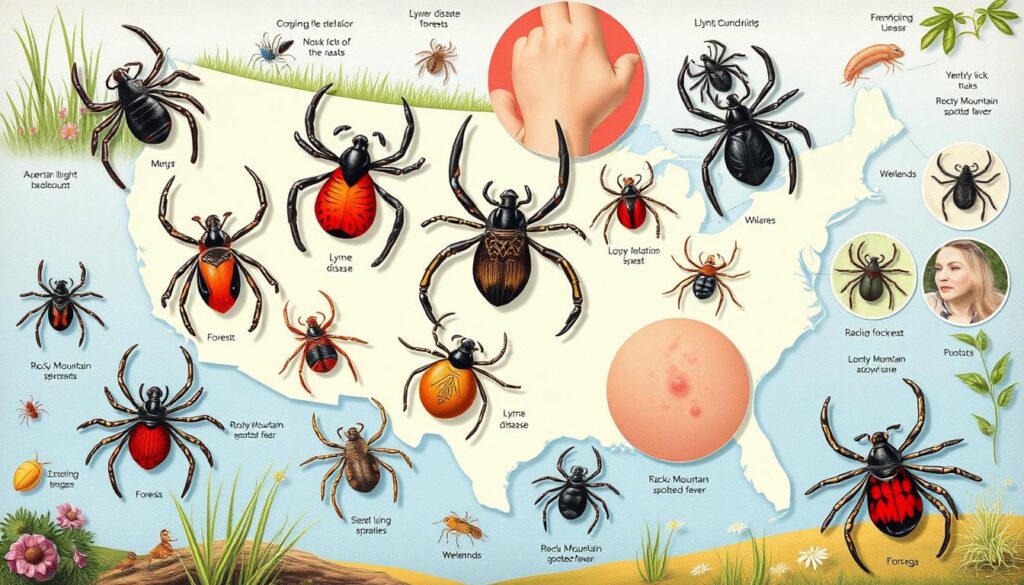
Ticks are tiny arachnids that can cause big health problems. These parasites spread illnesses across the U.S. Knowing about ticks is key to staying safe outdoors.
Ticks have clever ways to survive and spread diseases. They find hosts by sensing breath, smells, heat, and movement. Ticks wait on grass tips to grab passing animals or people.
Tick-borne diseases are tricky to spot. They often have similar symptoms like fever and muscle aches. Some cause strange rashes too.
Learning where ticks live helps you avoid them. Knowing how to prevent tick bites is your best defense1.
Key Takeaways
- Ticks are arachnids that can transmit multiple dangerous diseases
- Disease symptoms often overlap, making precise diagnosis difficult
- Tick identification is critical for understanding potential health risks
- Outdoor activities require careful tick prevention strategies
- Early detection and removal of ticks can prevent serious health complications
Common Tick Species and Diseases in the United States
Tick-borne diseases are a growing health issue in the U.S. From 2004 to 2019, reported cases jumped from 22,500 to about 50,8002. Knowing tick species and their risks is key to protecting yourself and your loved ones.
The U.S. is home to several dangerous tick species. Each type can spread different diseases. They’re usually found in specific areas across the country.
Black-legged (Deer) Ticks: Silent Carriers of Multiple Diseases
Black-legged or deer ticks are a major worry for outdoor lovers. These ticks can spread several serious illnesses.
- Lyme disease
- Anaplasmosis
- Babesiosis
- Ehrlichiosis
Lyme disease is the most common tick-borne illness in the U.S2. These ticks live mainly in the eastern and Midwestern regions. All stages of their life can feed on humans.
Lone Star Ticks: Unexpected Health Risks
Lone Star ticks bring unique health challenges. They’re found mostly in Southern and Eastern states. These ticks can spread several diseases.
- Ehrlichiosis
- Tularemia
- Heartland virus disease
Notably, Lone Star tick bites can also trigger alpha-gal syndrome, an allergic reaction to certain meats.
American Dog Ticks: Regional Disease Vectors
American dog ticks live east of the Rocky Mountains. They can spread Rocky Mountain spotted fever and tularemia3. These ticks may cause tick paralysis from toxins in their saliva.
“Knowledge is your best defense against tick-borne diseases.”
Stay alert and learn about these tick species. Understanding their potential health impacts is crucial for protection.
Essential Prevention and Protection Methods
Safeguard yourself from tick bites with a smart approach. Start by wearing the right clothes and using effective tick repellents4. Choose light-colored, long-sleeved shirts and pants tucked into socks. This creates a barrier against these tiny pests. Check out these tick prevention strategies for more info.
Pick EPA-registered tick repellents with proven ingredients. Top choices include DEET, Picaridin, Oil of lemon eucalyptus, and IR3535.
- DEET
- Picaridin
- Oil of lemon eucalyptus
- IR3535
Treat your clothes and gear with permethrin for extra protection4. The Department of Defense advises using repellents on skin and clothing. This helps prevent tick-borne diseases4.
| Prevention Method | Effectiveness |
|---|---|
| Protective Clothing | High |
| Tick Repellents | Very High |
| Permethrin Treatment | Excellent |
Always do a thorough tick check after outdoor activities. Focus on these key areas:
- Scalp
- Behind ears
- Armpits
- Groin area
- Behind knees
To remove ticks, use fine-tipped tweezers and grab close to your skin. Pull straight out to ensure complete removal.
Clean the bite area with soap and water or rubbing alcohol. This helps reduce infection risk4.
After coming indoors, take a shower. Put your clothes in a hot dryer for 20-30 minutes. This kills any hidden ticks4.
Remember: Quick and careful tick removal can significantly reduce your risk of tick-borne diseases.
Conclusion
Understanding tick species is vital for outdoor safety. Your knowledge can reduce the risk of tick-borne illnesses. The scientific research on tick populations emphasizes the need for prevention strategies5.
Tick awareness involves recognizing exposure risks in different settings. Black-legged ticks have become more active due to climate changes6. Simple protective measures can greatly reduce health complications.
Wear long sleeves, use EPA-approved repellents, and check for ticks after outdoor activities. These steps can significantly lower your risk of tick-related problems.
Disease prevention requires ongoing vigilance and education. Different tick species carry various pathogens. Stay informed about local tick populations and their seasonal activities5.
If you notice unusual symptoms after possible tick exposure, see a doctor quickly. This can help prevent long-term health issues.
Your outdoor safety relies on knowledge, preparedness, and proactive measures. Understanding tick behaviors and risks helps you enjoy nature safely. Remember, prevention beats treatment for tick-borne diseases.
FAQ
What are ticks and how are they different from insects?
Ticks are arachnids, not insects. They have four pairs of legs as adults and no antennae. Ticks go through four life stages: egg, larva, nymph, and adult.
These creatures wait on grass and shrub tips for hosts. They detect potential meals through breath, body odors, heat, moisture, and vibrations.
How have tick-borne diseases changed in recent years?
Tick-borne diseases in the U.S. have significantly increased. Cases rose from about 22,500 in 2004 to 50,800 in 2019. Lyme disease remains the most frequently diagnosed tick-borne illness.
What are the most common tick species in the United States?
The three most common tick species are Black-legged, Lone Star, and American Dog Ticks. Each is found in different regions across the country.
These ticks can transmit various diseases. They include Lyme disease, Rocky Mountain spotted fever, and ehrlichiosis.
How can I prevent tick bites?
Wear light-colored, long-sleeved clothing and long pants tucked into socks. Use EPA-registered tick repellents containing DEET or permethrin.
Perform thorough tick checks after being outdoors. Pay special attention to areas like scalp, ears, armpits, groin, and behind the knees.
What should I do if I find a tick on my body?
Remove the tick promptly using fine-tipped tweezers. Grasp it close to the skin and pull straight out.
Clean the bite area with soap and water or rubbing alcohol. Monitor the site for unusual symptoms and consult a doctor if concerns arise.
Can tick bites cause long-term health problems?
Yes, tick bites can lead to various diseases with serious health consequences. Some ticks transmit illnesses like Lyme disease and Rocky Mountain spotted fever.
Alpha-gal syndrome is another potential health issue. These conditions can cause ongoing problems if not properly treated.
When are ticks most active?
Tick activity varies by species. Larvae and nymphs are most active in spring and early summer. Adult ticks can be active in spring and fall.
Lone Star ticks are most active from April through July. American dog ticks peak in April, May, and June.
What unique risks do different tick species pose?
Different tick species carry unique health risks. Lone Star ticks can cause alpha-gal syndrome, a meat allergy.
Black-legged ticks spread Lyme disease. American dog ticks transmit Rocky Mountain spotted fever and cause tick paralysis through saliva toxins.
Source Links
- About Ticks and Tickborne Disease – https://www.cdc.gov/ticks/about/index.html
- Guide to different tick species and the diseases they carry – https://www.mayoclinic.org/diseases-conditions/alpha-gal-syndrome/in-depth/tick-species/art-20546861
- Common Ticks – https://dph.illinois.gov/topics-services/environmental-health-protection/structural-pest-control/common-ticks.html
- Tick talk: essential tips for preventing tick-borne illnesses – https://www.army.mil/article/276869/tick_talk_essential_tips_for_preventing_tick_borne_illnesses
- Bacterial Agents Detected in 418 Ticks Removed from Humans during 2014–2021, France – https://wwwnc.cdc.gov/eid/article/29/4/22-1572_article
- Effects of Tick-Control Interventions on Tick Abundance, Human Encounters with Ticks, and Incidence of Tickborne Diseases in Residential Neighborhoods, New York, USA – https://wwwnc.cdc.gov/eid/article/28/5/21-1146_article

