
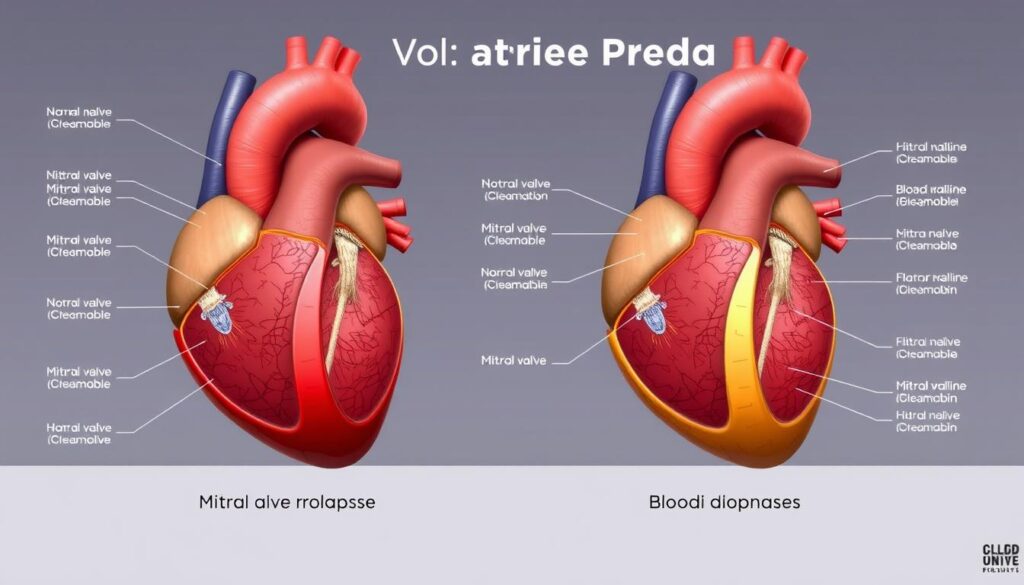
Mitral valve prolapse is a heart condition affecting valve function. It happens when the left heart chambers’ valve doesn’t close right. This can lead to heart health issues1.
The disease can appear at any age. It affects people in different ways1. Genetic links exist, including Marfan syndrome and muscular dystrophy1.
Some people have no symptoms. Others might feel odd heartbeats or hear soft heart sounds1. These signs can mean the valve isn’t working well.
Knowing your risk is key. Men over 50 often face more serious issues. Regular heart checks are vital1.
Heart rhythm problems can occur. They happen if blood flow gets badly disrupted1.
Key Takeaways
- Mitral valve prolapse can affect individuals of all ages
- Genetic factors play a role in developing the condition
- Regular medical monitoring is recommended
- Symptoms can range from mild to complex
- Men over 50 may experience more serious complications
What is Mitral Valve Prolapse and How Does It Affect Your Heart
Mitral valve prolapse is a heart condition that affects how your heart works. It involves the mitral valve, which sits between two chambers of your heart2. Knowing about this condition can help you handle possible heart health issues.
Understanding the Anatomy of Mitral Valve
The mitral valve is a key gateway in your heart. It makes sure blood flows the right way. In mitral valve prolapse, the valve’s parts stretch and bulge backward when your heart beats2.
This can lead to problems with heart rhythm and blood flow. It might cause your heart to feel like it’s racing or skipping beats.
The Mechanism of Valve Regurgitation
- Valve leaflets become abnormally flexible
- Blood may leak backward into the heart chamber
- Potential impact on heart efficiency
Mitral valve prolapse can cause blood to leak backward through the valve. This problem often affects thin women and may be linked to genetic issues3. The backflow can cause symptoms that affect how well your heart works.
Common Names and Medical Terms
| Medical Term | Alternative Name |
|---|---|
| Mitral Valve Prolapse | Floppy Valve Syndrome |
| Myxomatous Valve Disease | Barlow Syndrome |
Though it sounds scary, most cases of mitral valve prolapse are harmless2. You might feel chest pain, dizziness, or a racing heart. Your doctor can help decide if you need valve repair or replacement3.
“Understanding your heart’s unique rhythm is the first step to maintaining cardiovascular health.”
Recognizing Symptoms and Risk Factors of Mitral Valve Prolapse
Mitral valve prolapse affects about 3 percent of people. Many experience no major symptoms. Knowing the signs can help you decide when to see a doctor.
The condition involves stretchy valve leaflets, called myxomatous valve disease4. Most cases are harmless. Some people may have symptoms that need watching.
Key symptoms include:
- Chest discomfort that can be recurrent and intense5
- Shortness of breath, especially during physical activity
- Palpitations or irregular heartbeat5
- Dizziness or lightheadedness
- Extreme fatigue
Risk factors for mitral valve prolapse include:
- Genetic predisposition4
- Inherited connective tissue diseases
- Age (more common in adults)
- Associated conditions like Marfan’s Syndrome5
Early detection through routine medical examinations can help manage potential complications.
Sometimes, blood leaks backward, causing a heart murmur4. This is called mitral regurgitation. Most cases are harmless. Severe cases may cause rhythm problems needing medication5.
Remember, not all individuals with mitral valve prolapse experience symptoms. Regular check-ups are crucial for early detection and proper management.
Diagnosis and Treatment Options
Managing mitral valve prolapse requires understanding your diagnostic and treatment options. Your healthcare journey starts with a thorough evaluation of your heart’s health6.
Diagnostic Tests and Procedures
Detecting mitral valve prolapse involves several precise diagnostic approaches. The main tool is an echocardiogram, which uses ultrasound to check your heart’s valve features6.
It also helps spot potential blood leakage. Other tests may include ECG, chest X-ray, stress tests, and cardiac MRI.
- Electrocardiogram (ECG)
- Chest X-ray
- Exercise stress tests
- Cardiac magnetic resonance imaging (CMR)
Medical Management Approaches
Your treatment plan depends on how severe your condition is. Mild cases might only need regular check-ups7.
Doctors may prescribe meds for symptoms like rapid heartbeat. Specific strategies could include blood thinners, lifestyle changes, and symptom-specific medications.
- Blood thinners for atrial fibrillation
- Lifestyle modifications
- Symptom-specific medications
Surgical Intervention Options
Severe cases of mitral valve prolapse might need surgery. Options include valve repair or replacement7. Modern techniques offer various approaches.
- Traditional open-heart surgery
- Robot-assisted minimally invasive procedures
- Transcatheter mitral valve repair
Surgical options aim to restore optimal heart function with minimal patient recovery time.
Your medical team will assess valve damage and heart function. They’ll use this info to choose the best surgical approach6.
Conclusion
Living with Mitral Valve Prolapse (MVP) doesn’t define your heart health journey. Your proactive approach can greatly impact managing this heart valve disease. Most people with MVP lead fulfilling lives with proper medical guidance and lifestyle changes.
Regular cardiac monitoring is vital for managing MVP. Echocardiography tracks your heart’s performance and potential changes8. Some patients may experience cardiac murmurs or mild symptoms, but not all need immediate treatment.
Ventricular arrhythmias can occur in up to 34% of MVP patients8. This makes consistent medical follow-ups crucial for your heart health. Your personal risk profile depends on various factors.
Young women with specific cardiac characteristics may have a higher risk of sudden cardiac events8. Structural cardiac abnormalities contribute to about 25% of cardiovascular-related deaths worldwide8. This highlights the need for personalized medical care.
Stay informed and work closely with your healthcare provider. Maintain a heart-healthy lifestyle to manage your MVP effectively. With professional guidance, you can successfully navigate your heart health journey.
FAQ
What is Mitral Valve Prolapse?
Mitral Valve Prolapse is a heart condition affecting the valve between left heart chambers. The valve’s flaps become floppy and bulge backward during heart contraction. This can cause blood to leak backward, known as mitral valve regurgitation.
It’s a common condition that can affect people of any age. Serious symptoms tend to occur more often in men over 50.
What are the typical symptoms of Mitral Valve Prolapse?
Symptoms can range from none to mild ones that develop gradually. Common signs include irregular heartbeat, dizziness, shortness of breath, and fatigue.
Some people may experience racing heartbeats or chest discomfort. Others might have trouble breathing during exercise or when lying flat.
Is Mitral Valve Prolapse a serious condition?
In most cases, Mitral Valve Prolapse isn’t life-threatening. Many people with this condition only need regular check-ups.
However, some cases may require medication or surgery. This is especially true if blood leakage becomes severe or affects heart function.
How is Mitral Valve Prolapse diagnosed?
Diagnosis often starts with finding a heart murmur during a routine check-up. The main test is an echocardiogram, which uses ultrasound to check valve health.
Doctors may also use cardiac magnetic resonance imaging (CMR) for a more detailed look.
What are the treatment options for Mitral Valve Prolapse?
Treatment depends on how severe your condition and symptoms are. Many cases only need regular check-ups.
For those with symptoms, doctors may prescribe meds to manage rapid heartbeat. In severe cases, surgery to repair or replace the valve might be needed.
Can Mitral Valve Prolapse be inherited?
Yes, Mitral Valve Prolapse can run in families. It’s often linked to genetic conditions like Marfan syndrome and muscular dystrophy.
The most common cause is abnormally stretchy valve leaflets. This is known as myxomatous valve disease.
When should I see a doctor about Mitral Valve Prolapse?
See a doctor if you have sudden chest pain, fainting, extreme weakness, or severe shortness of breath. These could be signs of a serious problem.
If you’ve been diagnosed, regular check-ups are important. They help monitor your condition and catch any changes early.
Are there any lifestyle modifications for managing Mitral Valve Prolapse?
Keeping your heart healthy is key. This means regular exercise, eating well, and managing stress. It’s also important to avoid smoking.
Always talk to your doctor for advice tailored to your specific condition. They can help you make the best choices for your health.
Source Links
- Mitral valve prolapse-Mitral valve prolapse – Symptoms & causes – Mayo Clinic – https://www.mayoclinic.org/diseases-conditions/mitral-valve-prolapse/symptoms-causes/syc-20355446
- Mitral valve prolapse – UF Health – https://ufhealth.org/conditions-and-treatments/mitral-valve-prolapse
- Mitral Valve Prolapse | MVP | MedlinePlus – https://medlineplus.gov/mitralvalveprolapse.html
- Problem: Mitral Valve Prolapse – https://www.heart.org/en/health-topics/heart-valve-problems-and-disease/heart-valve-problems-and-causes/problem-mitral-valve-prolapse
- Mitral Valve Prolapse – https://www.hopkinsmedicine.org/health/conditions-and-diseases/mitral-valve-prolapse
- Mitral Valve Prolapse: Diagnosis & Treatment – https://www.massgeneralbrigham.org/en/patient-care/services-and-specialties/heart/conditions/mitral-valve-prolapse/treatment
- Mitral valve disease – Diagnosis and treatment – https://www.mayoclinic.org/diseases-conditions/mitral-valve-disease/diagnosis-treatment/drc-20355112
- Mitral valve prolapse: an underestimated cause of sudden cardiac death—a current review of the literature – https://pmc.ncbi.nlm.nih.gov/articles/PMC5757046/

