
Athlete’s foot is a common skin condition affecting millions worldwide. It causes discomfort and irritation that can disrupt daily life1. Quick relief is possible with the right treatment options.
This fungal infection can affect anyone, regardless of age or activity level1. It usually starts between the toes and can spread fast if not treated. Terbinafine (Lamisil AT) is a highly effective treatment for this stubborn infection2.
Patients should expect treatment to take 2 to 4 weeks for complete results2. Early symptom recognition is key to successful treatment. Some cases may look like dry skin or dermatitis2.
The infection is mildly contagious and can spread through direct contact. Proper foot hygiene is essential to prevent its spread1. Various treatment options are available, including over-the-counter and prescription medications.
Key Takeaways
- Athlete’s foot affects people of all ages
- Treatment typically takes 2-4 weeks
- Multiple treatment options are available
- Proper foot hygiene is crucial for prevention
- Over-the-counter and prescription treatments exist
Understanding Athlete’s Foot and Its Symptoms
Athlete’s foot is a common fungal infection. It affects millions worldwide, causing discomfort and irritation. This condition can be persistent, especially for foot health.
What is Athlete’s Foot?
Athlete’s foot is a contagious fungal infection. It typically develops between toes and spreads in warm, moist environments3. Dermatophytes cause this condition, the same fungi behind ringworm and jock itch3.
These fungi thrive in damp conditions. Sweaty socks and tight shoes create an ideal breeding ground for them.
Common Symptoms to Look For
Early recognition of Athlete’s Foot symptoms helps in seeking quick treatment. Watch for these key indicators:
- Scaly, peeling skin between toes3
- Intense itching and burning sensations3
- Inflamed skin
- Blisters on feet
- Dry, scaly skin on bottom and sides of foot3
Risk Factors for Developing Athlete’s Foot
Certain conditions can increase your chances of getting this fungal infection:
- Wearing enclosed footwear frequently3
- Heavy sweating4
- Walking barefoot in public areas like pools or locker rooms3
- Sharing infected personal items4
- Weakened immune systems4
Moisture Management is key to preventing fungal infections and keeping your feet healthy.
Athlete’s foot is treatable but can often recur3. Proper foot care is crucial in managing this condition. Quick intervention helps prevent its spread and recurrence.
Effective Home Remedies for Athlete’s Foot
Athlete’s foot can be frustrating, but natural treatments offer relief. Good foot hygiene is crucial for managing this fungal infection. It also helps prevent future occurrences.
Natural Antifungal Treatments
Nature provides powerful remedies to fight athlete’s foot. These solutions can effectively combat the infection.
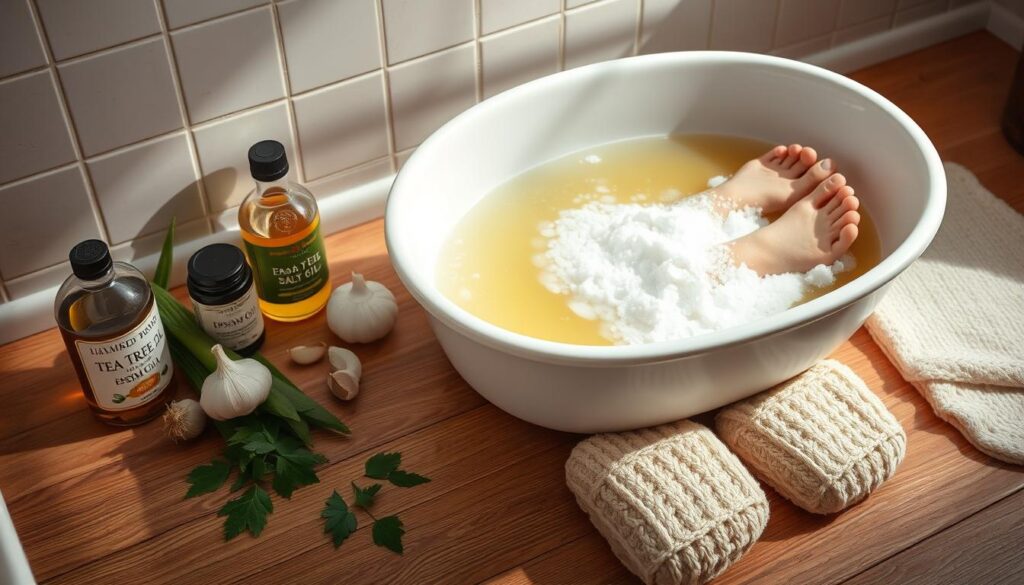
- Tea tree oil solutions effectively treat fungal infections. Studies show 25% and 50% concentrations cured 64% of participants56.
- Garlic contains ajoene, a compound that completely cures athlete’s foot in some cases5.
- Hydrogen peroxide and iodine combined can kill 16 different fungi types5.
- Baking soda foot soaks offer antifungal benefits5.
Benefits of Soaking Your Feet
Foot soaks are an excellent way to manage athlete’s foot. Green tea polyphenol foot baths improve symptoms, especially for elderly patients6.
Sea salt soaks may provide antibacterial and antifungal properties7.
Importance of Proper Foot Care
Prevention is key to managing athlete’s foot. Here are some Over-the-Counter Remedies and foot hygiene tips:
- Wash and dry feet thoroughly, especially between toes
- Change socks frequently to keep feet dry
- Use antifungal powders in shoes
- Avoid walking barefoot in public areas
Remember, persistent symptoms lasting more than a week require professional medical attention5.
If home remedies don’t work, consult a healthcare professional. People with diabetes should be extra careful with foot-related issues.
Seek immediate medical advice for any foot concerns if you have diabetes5.
Over-the-Counter Treatment Options
Athlete’s foot can be frustrating, but over-the-counter remedies offer effective relief. Antifungal creams and sprays provide a handy solution for this skin condition. These products can help manage the discomfort of athlete’s foot.
Topical Antifungal Creams and Sprays
Several antifungal cream options exist for treating athlete’s foot. Here are five widely available treatments:
- Clotrimazole (Lotrimin)
- Miconazole (Monistat-Derm)
- Terbinafine (Lamisil AT)
- Tolnaftate (Tinactin)
- Undecylenic acid (Desenex)
Recommended Brands for Relief
Terbinafine cream is a top choice for treating athlete’s foot. It’s effective in 88 to 97 percent of cases within one week8. A 30-g tube usually lasts for the whole treatment8.
How to Apply Your Chosen Treatment
Follow these steps for best results:
- Clean and dry the affected area thoroughly
- Apply a thin layer of antifungal cream
- Repeat application as directed, typically twice daily
- Continue treatment for 2-4 weeks or until the rash clears
Pro tip: Tolnaftate and miconazole also come in spray form. These sprays can help prevent athlete’s foot8. Studies show 88 percent of people using tolnaftate spray stayed free of tinea pedis8.
“Consistent treatment is key to eliminating athlete’s foot completely.”
If symptoms last after two weeks of treatment, see a doctor. They can provide more guidance on treating your athlete’s foot.
When to See a Doctor for Athlete’s Foot
Know when to get professional help for Athlete’s Foot. See a doctor if symptoms last after using over-the-counter creams for two weeks. People with diabetes or weak immune systems need extra care.
Prescription treatments work better when home remedies fail. Your doctor may give stronger creams or oral tablets like terbinafine. They might suggest more tests or send you to a skin specialist.
Prevent future Athlete’s Foot outbreaks with simple steps. Wear shoes that let your feet breathe. Change socks daily and use antifungal powders to keep feet dry9.
Act fast to stop the infection from spreading. Wear cotton socks and let your shoes air out between uses. This can lower your chance of getting Athlete’s Foot again10.
Take care of your feet to avoid Athlete’s Foot. If you have health issues, watch for unusual symptoms. Quick action keeps your feet healthy and prevents problems.
FAQ
What exactly is athlete’s foot?
Athlete’s foot is a common fungal infection affecting foot skin. It thrives in warm, moist areas, causing itching, burning, and peeling. Despite its name, it can affect anyone, not just athletes.
How do I know if I have athlete’s foot?
Look for burning sensations, itchy red rash, and skin peeling between toes. Cracking skin, unpleasant foot odor, and blisters are also common signs.
How can I prevent athlete’s foot?
Keep feet dry and wear breathable shoes. Change socks daily and use antifungal powders. Avoid walking barefoot in public areas like locker rooms.
Don’t share personal items like towels or shoes. These steps can greatly reduce your risk of infection.
Are over-the-counter treatments effective?
Yes, many OTC treatments work well for mild to moderate cases. Products like Lamisil AT and Lotrimin AF contain effective active ingredients.
Apply these treatments as directed for 2-4 weeks. They often provide relief and clear up the infection.
Can I treat athlete’s foot with home remedies?
Some natural remedies like tea tree oil can help manage symptoms. Green tea soaks and garlic-derived ajoene may also provide relief.
However, these aren’t as reliable as medical treatments. See a doctor if symptoms persist despite trying home remedies.
When should I see a doctor?
Seek medical help if OTC treatments don’t work after two weeks. Also consult a doctor if the infection is severe or spreads.
Those with diabetes or weakened immune systems should see a healthcare professional right away.
Is athlete’s foot contagious?
Yes, athlete’s foot is mildly contagious. It can spread through direct contact with infected skin. Contaminated surfaces like shower floors or shared footwear can also transmit the infection.
How long does athlete’s foot typically last?
With proper treatment, athlete’s foot usually clears up in 2-4 weeks. The duration depends on infection severity and consistent treatment application.
Source Links
- The Basics of Athlete’s Foot – https://www.webmd.com/skin-problems-and-treatments/understanding-athletes-foot-basics
- Athlete’s foot – Diagnosis and treatment – https://www.mayoclinic.org/diseases-conditions/athletes-foot/diagnosis-treatment/drc-20353847
- Athlete’s foot – Symptoms and causes – https://www.mayoclinic.org/diseases-conditions/athletes-foot/symptoms-causes/syc-20353841
- Athlete’s Foot Symptoms, Causes & Treatment | Aurora Health Care – https://www.aurorahealthcare.org/services/dermatology/athletes-foot
- Athlete’s foot: Home remedies, treatment, and causes – https://www.medicalnewstoday.com/articles/319563
- 5 Natural Remedies To Treat Athlete’s Foot At Home, According To Podiatrists – https://essexunionpodiatry.com/5-natural-remedies-to-treat-athletes-foot-at-home-according-to-podiatrists/
- Home Remedies for Athlete’s Foot – https://www.healthline.com/health/home-remedies-for-athletes-foot
- Over-the-Counter Foot Remedies – https://www.aafp.org/pubs/afp/issues/2001/0901/p791.html
- Athlete’s Foot – https://www.columbiadoctors.org/health-library/condition/athlete-s-foot/
- Athlete’s foot – https://www.nhs.uk/conditions/athletes-foot/

