
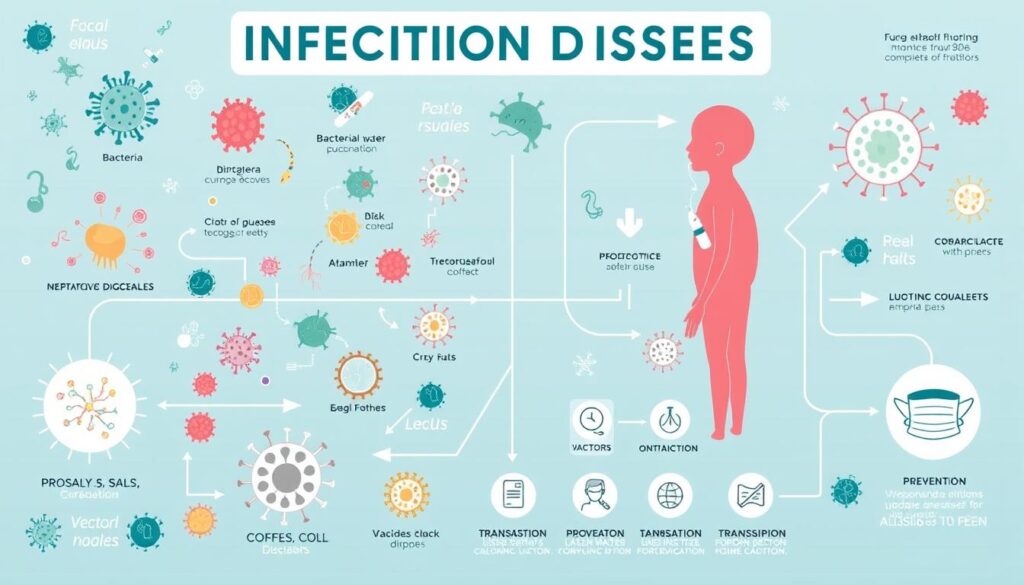
Infectious diseases are complex health challenges that can impact your life unexpectedly. These pathogens include bacteria, viruses, fungi, and parasites. They can spread quickly through different routes1.
Understanding these microorganisms is vital for your health preparedness. Your body’s immune system fights these tiny invaders constantly2. Some diseases resolve on their own, while others need medical help.
Epidemiology tracks how diseases spread and affect different groups3. Modern healthcare focuses on prevention and early detection. Washing hands and getting vaccines can lower your risk significantly2.
Good hygiene is crucial in reducing the spread of infectious diseases. Staying informed about health risks is your best defense. Knowledge empowers you to protect yourself and others.
Key Takeaways
- Infectious diseases are caused by various types of pathogens
- Prevention is key to managing disease transmission
- Regular hygiene practices can protect against many infections
- Understanding transmission routes helps minimize health risks
- Vaccines play a critical role in public health protection
What Are Infectious Diseases?
Infectious diseases are serious health issues affecting millions worldwide. They’re caused by tiny organisms called pathogens. Learning about these diseases can help protect you and your family.
Pathogens are microscopic organisms that can cause severe health problems. These include bacteria, viruses, fungi, and parasites. They enter your body and trigger various reactions4.
Each type of pathogen challenges your immune system differently. Understanding how they work is key to staying healthy.
Disease Transmission and Spread
Infectious diseases spread through multiple paths. You might catch these illnesses in several ways:
- Direct contact with infected individuals4
- Contaminated surfaces4
- Insect carriers like mosquitoes4
- Contaminated food or water4
Common Symptoms to Recognize
Spotting early signs of infectious diseases helps you get quick medical help. Look out for these key symptoms:
Risk Factors and Vulnerable Populations
Some groups face higher risks from infectious diseases. These include people with weak immune systems, young children, and pregnant individuals. Adults over 60 and healthcare workers are also more susceptible5.
“Prevention is better than cure when it comes to infectious diseases.”
New infections and diseases from animals pose big health challenges globally. Good hygiene and understanding how diseases spread can lower your risk. These habits help protect you from potentially serious illnesses6.
| Pathogen Type | Common Diseases | Transmission Method |
|---|---|---|
| Bacteria | Strep throat, UTIs | Direct contact |
| Viruses | Common cold, HIV | Respiratory droplets |
| Fungi | Ringworm, Athlete’s foot | Skin contact |
| Parasites | Malaria | Insect vectors |
Types of Infectious Diseases
Infectious diseases pose serious health risks. They’re caused by different pathogens that affect our bodies uniquely. Understanding these agents is vital for Global Health Security.
The main types of infectious agents are bacteria, viruses, fungi, and parasites. Each requires specific prevention and treatment methods. This is especially important when dealing with Antimicrobial Resistance.
Bacterial Infections
Bacterial infections happen when harmful bacteria grow in your body. These tiny organisms come in three shapes: cocci, bacilli, and spirilla7.
Common bacterial infections include:
Viral Infections
Viruses are tiny invaders that use your cells to multiply. They’re even smaller than bacteria7. Vaccine Development is crucial in fighting viral threats.
Common viral infections include:
Fungal Infections
Fungal infections occur when fungi overgrow or enter your body. Yeast cells are tiny, while mold cells have branching structures7.
Examples include:
- Athlete’s foot
- Thrush
- Ringworm
Parasitic Infections
Parasites vary greatly in size. They can be as small as malaria organisms or as long as tapeworms7. These creatures live off host bodies, causing health problems.
Examples include:
- Malaria
- Tapeworm infestations
- Chlamydia8
“Understanding infectious diseases is key to protecting personal and public health.” – Public Health Expert
Prevention and Control Measures
Protecting yourself from infectious diseases requires a smart approach. Your health is your most valuable asset. Understanding key prevention strategies can make a big difference in staying healthy9.
Effective health security starts with proactive measures. These measures safeguard both individual and community health. Healthcare facilities play a crucial role in preventing disease spread9.
Vaccinations You Should Consider
Vaccine development has changed how we prevent serious diseases. Staying up-to-date with immunizations is vital. It protects you and your community10.
- Childhood immunization schedules
- Adult vaccination recommendations
- Travel-specific vaccines10
Essential Hygiene Practices
Proper hygiene is your first defense against infectious agents. Infection control techniques can greatly reduce your risk of illness10.
| Hygiene Practice | Recommended Action |
|---|---|
| Hand Washing | Wash hands before cooking, after using the bathroom, and when caring for sick people10 |
| Food Safety | Use separate cutting boards, control food temperatures, and handle food carefully10 |
Importance of Regular Check-ups
Regular medical check-ups help detect and prevent potential health issues early. Healthcare professionals can guide you on infection prevention strategies. Their advice is tailored to your specific needs9.
Prevention is always better than cure – stay informed, stay protected!
Seeking Treatment for Infectious Diseases
Understanding when to seek medical care for infections is vital for your health. Each year, about 23 million Americans get treatment for various infections11. Your healthcare approach can greatly affect recovery and prevent complications.
Infectious diseases need proactive medical attention. Infectious disease specialists advise seeking help for persistent symptoms or unusual health changes. Global Health Security guides the management of these medical situations.
Treatment plans differ based on the specific infection. Antimicrobial Resistance is a major concern in modern medicine. Doctors use targeted treatments like antibiotics for bacterial infections and antivirals for viral diseases.
Epidemiology helps create effective treatment protocols12. Antimicrobial stewardship is key in managing infectious diseases. It involves careful medication selection and monitoring to reduce drug resistance.
Your active role in following medical advice is crucial. Completing prescribed treatments can greatly improve your health outcomes. Working with healthcare professionals ensures the best possible care for infectious diseases.
FAQ
What exactly are infectious diseases?
Infectious diseases are disorders caused by harmful organisms. These include bacteria, viruses, fungi, and parasites. They enter your body from outside sources and spread in various ways.
Transmission can occur through person-to-person contact, contaminated food or water. Animal bites and insect vectors are also common ways of spreading.
How do infectious diseases spread?
These diseases spread through multiple routes. Direct contact involves person-to-person or animal-to-person transmission. Indirect contact happens through contaminated surfaces.
Insect bites and consuming tainted food or water are other ways. The way a disease spreads depends on its specific pathogen.
What are the most common symptoms of infectious diseases?
Typical symptoms include fever, fatigue, muscle aches, coughing, and diarrhea. Some infections can lead to serious complications. These may include dehydration, pneumonia, sepsis, or meningitis.
If symptoms persist or become severe, consult a healthcare professional immediately.
Are all infectious diseases equally dangerous?
No, the severity varies widely. Some infections like the common cold are mild. Others, such as HIV, COVID-19, or malaria, can be life-threatening.
Your risk depends on the specific pathogen and your overall health. Access to medical care also plays a role.
How can I prevent infectious diseases?
Stay up-to-date with vaccinations and practice good hygiene. Wash hands often and avoid touching your face. Maintain a healthy lifestyle and get regular check-ups.
Take precautions when traveling to high-risk areas. These steps can significantly reduce your risk of infection.
What’s the difference between viral and bacterial infections?
Bacterial infections are caused by single-celled organisms that can produce toxins. They’re typically treated with antibiotics. Viral infections are caused by viruses that hijack host cells.
Viruses often require antiviral medications or rely on the immune system to fight them off.
When should I see a doctor about an infectious disease?
Seek medical attention if you experience severe symptoms or have been bitten by an animal. Also, see a doctor if you’ve traveled to high-risk areas.
A persistent fever or symptoms that don’t improve with basic treatment are other reasons to consult a healthcare professional.
What is antimicrobial resistance?
Antimicrobial resistance occurs when pathogens survive medications designed to kill them. This happens through overuse or misuse of antibiotics. It’s a growing global health challenge.
Antimicrobial resistance makes infections harder to treat effectively.
Can infectious diseases be completely prevented?
Complete prevention is challenging, but you can significantly reduce risks. Vaccination and good hygiene practices are key. Maintaining a strong immune system also helps.
Being aware of potential exposure routes in your environment is crucial for prevention.
How do vaccinations help prevent infectious diseases?
Vaccines stimulate your immune system to recognize and fight specific pathogens. This reduces the likelihood of infection or minimizes disease severity.
They’re crucial in preventing the spread of diseases like measles, influenza, and COVID-19.
Source Links
- Infectious Disease | Germs | MedlinePlus – https://medlineplus.gov/infectiousdiseases.html
- Common Infectious Diseases – https://healthcare.utah.edu/infectious-diseases/general
- Infectious diseases-Infectious diseases – Diagnosis & treatment – Mayo Clinic – https://www.mayoclinic.org/diseases-conditions/infectious-diseases/diagnosis-treatment/drc-20351179
- Infectious diseases-Infectious diseases – Symptoms & causes – Mayo Clinic – https://www.mayoclinic.org/diseases-conditions/infectious-diseases/symptoms-causes/syc-20351173
- Infectious Disease: Types, Causes & Treatments – https://my.clevelandclinic.org/health/diseases/17724-infectious-diseases
- Introduction to Infectious Diseases – https://www.bcm.edu/departments/molecular-virology-and-microbiology/emerging-infections-and-biodefense/introduction-to-infectious-diseases
- Different Types of Infectious Diseases – https://nanocellect.com/blog/different-types-of-infectious-diseases/
- Infectious diseases – https://www.healthdirect.gov.au/infectious-diseases
- CDC’s Core Infection Prevention and Control Practices for Safe Healthcare Delivery in All Settings – https://www.cdc.gov/infection-control/hcp/core-practices/index.html
- Pages – preventing-infectious-disease – https://health.maryland.gov/phpa/pages/preventing-infectious-disease.aspx
- Infectious Diseases – https://www.nih.gov/about-nih/what-we-do/nih-turning-discovery-into-health/our-biggest-health-challenges/infectious-diseases
- Infectious Diseases – Overview – https://www.mayoclinic.org/departments-centers/infectious-diseases/sections/overview/ovc-20456906

