
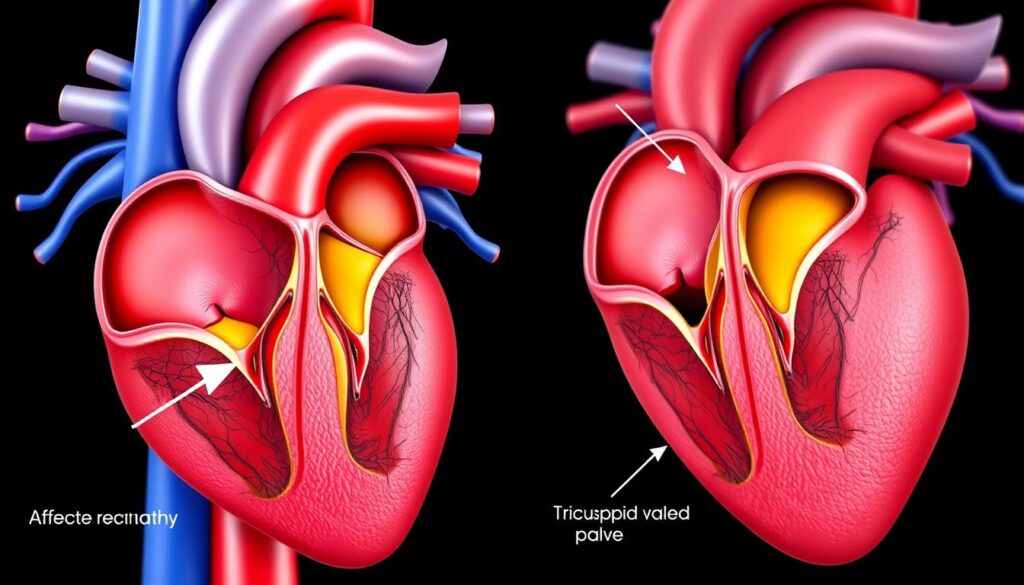
Tricuspid valve regurgitation affects the right heart chambers. It happens when the valve doesn’t close properly, causing blood to flow backward1. Functional tricuspid valve regurgitation is the most common type1.
Your heart functions like a precise pump. A faulty tricuspid valve disrupts this balance. An enlarged right ventricle can lead to tricuspid regurgitation1.
Some people may not notice symptoms at first. The condition can worsen without you knowing1.
Several factors increase your risk of tricuspid valve regurgitation. Congenital heart defects and lung diseases are major contributors1.
Ignoring this condition can have serious consequences. It may lead to heart failure and liver congestion1.
Key Takeaways
- Tricuspid valve regurgitation impacts blood flow in right heart chambers
- The condition can be asymptomatic in early stages
- Functional regurgitation is the most common type
- Risk factors include congenital heart defects and lung diseases
- Untreated cases can lead to heart failure
What is Tricuspid Valve Regurgitation and How Does It Affect Your Heart
Your heart’s valve system is crucial for proper blood circulation. The tricuspid valve needs attention to grasp its role and potential issues. Let’s explore this vital component of heart health.
Anatomy of a Healthy Tricuspid Valve
The tricuspid valve sits between the right atrium and right ventricle. It has three leaflets that open and close to control blood flow. When functioning normally, these leaflets create a tight seal during heart contractions.
Types of Tricuspid Regurgitation
Tricuspid valve regurgitation happens when leaflets don’t close properly, causing blood to leak backward. There are three main types:
- Primary (Organic) Regurgitation: Involves structural valve abnormalities2
- Secondary (Functional) Regurgitation: Caused by underlying heart conditions3
- Isolated Regurgitation: Often related to atrial fibrillation or prior heart procedures2
Impact on Blood Flow in Heart
The severity of tricuspid regurgitation affects blood flow significantly. Mild cases might go unnoticed, but severe regurgitation can enlarge the right atrium3.
This condition impacts heart efficiency and may increase pressure in nearby chambers2. Knowing how your heart valves work helps maintain good cardiovascular health.
Understanding your heart’s valve function is the first step in maintaining cardiovascular health.
| Type of Regurgitation | Primary Characteristics | Potential Causes |
|---|---|---|
| Primary | Structural valve issues | Congenital defects, infections |
| Secondary | Valve dysfunction due to other conditions | Pulmonary hypertension, heart disease |
| Isolated | Specific valve-related complications | Atrial fibrillation, prior surgeries |
Tricuspid valve regurgitation affects 5 to 8 in 1,000 people in the U.S2. Knowing the signs and impact helps you manage your heart health better.
Common Causes and Risk Factors of Tricuspid Valve Disease
Tricuspid regurgitation is a complex heart condition. It affects 3% to 6% of people. Understanding its causes is key to managing your heart health.
- Congenital heart defects like Ebstein’s anomaly
- Rheumatic fever
- Infective endocarditis
- Carcinoid syndrome
- Chest injuries
Several factors can raise your risk of tricuspid regurgitation. These include:
- Atrial fibrillation
- Heart failure
- Pulmonary hypertension
- Genetic conditions like Marfan syndrome
“The severity of tricuspid regurgitation directly impacts patient prognosis,” notes cardiac specialists4.
Left-sided valve disorders often come with tricuspid regurgitation. It affects 10% to 23% of these patients. Heart failure patients with this condition face higher death rates and more hospital stays.
Some unique triggers include chest radiation therapy and heart procedure complications. Pacemaker wires can also cause issues. Your risk depends on age, existing heart problems, and overall heart health.
Recognizing Symptoms and Seeking Medical Care
Knowing tricuspid valve regurgitation signs can help manage your heart health. Early detection and treatment are crucial. Recognizing symptoms can make a significant difference.
Early Warning Signs
Tricuspid regurgitation symptoms can be subtle but serious. Watch for these signs:
- Persistent fatigue that interferes with daily activities
- Shortness of breath during mild exercise
- Unexpected swelling in your abdomen or legs5
- Reduced exercise tolerance
- Occasional heart palpitations
When to Contact Your Healthcare Provider
Seek medical care if you notice ongoing symptoms. Contact your doctor if you see changes in your heart health. Early intervention can prevent potential complications.
Your heart health is too important to ignore subtle warning signs.
Diagnostic Methods and Tests
Doctors use various tests to check tricuspid valve function. These may include comprehensive heart imaging techniques.
| Diagnostic Test | Purpose |
|---|---|
| Echocardiogram | Assesses heart valve structure and blood flow |
| Electrocardiogram (ECG) | Checks heart’s electrical activity |
| Cardiac MRI | Provides detailed heart muscle and valve images6 |
| Right Heart Catheterization | Measures heart pressures and blood flow dynamics5 |
Young patients should know that some cases stem from congenital heart conditions. 15 to 30% of tricuspid regurgitation cases occur in individuals with these conditions6.
Understanding these tests helps you work with your doctor. Together, you can effectively manage your heart health.
Conclusion
Tricuspid valve regurgitation affects 3% to 6% of people4. It requires careful monitoring and personalized treatment strategies. Stay informed and work closely with your healthcare provider.
Treatment options depend on the condition’s severity. Some patients need watchful waiting, while others require medication or surgery. Untreated, it can lead to heart failure and increased mortality47.
Functional tricuspid valve regurgitation is most common. Symptoms range from fatigue to irregular heartbeats1. Your heart health relies on more than just medical treatments.
Lifestyle changes are crucial for managing this condition. Regular exercise, a balanced diet, and avoiding smoking can make a difference. Work with your Mayo Clinic team to create a plan for your needs1.
Early detection and proactive management are vital. With the right approach, you can effectively manage tricuspid valve regurgitation. Take control of your heart health today.
FAQ
What is tricuspid valve regurgitation?
Tricuspid valve regurgitation is a heart problem. The valve between the right atrium and ventricle doesn’t close properly. This causes blood to flow backward, potentially leading to heart failure.
What are the main types of tricuspid valve regurgitation?
There are three main types of tricuspid regurgitation. Primary involves structural valve issues. Secondary is caused by other heart conditions. Isolated regurgitation often relates to atrial fibrillation or previous heart procedures.
What causes tricuspid valve regurgitation?
Causes include congenital heart defects, rheumatic fever, and infective endocarditis. Carcinoid syndrome, chest injuries, and radiation therapy can also cause it. Risk factors include atrial fibrillation, heart failure, and pulmonary hypertension.
What are the symptoms of tricuspid valve regurgitation?
Symptoms may not appear until the condition is severe. They can include fatigue, shortness of breath during activity, and palpitations. Swelling in the abdomen, legs, or neck veins may also occur.
Seek medical help if you feel extremely tired or have trouble breathing during normal activities.
How is tricuspid valve regurgitation diagnosed?
Diagnosis typically involves a physical exam and listening to heart sounds. Tests like echocardiography, ECG, chest X-ray, and cardiac MRI are often used. Sometimes, heart catheterization is needed for a detailed evaluation.
What are the treatment options?
Treatment depends on severity. It ranges from watchful waiting for mild cases to medication and surgery. Your doctor will create a plan based on your needs and valve dysfunction.
Can tricuspid valve regurgitation be prevented?
Not all cases can be prevented. You can reduce your risk by maintaining good heart health. Eat a balanced diet, exercise regularly, avoid smoking, and manage underlying conditions.
Is tricuspid valve regurgitation a serious condition?
The seriousness depends on the condition’s severity. Mild cases might not need immediate treatment. Severe cases can lead to right heart failure and other complications if left untreated.
Source Links
- Tricuspid Valve Regurgitation: Symptoms & Causes | NewYork-Presbyterian – https://www.nyp.org/heart/heart-valves/tricuspid-valve-regurgitation
- Tricuspid Valve Regurgitation: What You Need To Know – https://my.clevelandclinic.org/health/diseases/21627-tricuspid-valve-regurgitation
- Tricuspid regurgitation: MedlinePlus Medical Encyclopedia – https://medlineplus.gov/ency/article/000169.htm
- Tricuspid Regurgitation – StatPearls – NCBI Bookshelf – https://www.ncbi.nlm.nih.gov/books/NBK526121/
- Tricuspid Regurgitation: What You Need to Know – https://my.clevelandclinic.org/podcasts/love-your-heart/tricuspid-regurgitation-what-you-need-to-know
- Tricuspid Regurgitation – https://www.ucsfhealth.org/conditions/tricuspid-regurgitation
- Tricuspid valve regurgitation – Symptoms and causes – https://www.mayoclinic.org/diseases-conditions/tricuspid-valve-regurgitation/symptoms-causes/syc-20350168

