
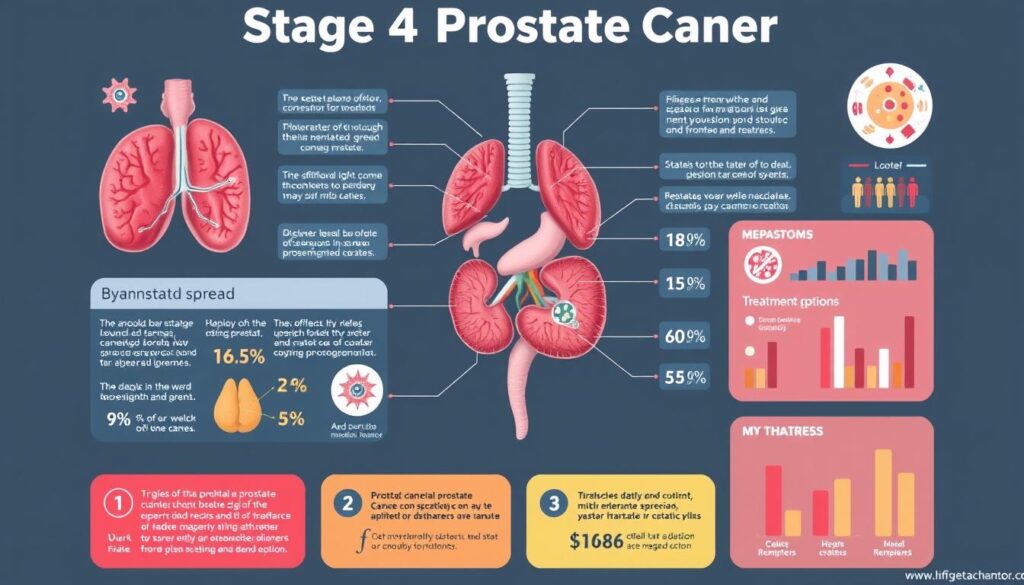
Stage 4 prostate cancer is an advanced phase where cancer cells spread beyond the prostate gland. This metastatic condition occurs when cancer cells break away from the original tumor. They then migrate to distant organs in the body1.
Advanced prostate cancer involves complex cellular changes. Genetic mutations cause prostate cells to grow and multiply abnormally. These cells form tumors that can spread to lymph nodes, bones, and liver1.
Risk factors include aging, family history, and racial background. Black individuals face higher risks of aggressive prostate cancer1. While incurable, modern treatments can extend life and reduce symptoms1.
Key Takeaways
- Stage 4 prostate cancer means cancer has spread beyond the prostate
- Cellular DNA changes trigger abnormal cancer cell growth
- Risk increases with age and specific racial backgrounds
- Treatment can help manage symptoms and extend life
- Early detection remains crucial for better outcomes
Recognizing Stage 4 Prostate Cancer Signs and Symptoms
Spotting aggressive prostate cancer signs can be vital for early detection and treatment. Symptoms vary, but recognizing them could greatly impact treatment outcomes2.
Prostate cancer screening tests are key in identifying potential issues early. They can help catch problems before they become more serious.
Terminal prostate cancer often shows physical and systemic symptoms. These can greatly affect your daily life and overall well-being2.
Common Physical Symptoms to Watch
- Urinary changes such as frequent urination or difficulty starting/stopping
- Pain during urination or ejaculation2
- Blood in urine or semen
- Unexpected weight loss
- Bone pain in spine, ribs, and pelvis3
Hormone-refractory prostate cancer can show various advanced symptoms beyond typical prostate issues. Castration-resistant prostate cancer might cause extreme fatigue and potential spread to other body parts3.
When to Seek Medical Attention
See a doctor if you have ongoing symptoms or notice big health changes. PSA blood tests and digital rectal exams help catch issues early2.
“Early detection can significantly improve treatment outcomes and quality of life for patients with prostate cancer.”
| Symptom Category | Potential Indicators |
|---|---|
| Urinary Symptoms | Frequent urination, pain, weak stream |
| Physical Symptoms | Bone pain, weight loss, fatigue |
| Sexual Health | Erectile difficulties, pain during ejaculation |
Prostate cancer remains a major health issue. The American Cancer Society expects about 34,700 deaths from it in 20234.
Awareness and early detection are crucial in fighting this disease. Regular check-ups can make a big difference in treatment success.
Stage 4 Prostate Cancer Treatment Options
Understanding treatment options is vital when facing end-stage prostate cancer. Your care team will create a plan based on cancer spread and your health. The goal is to control cancer progression and boost life quality.
Treatment options for advanced prostate cancer include several key approaches:
- Hormone therapy to suppress testosterone levels5
- Radiation therapy for targeted cancer management6
- Chemotherapy to slow cancer spread
- Immunotherapy to boost your body’s natural defense mechanisms
Hormone therapy, or androgen deprivation therapy (ADT), is crucial in treating advanced prostate cancer. Medications like abiraterone can block androgen production and improve survival rates5.
Some patients might experience side effects such as decreased libido and hot flashes. Heart-related complications are also possible5.
*”The goal of treatment is not just to extend life, but to maintain its quality.”*
Radiation therapy helps manage bone metastases, common in advanced prostate cancer. Over 60% of men with this condition develop bone metastases7.
Specialized treatments like Xofigo can control cancer growth and ease bone pain7. Your treatment plan will depend on various factors.
The Mayo Clinic recommends a comprehensive approach. It considers metastasis extent, overall health, and potential treatment responses7.
The 5-year survival rate for distant prostate cancer is about 34%. This highlights the need for personalized, comprehensive treatment strategies7.
Conclusion
Grasping prostate cancer survival rates helps maintain perspective during treatment. Stage 4 prostate cancer is tough, but medical progress improves outcomes. Your prognosis depends on health, cancer spread, and treatment response8.
Proactive management can greatly impact your stage 4 prostate cancer experience. Clinical trials and personalized treatments offer new hope9. Team up with healthcare providers to create a comprehensive care plan.
This plan should address medical treatments and supportive care strategies. It’s key to maintaining your quality of life8. Remember, each patient’s journey is unique.
Statistics offer insights but don’t define your personal experience. Focus on comprehensive care and emotional support. Maintain a positive outlook to navigate this challenging diagnosis9.
Understand your condition and follow recommended treatments. Prioritize your overall well-being to manage stage 4 prostate cancer effectively. Stay informed and hopeful throughout your journey.
Lean on your support network as you face this challenge. Your commitment can make a significant difference in your treatment outcomes.
FAQ
What is Stage 4 Prostate Cancer?
Stage 4 prostate cancer has spread beyond the prostate to other body parts. It’s called metastatic prostate cancer. While usually incurable, treatments can manage symptoms and possibly extend life.
What Are the Common Symptoms of Stage 4 Prostate Cancer?
Symptoms may include pain while urinating and trouble with bladder control. Blood in urine or semen, bone pain, and unexplained weight loss can occur.
Other signs are fatigue, persistent cough, and breathlessness. Not all patients experience every symptom.
What Treatment Options Are Available?
Options include hormone therapy, radiation, surgery, chemotherapy, and targeted therapy. Immunotherapy and theranostics are also available. Treatment choice depends on cancer spread and patient factors.
The goal is to slow cancer growth and improve quality of life.
What is the Survival Rate for Stage 4 Prostate Cancer?
The five-year survival rate for metastatic prostate cancer is about 34.1%. Rates vary based on age, health, and disease extent.
It’s crucial to discuss your prognosis with your healthcare team.
How is Stage 4 Prostate Cancer Diagnosed?
Diagnosis involves PSA testing, imaging tests, and biomarker tools. PSA levels are usually higher in metastatic cancer.
Imaging tests help confirm the cancer’s spread and stage.
What Are the Risk Factors for Stage 4 Prostate Cancer?
Key risk factors are older age, family history, and being Black. The exact cause is unknown.
Stage 4 occurs when cancer cells spread from the original tumor to other body parts.
Can Stage 4 Prostate Cancer Be Prevented?
There’s no guaranteed prevention. Regular check-ups, PSA screening, and a healthy lifestyle can help manage risk.
If you have risk factors, talk to your doctor about screening and prevention strategies.
Source Links
- Stage 4 prostate cancer – Symptoms and causes – https://www.mayoclinic.org/diseases-conditions/stage-4-prostate-cancer/symptoms-causes/syc-20377966
- Prostate Cancer Symptoms: Recognizing and Responding to Early and Advanced Signs – https://zerocancer.org/about-prostate-cancer/symptoms
- What to expect – https://prostatecanceruk.org/prostate-information-and-support/advanced-prostate-cancer/dying-from-prostate-cancer/what-to-expect/
- What to Know About End Stage Prostate Cancer – https://www.healthline.com/health/prostate-cancer/signs-you-are-dying-of-prostate-cancer
- Patient education: Treatment for advanced prostate cancer (Beyond the Basics) – https://www.uptodate.com/contents/treatment-for-advanced-prostate-cancer-beyond-the-basics/print
- Initial Treatment of Prostate Cancer, by Stage and Risk Group – https://www.cancer.org/cancer/types/prostate-cancer/treating/by-stage.html
- Metastatic Prostate Cancer: Treatment Options & Prognosis – https://zerocancer.org/stages-and-grades/metastatic-prostate-cancer
- Stage 4 Prostate Cancer: Symptoms, Life Expectancy & Treatment – https://www.drzadeclinic.com/blogs/stage-4-prostate-cancer/
- In Depth Analysis of Stage 4 Prostate Cancer – https://www.drzadeclinic.com/blogs/in-depth-analysis-of-stage-four-prostate-cancer/

