
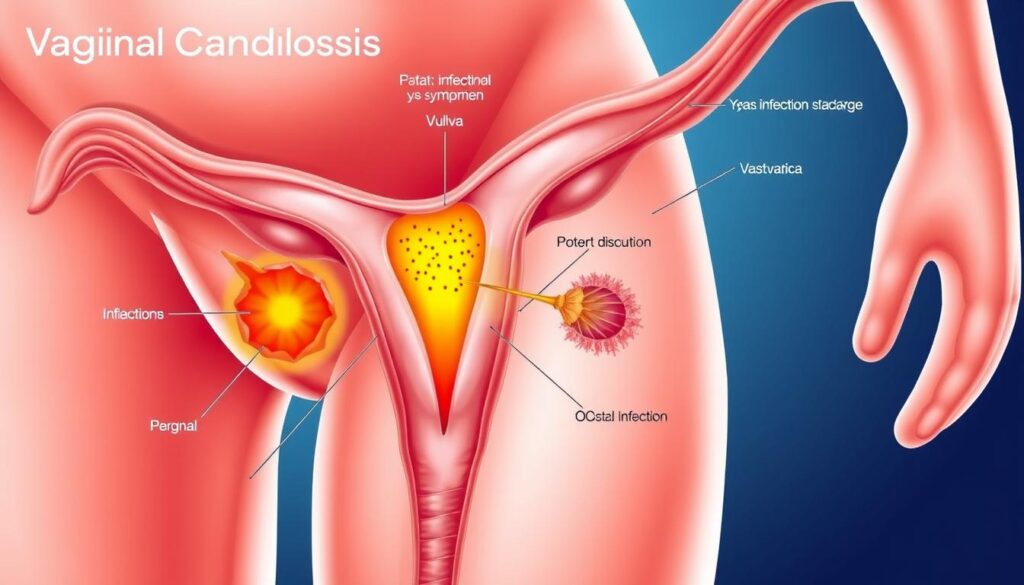
Vaginal candidosis is a key women’s health issue. This fungal infection, also called a yeast infection, can greatly affect daily life. It happens when Candida fungus overgrows in the vaginal area, causing discomfort12.
Did you know that 75% of women will have a vaginal yeast infection? These common infections can occur multiple times. Understanding this condition helps manage and prevent future episodes21.
Vaginal candidosis isn’t limited to sexually active people. Even those who aren’t sexually active can get these infections. Many factors can lead to Candida overgrowth1.
Antibiotic use, hormone changes, and weak immune systems are common causes. Knowing these factors can help you avoid future infections1.
Key Takeaways
- 75% of women experience at least one yeast infection
- Yeast infections can occur without sexual activity
- Multiple factors contribute to Candida overgrowth
- Proper understanding helps in prevention and management
- Not all vaginal infections are sexually transmitted
What is Candidosis Vaginal and Its Common Signs
Vaginal yeast infection, or candidosis, is a common fungal condition affecting many women. It’s caused by Candida albicans overgrowth, creating uncomfortable symptoms. These symptoms can disrupt daily life3.
Yeast infections are the second most common cause of vaginal discharge in the U.S. Most people naturally carry Candida in their body4.
Understanding the Basic Symptoms
Knowing the signs of a vaginal yeast infection is key for quick treatment. Common symptoms include:
- Intense vaginal itching
- Thick white discharge resembling cottage cheese
- Minimal vaginal odor
- Mild irritation around the vaginal opening
Recognizing Severe Symptoms
Some women face more intense signs of thrush or vaginitis. Severe symptoms may include:
- Significant redness and swelling
- Burning sensation during urination
- Pain during sexual intercourse
- Potential vaginal tears or sores
Some groups are more likely to get complicated vaginitis. Women with diabetes or weak immune systems face higher risks. Those taking antibiotics are also more prone to persistent yeast infections3.
Consulting a healthcare professional is essential if symptoms persist or worsen after initial treatment.
Key Factors Behind Yeast Infections Development
Knowing what causes Candida overgrowth can help prevent vaginal yeast infections. These infections arise from specific health and lifestyle conditions5.
- Antibiotic use that disrupts natural vaginal bacteria5
- Pregnancy and hormone changes6
- Uncontrolled diabetes6
- Weakened immune system5
Your health environment affects Candida infection risk. Certain lifestyle choices can make you more prone to these infections5:
- Wearing tight, non-breathable clothing
- Remaining in wet garments
- Using scented hygiene products
Not all yeast infections are created equal – different Candida species can cause varying levels of complexity in treatment6.
Candida albicans is the most common cause of yeast infections. Knowing these risk factors helps you prevent and detect vaginal yeast infections early5.
Prevention and Risk Management Strategies
Vaginal candidiasis management combines lifestyle changes and medical insights. Protecting yourself can lower your risk of thrush and other yeast infections. Understanding prevention is key to maintaining vaginal health.
Women should take action to prevent vaginal candidiasis. About 75% of women will experience at least one yeast infection in their lifetime7. Proactive steps can make a big difference in reducing risk.
Lifestyle Modifications
- Wear breathable, 100% cotton underwear
- Avoid tight-fitting clothing that traps moisture
- Change out of wet workout clothes promptly
- Practice good personal hygiene
- Minimize sugar intake
- Manage stress levels effectively
Medical Considerations
Medical management is crucial for preventing repeat yeast infections. About 40%-45% of women will have multiple episodes of vaginal candidiasis7. Here are key medical strategies:
- Regular check-ups with healthcare providers
- Managing underlying conditions like diabetes
- Careful antibiotic use
- Discussing hormone therapy options
Proactive prevention is always better than reactive treatment when managing vaginal yeast infections.
For those prone to recurring thrush, doctors may suggest preventive antifungal treatments. Weekly oral fluconazole for 6 months can effectively manage recurrent vaginal candidiasis7.
By using these strategies, you can lower your risk of yeast infections. This approach helps maintain optimal vaginal health and prevents future issues8.
Conclusion
Vaginal candidiasis is a common health issue. About 75% of women will face this yeast infection in their lives9. It’s more than just discomfort, with serious health and money impacts9.
Take charge of your health with smart choices. C. albicans causes over 90% of cases9. But new studies show other Candida types are rising. Medical research points to immune factors as key for treatment.
Quick detection and proper care are vital. Recurrent VVC affects 8% of women worldwide9. Team up with your doctor for the best results. Stay informed about drug resistance and new treatments.
Your battle with vaginal candidiasis is unique. Be alert and seek help when needed. Remember, knowledge is your best defense for vaginal health.
FAQ
What is a vaginal yeast infection?
A vaginal yeast infection is a common fungal issue. It’s caused by an overgrowth of Candida albicans. This leads to irritation, discharge, and itching of the vagina and vulva.
What are the most common symptoms of a vaginal yeast infection?
The main signs include intense itching and burning. You may notice a thick white discharge like cottage cheese. Redness, swelling, and soreness around the vaginal opening are also common.
Discomfort during sex or urination might occur too.
What causes vaginal yeast infections?
Several factors can trigger a yeast infection. These include antibiotic use and hormonal changes during pregnancy. Uncontrolled diabetes and weak immune systems are also risk factors.
Tight-fitting, non-breathable clothing can contribute. High estrogen levels and prolonged moisture in the area may lead to Candida overgrowth.
Are yeast infections contagious?
Yeast infections can spread through sexual contact. However, not everyone exposed will develop an infection. Partners might pass it back and forth.
Treatment for both individuals may be recommended.
How can I prevent recurring yeast infections?
Wear breathable cotton underwear and avoid tight clothes. Change out of wet clothes quickly. Manage health conditions like diabetes.
Use antibiotics only when necessary. Maintain good hygiene. Probiotics and reducing sugar intake can help keep vaginal flora healthy.
When should I see a healthcare provider?
Seek help for persistent or severe symptoms. Consult if you have more than four infections yearly. Get checked if over-the-counter treatments don’t work.
Pregnant women, diabetics, or those with weak immune systems should see a doctor. Signs of a complex infection also warrant medical attention.
What treatment options are available?
Antifungal medications come as creams, ointments, suppositories, or oral tablets. Short-course treatments often work for mild infections. Recurring or complex cases may need longer treatments.
A healthcare professional can prescribe stronger medications if needed.
Can diet impact yeast infections?
Diet plays a key role in managing yeast infections. Cutting down on sugar helps prevent Candida overgrowth. Eating probiotics supports vaginal health.
Try yogurt with live cultures and garlic. Avoid too many refined carbs for better results.
Source Links
- Yeast infection (vaginal) – Symptoms and causes – https://www.mayoclinic.org/diseases-conditions/yeast-infection/symptoms-causes/syc-20378999
- Vaginal Yeast Infection: Causes, Symptoms & Treatment – https://my.clevelandclinic.org/health/diseases/5019-vaginal-yeast-infection
- Patient education: Vaginal yeast infection (Beyond the Basics) – https://www.uptodate.com/contents/vaginal-yeast-infection-beyond-the-basics/print
- What is a Yeast Infection? – https://www.health.ny.gov/publications/3833/
- Vaginal yeast infection – https://www.mountsinai.org/health-library/diseases-conditions/vaginal-yeast-infection
- Risk Factors for Candidiasis – https://www.cdc.gov/candidiasis/risk-factors/index.html
- Vulvovaginal Candidiasis – STI Treatment Guidelines – https://www.cdc.gov/std/treatment-guidelines/candidiasis.htm
- Preventing Candidiasis – https://www.cdc.gov/candidiasis/prevention/index.html
- Vulvovaginal Candidiasis: A Current Understanding and Burning Questions – https://pmc.ncbi.nlm.nih.gov/articles/PMC7151053/

