
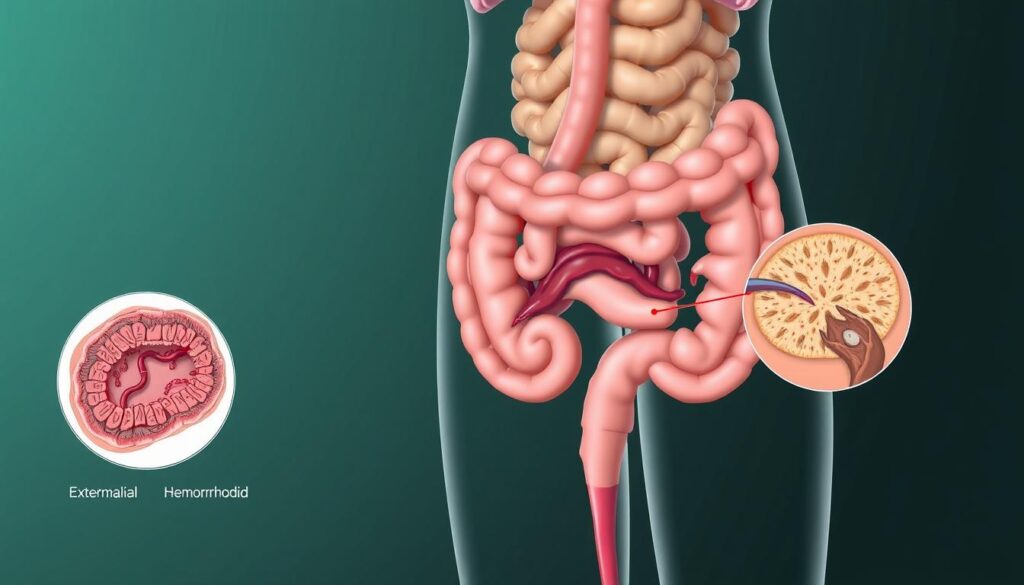
Hemorrhoidal disease affects millions of Americans, yet many don’t understand it. By age 50, about half of adults will have hemorrhoid problems1. Surprisingly, only one-third of the 10 million people with hemorrhoids seek medical help1.
Anal health is vital for overall well-being. Hemorrhoids are normal structures in the anal canal that aid bowel function. When swollen, they can cause discomfort and potential health issues.
Your risk of hemorrhoids increases with age. The rectal area’s supportive tissues naturally weaken over time2. Lifestyle, diet, and physical activity can greatly impact your chances of developing hemorrhoids.
Key Takeaways
- Hemorrhoids are a common condition affecting millions of Americans
- Age is a significant risk factor for developing hemorrhoids
- Most people with hemorrhoids do not seek medical treatment
- Lifestyle modifications can help prevent and manage hemorrhoids
- Understanding anal health is essential for overall wellness
Understanding Hemorrhoids and Their Impact on Your Health
Hemorrhoids are a common health issue affecting millions worldwide. They can be uncomfortable and embarrassing. Learning about their types, causes, and risk factors helps manage and prevent them.
Types of Hemorrhoids: Internal vs External
Hemorrhoids come in two main types: internal and external3. Internal hemorrhoids grow in the lower rectum’s lining. External hemorrhoids form under the skin around the anus.
Key differences include:
- Internal hemorrhoids: Located higher in the rectum, typically painless
- External hemorrhoids: Visible around the anal opening, can cause more discomfort
Common Risk Factors and Causes
About half of all people will experience hemorrhoids by age 504. Several factors contribute to their development.
Key risk factors include:
- Chronic constipation or straining during bowel movements
- Pregnancy and childbirth
- Aging and weakening of rectal tissues
- Low-fiber diet
- Prolonged sitting
“Understanding your risk factors is the first step in prevention and management.”
Recognition of Warning Signs
Spotting hemorrhoid symptoms early helps you get proper treatment. Common warning signs include:
- Bright red blood during bowel movements4
- Pain or irritation around the anus
- Swelling or hard lumps near the anal area
- Itching and discomfort5
See your doctor if symptoms last over a week or you have severe pain5. Early treatment can prevent complications and improve your quality of life.
Hemorrhoidal Disease: Symptoms and Diagnostic Approach
https://www.youtube.com/watch?v=-qX-NgyZmQA
Hemorrhoids affect about 10 million people in the United States. The condition peaks between ages 45-65. Recognizing key warning signs is vital for early detection and treatment.
Common signs of hemorrhoids include bright red bleeding during bowel movements. Persistent anal itching and discomfort in the anal region are also indicators. Some people experience a feeling of incomplete bowel evacuation.
- Bright red bleeding during bowel movements
- Persistent anal itching
- Discomfort in the anal region
- A feeling of incomplete bowel evacuation
Diagnosing hemorrhoids can be tricky due to overlapping symptoms with other anorectal conditions. Internal hemorrhoids are typically painless. Pain might indicate more serious issues. Obesity, pregnancy, and a low-fiber diet are risk factors.
“Early recognition of hemorrhoid symptoms is key to effective management and treatment.”
Healthcare providers usually perform a physical exam for hemorrhoid diagnosis. They may use various techniques to rule out other conditions. Anal itching can signal hemorrhoids or other health issues.
Studies show 55% of hemorrhoid patients have no symptoms. Regular screenings are crucial for high-risk groups. Fiber supplements can reduce bleeding and improve symptoms by up to 50%67.
Treatment Options and Relief Strategies
Hemorrhoids can be tough to handle. But don’t worry, there are many ways to find relief. Knowing your options will help you manage this uncomfortable condition better.
There are several ways to deal with hemorrhoids. Hemorrhoid Treatment includes simple home remedies and medical procedures8. Let’s explore these options to help you find relief.
Conservative Management Methods
Most hemorrhoid cases can be treated at home. In fact, 70-80% of people find success with self-care measures8. Here are some easy steps you can take:
- Dietary modifications
- Using stool softeners
- Applying over-the-counter pain relievers
- Using topical creams or suppositories
Medical Procedures and Surgical Solutions
Sometimes, home remedies aren’t enough. In these cases, medical procedures can help. Doctors use methods like rubber band ligation, sclerotherapy, and infrared photocoagulation8.
These treatments can effectively shrink hemorrhoids. They’re often less painful than traditional surgery.
| Procedure | Best For | Recovery Time |
|---|---|---|
| Rubber Band Ligation | Grades I-III Hemorrhoids | Short |
| Hemorrhoidectomy | Severe External Hemorrhoids | Longer |
Lifestyle Modifications for Better Outcomes
Preventing hemorrhoids is key. Maintaining a high-fiber diet, staying hydrated, and avoiding straining can reduce your risk8. These simple changes can make a big difference.
“Prevention is always better than cure when it comes to hemorrhoids.”
Understanding these strategies can help you manage hemorrhoids. You can find relief and prevent future discomfort. Remember, there’s always a solution to feel better.
Conclusion
Understanding hemorrhoidal disease is vital for good anal health. About 4.4% of U.S. adults face this condition9. Your approach to hemorrhoid care can greatly boost your life quality10.
Lifestyle changes are key in managing hemorrhoids. A high-fiber diet can cut symptoms and bleeding by half. Staying hydrated and avoiding long toilet sits also help10.
For ongoing issues, medical treatments like rubber band ligation work well for internal hemorrhoids9. Most cases don’t need surgery, but 5-10% of patients might10.
Know your risk factors and practice good bathroom habits. Seek medical advice when needed. These steps can help you manage and prevent hemorrhoids effectively11.
FAQ
What exactly are hemorrhoids?
Hemorrhoids are vascular cushions in the anal canal. They protect the anal sphincter naturally. When swollen, they can cause discomfort and troubling symptoms.
How common are hemorrhoids?
Half of all adults experience hemorrhoid problems by age 50. About 1 in 20 Americans are affected. Only one-third of those with symptoms seek medical treatment.
What are the different types of hemorrhoids?
Hemorrhoids are classified into two main types: external and internal. External hemorrhoids are below the dentate line and covered by skin.
Internal hemorrhoids are above the dentate line, covered by columnar cells. They are typically painless.
What are the main symptoms of hemorrhoids?
Common symptoms include bright red bleeding during bowel movements and anal itching. Other signs are pressure, discomfort, and a sense of incomplete evacuation.
Internal hemorrhoids are usually painless. External hemorrhoids can be more uncomfortable.
What causes hemorrhoids?
Risk factors include pregnancy, chronic constipation, and diarrhea. Prolonged straining during bowel movements and heavy weight lifting also contribute.
Weakening of supporting tissues due to aging or genetics can cause hemorrhoids too.
How are hemorrhoids treated?
Treatment ranges from conservative methods to medical procedures. Initial approaches include dietary changes and increased fiber intake.
Over-the-counter remedies like witch hazel and lifestyle changes can help. For severe cases, medical procedures or surgery may be recommended.
When should I see a doctor about hemorrhoids?
Seek medical attention if symptoms persist or worsen. Visit a doctor if you experience significant pain or notice persistent rectal bleeding.
It’s important to rule out other conditions with similar symptoms.
Can hemorrhoids be prevented?
Prevention strategies include maintaining proper bathroom habits. Avoid prolonged sitting on the toilet and increase fiber intake.
Stay hydrated, exercise regularly, and avoid straining during bowel movements.
Are hemorrhoids dangerous?
Hemorrhoids can be uncomfortable and impact quality of life. However, they are typically not dangerous.
It’s crucial to have persistent symptoms evaluated to rule out more serious conditions.
How long do hemorrhoid symptoms typically last?
Hemorrhoid symptom duration varies. Mild cases may resolve with home treatment in a few days to a week.
More severe cases might require medical intervention. These can take several weeks to improve completely.
Source Links
- Hemorrhoidal disease: Diagnosis and management – https://www.mayoclinic.org/medical-professionals/digestive-diseases/news/hemorrhoidal-disease-diagnosis-and-management/mac-20430067
- Hemorrhoids – Symptoms and causes – https://www.mayoclinic.org/diseases-conditions/hemorrhoids/symptoms-causes/syc-20360268
- Hemorrhoids | Piles | MedlinePlus – https://medlineplus.gov/hemorrhoids.html
- Hemorrhoids – https://www.hopkinsmedicine.org/health/conditions-and-diseases/hemorrhoids
- Everything You Need to Know About Hemorrhoids – https://www.templehealth.org/about/blog/everything-you-need-to-know-about-hemorrhoids
- Hemorrhoids: From basic pathophysiology to clinical management – https://pmc.ncbi.nlm.nih.gov/articles/PMC3342598/
- Hemorrhoids: Diagnosis and Treatment Options – https://www.aafp.org/pubs/afp/issues/2018/0201/p172.html
- Treatment of Hemorrhoids – NIDDK – https://www.niddk.nih.gov/health-information/digestive-diseases/hemorrhoids/treatment
- Hemorrhoids – https://www.aafp.org/pubs/afp/issues/2011/0715/p204.html
- Evaluation of Clinical Manifestations of Hemorrhoidal Disease, Carried Out Surgeries and Prolapsed Anorectal Tissues: Associations with ABO Blood Groups of Patients – https://www.mdpi.com/2077-0383/12/15/5119
- Epidemiology of Hemorrhoidal Disease – https://link.springer.com/doi/10.1007/978-3-319-53357-5_1

