
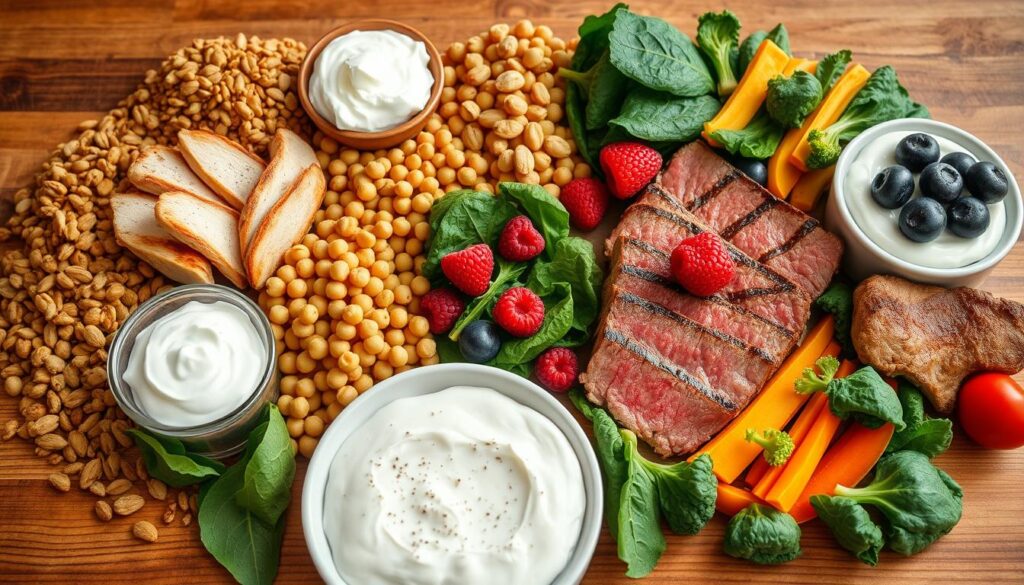
Protein-rich foods are vital for your health and wellness. They support muscle growth, bone strength, and overall nutrition. Adding these foods to your diet can change how you think about eating well1.
Protein does more than build muscles. It’s crucial for nearly every bodily function. Eggs provide 6.3 grams of protein1. Chicken breast offers a whopping 26.7 grams1.
Your meals can include many protein sources. Almonds have 6 grams per ounce1. Cottage cheese packs 28 grams in a cup1. Salmon lovers get 30.5 grams in half a fillet1.
Key Takeaways
- High-protein foods support muscle health and overall wellness
- Diverse protein sources exist for different dietary preferences
- Protein aids in maintaining satiety and supporting metabolic functions
- Nutrition can be delicious when incorporating varied protein sources
- Balanced protein intake is crucial for optimal health
Understanding Protein’s Role in Your Body
Protein is a vital nutrient for your overall health. Your body needs proteins for many essential functions. It’s crucial to include enough protein in your diet for optimal wellness2.
Proteins are complex molecules made of amino acids. They serve many important purposes in your body. Twenty different amino acids combine to create thousands of unique proteins2.
Essential Amino Acids and Their Functions
Your body needs specific amino acids for critical functions. Here are some key protein roles:
- Forming structural components like keratin and collagen2
- Supporting immune system health by creating immunoglobulins2
- Maintaining blood pH balance through proteins like hemoglobin2
- Storing essential minerals such as iron2
Daily Protein Requirements for Optimal Health
Knowing your protein needs is key to a healthy diet. The National Academy of Medicine suggests a daily intake for adults. They recommend at least 0.8 grams of protein per kilogram of body weight3.
| Body Weight | Daily Protein Requirement |
|---|---|
| 140 pounds | 50 grams |
| 200 pounds | 70 grams |
Benefits of Adequate Protein Intake
Eating healthy protein options supports many aspects of your health. Protein helps you feel full and manage your weight. It also supports muscle building and maintains bodily functions4.
“Protein is not just food, it’s fuel for your body’s most critical processes.” – Nutrition Expert
Your daily protein should be 10% to 35% of your total calories. One gram of protein provides 4 calories4.
For muscle building, choose high-quality protein sources. These offer complete amino acid profiles for best results.
High-Protein Foods for Every Diet
High-protein meal ideas can boost your nutrition strategy. There are many tasty options for meat-lovers, vegetarians, and plant-based eaters5.
Protein intake is crucial for your health. Adults should get 10% to 35% of daily calories from protein6.
Choose lean meats, seafood, eggs, and plant-based options. These foods offer great nutritional value7.
Animal Protein Powerhouses
- Chicken breast: 27g protein per 3-ounce serving6
- Salmon: 19g protein per 3-ounce serving7
- Lean ground beef: 22g protein per 3-ounce serving7
- Eggs: 6g protein per large egg7
Plant-Based Protein Champions
- Lentils: 18g protein per cup cooked7
- Peanut butter: 7g protein per 2 tablespoons7
- Pasta: 8g protein per cup cooked7
- Cottage cheese: 12g protein per 1/2 cup7
Proteins are essential for muscle maintenance and overall health7.
Mix animal and plant proteins in your diet. This ensures you get all essential amino acids. Remember, protein needs vary by age, sex, and activity level5.
| Protein Source | Protein (g) | Calories |
|---|---|---|
| Chicken Breast | 32g | 158 |
| Shrimp | 22.8g | 119 |
| Tofu | 21.8g | 181 |
Try different protein sources to keep meals exciting. Your body will love the variety and balance.
Conclusion
Protein is vital for your health and well-being. It’s the most filling nutrient, helping you control your weight. Adults need 46-56g of protein daily, which is easy to get from various foods8.
Active people can use protein-rich foods to keep their muscles strong. Research shows that active adults who eat enough protein are 35% less likely to lose physical function9. More young people are focusing on protein, with 53% of Gen Z eating protein-rich foods in 202310.
Adding protein to your diet is simple. You can find high-protein options in meal kits and restaurants10. Choose different protein sources that fit your needs.
By balancing your protein intake, you’ll boost your overall health. Embrace this approach and watch your body thrive with the power of protein.
FAQ
How much protein do I need daily?
Most adults need 0.8 grams of protein per kilogram of body weight. Your needs may vary based on weight, age, sex, and activity level. Athletes, pregnant women, and older adults might require more protein.
What are the best sources of protein?
Animal-based proteins include chicken breast (27g per 3-oz serving) and salmon (19g per 3-oz serving). Eggs provide 6g of protein per large egg.
Plant-based options are lentils (18g per cup cooked) and quinoa (8g per cup cooked). Peanut butter offers 7g per 2 tablespoons.
Can I get enough protein on a vegetarian or vegan diet?
Yes! Plant-based proteins are plentiful. They include legumes, nuts, seeds, certain grains, tofu, and tempeh.
Vegetarians can also enjoy Greek yogurt, cottage cheese, and eggs as protein sources.
What are the benefits of a high-protein diet?
High-protein diets support muscle growth and maintenance. They improve satiety, aid weight management, and enhance immune function.
Protein helps you feel full longer. It also reduces the risk of high blood pressure.
What are essential amino acids?
Essential amino acids are proteins your body can’t produce. You must get them through your diet.
There are nine essential amino acids. They play crucial roles in muscle synthesis, immune support, and overall health.
How does protein support weight management?
Protein helps you feel fuller for longer. This can reduce overall calorie intake and support weight management.
It boosts metabolism and preserves muscle mass during weight loss. Protein also helps regulate hunger hormones.
Are protein needs different for athletes?
Yes, athletes need more protein. It supports muscle recovery, growth, and overall performance.
Active individuals might need 1.2 to 2.0 grams of protein per kilogram of body weight.
Can I consume too much protein?
Excessive protein intake can strain your kidneys and liver. It’s best to follow recommended guidelines.
Consult a healthcare professional or nutritionist. They can determine the right amount for your individual needs.
Source Links
- High Protein Foods: 16 Foods for High Protein Meals – https://www.healthline.com/nutrition/high-protein-foods
- 9 Important Functions of Protein in Your Body – https://www.healthline.com/nutrition/functions-of-protein
- Protein – https://nutritionsource.hsph.harvard.edu/what-should-you-eat/protein/
- Protein in diet: MedlinePlus Medical Encyclopedia – https://medlineplus.gov/ency/article/002467.htm
- USDA MyPlate Protein Foods Group – One of the Five Food Groups – https://www.myplate.gov/eat-healthy/protein-foods
- 21 Low-Calorie and High-Protein Foods, Snacks, and Meal Ideas – https://www.verywellhealth.com/low-calorie-high-protein-foods-8599104
- The 8 Best High Protein Foods, According to a Dietitian – https://www.eatingwell.com/article/7938628/high-protein-foods-list-according-to-a-dietitian/
- A high-protein diet for reducing body fat: mechanisms and possible caveats – https://pmc.ncbi.nlm.nih.gov/articles/PMC4258944/
- High-Protein Foods and Physical Activity Protect Against Age-Related Muscle Loss and Functional Decline – https://pmc.ncbi.nlm.nih.gov/articles/PMC5861873/
- Beef Research – Leveraging Beef’s Role in High-Protein Diet Trends – https://www.beefresearch.org/resources/market-research-planning/white-papers/leveraging-beefs-role-in-high-protein-diet-trends

