
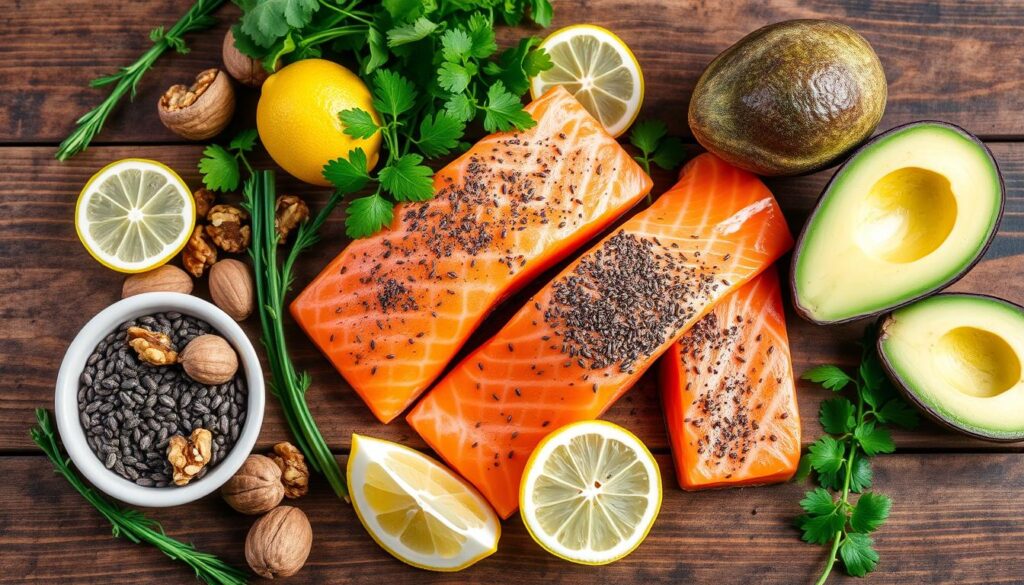
Omega-3 fatty acids can revolutionize your nutrition and wellness approach. These nutrients support heart health and brain function. They’re vital for a balanced diet1.
Men need about 1.6 grams of omega-3s daily. Women require approximately 1.1 grams per day2. These nutrients are crucial for cell membranes and reducing inflammation.
Omega-3s protect against chronic diseases. Most people consume more omega-6 fats than beneficial omega-3s2. Your body can’t produce these nutrients on its own.
You’ll need to get omega-3s through diet or supplements. The American Heart Association suggests two servings of fatty fish weekly1. This helps maximize the health benefits of omega-3 fatty acids.
Key Takeaways
- Omega-3s are crucial for overall health and wellness
- Daily intake varies by gender and age
- Fish and seafood are excellent sources of omega-3s
- These nutrients support heart and brain function
- Balanced omega-3 intake can help prevent chronic diseases
Understanding the Power of Omega-3 Fatty Acids
Omega-3 fatty acids are vital nutrients for your health. They support many body functions and offer big benefits. These include better heart health, brain function, and reduced inflammation.
Types of Omega-3 Fatty Acids
Your body needs three main types of omega-3s: EPA, DHA, and ALA. Each type has its own health perks.
- EPA (Eicosapentaenoic Acid): Primarily found in fish, supports heart health3
- DHA (Docosahexaenoic Acid): Critical for brain function and development4
- ALA (Alpha-linolenic Acid): Found in plant sources like flaxseeds and walnuts3
Health Benefits of Omega-3s
Omega-3 fatty acids offer amazing health benefits. Research shows they can do a lot for your body.
- Reduce cardiovascular disease risk4
- Support cognitive function and prevent age-related mental decline5
- Lower inflammation in the body5
- Improve symptoms of depression5
Recommended Daily Intake Guidelines
Your omega-3 needs depend on age and health. The National Institutes of Health suggests about 1-1.5 grams daily4.
Adults assigned male at birth should aim for 1.6 grams, while those assigned female at birth should target 1.1 grams of ALA3.
“Omega-3s are not just supplements, they’re a pathway to better health and wellness.”
Important note: Taking over 3 grams of omega-3s daily can cause health issues3. Always talk to a doctor about your specific needs.
Omega-3 Rich Foods: Best Natural Sources
Omega-3 rich foods can boost your nutritional intake. Fatty fish and plants offer health-boosting nutrients that support overall wellness6.
Marine Sources of Omega-3
Some fish are nutritional powerhouses. Mackerel tops the list with 4,580 mg of omega-3 per serving. Salmon follows with 2,150 mg7.
Other top marine sources include:
- Herring (2,150 mg per serving)
- Sardines (1,463 mg per serving)
- Oysters (329 mg per serving)
- Anchovies (411 mg per serving)
Plant-Based Omega-3 Sources
Plant-based omega-3 sources offer substantial nutritional benefits6. Chia seeds lead with 5,050 mg per ounce. They’re an excellent choice for nuts and seeds lovers.
| Plant Source | Omega-3 Content |
|---|---|
| Chia Seeds | 5,050 mg per ounce |
| Flaxseeds | 2,350 mg per tablespoon |
| Walnuts | 2,570 mg per ounce |
| Soybeans | 670 mg per 1/2 cup |
“Your body can convert plant-based ALA to EPA and DHA, though the conversion rate is less than 15%”6
Try omega-3 fortified products like eggs, milk, yogurt, and bread. These can help diversify your intake6.
A balanced approach to omega-3 rich foods supports your health. It benefits cardiovascular, respiratory, and immune systems6.
Maximizing Omega-3 Benefits in Your Diet
Smart food prep boosts omega-3 benefits. Your cooking methods and nutrient absorption impact these essential nutrients’ health perks. Let’s explore how to get the most from omega-3s.
Optimal Cooking Methods for Preserving Omega-3s
Gentle cooking keeps omega-3s intact. Steaming, baking, and light grilling are best for fatty acids8. Skip high-heat frying to protect fish and seeds’ nutrition.
- Bake salmon at low temperatures
- Steam mackerel to retain nutrients
- Gently toast seeds to enhance flavor
Strategic Food Combinations for Enhanced Absorption
Pair omega-3 foods smartly to boost absorption. Combining omega-3 sources with healthy fats improves benefits. Try chia seeds on avocado salad or olive oil on sardines.
| Omega-3 Source | Recommended Daily Intake | Pairing Suggestion |
|---|---|---|
| Chia Seeds | 5,000 mg per ounce9 | Pair with avocado or olive oil |
| Walnuts | 2,570 mg per ounce9 | Mix with Greek yogurt |
| Flaxseeds | 2,350 mg per tablespoon9 | Blend into smoothies |
Storage Techniques for Maintaining Freshness
Good storage keeps omega-3s fresh. Refrigerate fish and eat within 1-2 days. Store nuts and seeds in cool, dark places to prevent spoiling8.
“The way you store and prepare omega-3 rich foods can make a significant difference in their nutritional value.”
Can’t get enough omega-3s from food? Think about supplements like fish or algal oil8. Always talk to a doctor first.
Conclusion
Boost your health by understanding and eating omega-3 fatty acids. Smart food choices and nutrition know-how are key. ALA from plant oils and EPA and DHA from fish create a well-rounded diet10.
Omega-3 rich foods support various health aspects. They may improve heart function and brain performance. The American College of Cardiology suggests eating fish twice weekly for heart health11.
Explore omega-3 research to make informed food choices. Your long-term health relies on steady omega-3 intake. Western diets often lack omega-3 compared to fish-heavy diets in Japan10.
Mix various omega-3 sources into your meals. Consider supplements with professional advice. This approach can improve your nutrition and overall wellness.
Everyone’s nutrition needs differ. Consult a healthcare expert for personalized guidance. Your commitment to omega-3 rich foods promotes a healthy, vibrant life.
FAQ
What are omega-3 fatty acids?
Omega-3 fatty acids are vital nutrients found in fish, seeds, and nuts. They’re key parts of cell membranes and support many body systems. The main types are EPA, DHA, and ALA, each offering unique health perks.
How much omega-3 should I consume daily?
Experts suggest 250-500 mg of EPA and DHA daily. You can get this by eating fatty fish twice a week. For ALA, men need 1,600 mg, while women need 1,100 mg.
Pregnant and breastfeeding women should eat 8-12 ounces of low-mercury fish weekly.
What are the best food sources of omega-3s?
Top EPA and DHA sources include mackerel, salmon, herring, and sardines. Plant-based ALA sources are flaxseed, chia seeds, walnuts, and soybeans. Seaweed and algae also provide EPA and DHA.
What are the health benefits of omega-3s?
Omega-3s boost heart health, brain function, and reduce inflammation. They may help prevent cancer, Alzheimer’s, and eye problems. These fatty acids are crucial for overall well-being.
Can I get omega-3s if I’m vegetarian or vegan?
Absolutely! Plant-based omega-3 sources include chia seeds, flaxseeds, walnuts, and hemp seeds. Seaweed and algae are also great options. Algae-based supplements are available for those needing extra support.
How should I prepare omega-3 rich foods?
Grill, bake, or steam fish to keep omega-3 content high. Pair omega-3 foods with healthy fats for better absorption. Try adding olive oil to canned sardines.
Store fish in the fridge and eat within 1-2 days. Keep nuts and seeds in airtight containers in cool, dark places.
Are omega-3 supplements a good alternative?
Omega-3 supplements can help if you can’t get enough from food. Options include fish oil, cod liver oil, krill oil, and algae oil. Talk to a healthcare pro to find the right supplement for you.
Source Links
- Office of Dietary Supplements – Omega-3 Fatty Acids – https://ods.od.nih.gov/factsheets/Omega3FattyAcids-Consumer/
- Top Foods High in Omega-3 – https://www.webmd.com/diet/foods-high-in-omega-3
- Omega-3 Fatty Acids & the Important Role They Play – https://my.clevelandclinic.org/health/articles/17290-omega-3-fatty-acids
- Omega-3 Fatty Acids: Fact Sheet – https://www.webmd.com/healthy-aging/omega-3-fatty-acids-fact-sheet
- 17 Science-Based Benefits of Omega-3 Fatty Acids – https://www.healthline.com/nutrition/17-health-benefits-of-omega-3
- 15 Foods That Are Very High in Omega-3 – https://www.medicalnewstoday.com/articles/323144
- 12 Foods That Are Very High in Omega-3 – https://www.healthline.com/nutrition/12-omega-3-rich-foods
- Omega-3 Fatty Acids and Joint Health: Benefits and Sources – https://www.pdxfootandankle.com/blog/omega-3-fatty-acids-and-joint-health-benefits-and-sources-40772.html
- The 6 Best Plant Sources of Omega-3 Fatty Acids – https://www.healthline.com/nutrition/7-plant-sources-of-omega-3s
- Office of Dietary Supplements – Omega-3 Fatty Acids – https://ods.od.nih.gov/factsheets/Omega3FattyAcids-HealthProfessional/
- Fish oils and omega-3 oils: Benefits, foods, and risks – https://www.medicalnewstoday.com/articles/40253

