
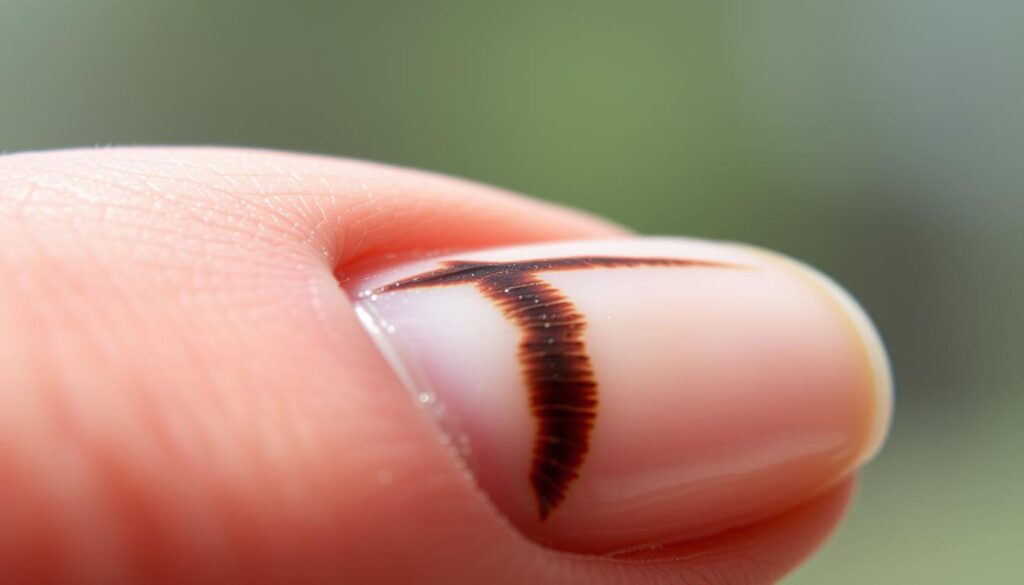
Melanonychia is a nail condition that can reveal important health insights. It causes dark brown or black streaks on nails. These streaks can be natural or signal underlying medical issues12.
This pigmentation may affect one or multiple nails. It can appear as distinct bands or cover the entire nail surface. People with darker skin are more prone to melanonychia2.
Up to 77-100% of African Americans may develop these nail changes. In contrast, only 1% of white people experience this condition2.
Recognizing melanonychia symptoms is vital for identifying potential health problems. The condition can arise from various factors. These include genetic predisposition, pregnancy, infections, and medications1.
Some cases are harmless, while others may indicate serious health issues. Nutritional deficiencies can also cause melanonychia.
Key Takeaways
- Melanonychia is a nail pigmentation condition affecting multiple races
- Darker-skinned individuals have higher prevalence rates
- Causes range from natural pigmentation to potential health concerns
- Pregnancy and certain medications can trigger nail pigmentation
- Professional medical evaluation is recommended for persistent changes
Understanding Melanonychia and Its Types
Melanonychia is a complex nail pigmentation condition with various forms. Your nails can reveal important health information through different pigmentation patterns. Recognizing these types helps identify potential underlying conditions.
There are three primary types of melanonychia. Each has unique characteristics and potential health implications. Let’s explore these types in detail.
Longitudinal Melanonychia (Melanonychia Striata)
Longitudinal melanonychia appears as a long, narrow band along the nail plate. It’s most common in people of African descent3. This pigmentation can develop due to pregnancy, nail trauma, or viral infections.
- Pregnancy
- Nail trauma
- Chronic nail-biting
- Viral infections
Diffuse or Total Melanonychia
Diffuse melanonychia causes complete discoloration across the entire nail plate. It can affect up to 20% of people in some populations4. This type might indicate underlying health conditions.
- Addison’s disease
- Cushing’s syndrome
- Exposure to chemotherapy
Transverse Melanonychia
Transverse melanonychia appears as a horizontal band across the nail’s width. This unique pigmentation pattern can result from various triggers. These triggers include systemic diseases, medications, and nutritional deficiencies.
- Systemic diseases
- Medications
- Nutritional deficiencies
“Nail pigmentation is not just a cosmetic concern but can be a window into your overall health.” – Dermatology Experts
Recognizing melanonychia types helps identify potential health signals. Most cases are harmless. However, consult a doctor if you notice significant changes in your nail pigmentation3.
Common Causes and Risk Factors of Nail Pigmentation
Nail pigmentation, or melanonychia, can stem from various causes affecting nail health. Recognizing these factors helps identify potential underlying conditions. Timely medical attention is crucial for proper diagnosis and treatment5.
- Racial differences in skin pigmentation6
- Pregnancy hormonal changes
- Fungal and bacterial infections
- Viral infections, especially in immunocompromised patients
Nail pigmentation risk factors fall into several groups:
- External Triggers
- Repeated nail trauma
- Friction and mechanical stress
- Environmental exposures
- Medical Conditions
- Inflammatory skin disorders
- Systemic diseases like Addison’s disease
- Hormonal imbalances
“Nail pigmentation can be a window to understanding your overall health” – Dermatology Experts
Key melanonychia diagnosis considerations include:
- Color changes
- Streak patterns
- Associated symptoms
| Cause Category | Prevalence |
|---|---|
| Benign Pigmentation | 75-80% |
| Malignant Conditions | 1-3% |
| Infection-Related | 10-15% |
Your risk increases with factors like dark skin tone and genetic predisposition. Certain lifestyle choices can also play a role. Consult a healthcare professional if you notice unusual nail pigmentation changes56.
Diagnosis and Treatment Methods for Melanonychia
Melanonychia requires careful medical evaluation. Your nail health can reveal insights about your overall well-being. Early detection and professional advice are crucial for managing this condition.
Clinical Examination and Diagnostic Tools
Melanonychia diagnosis involves a comprehensive approach. A Melanonychia specialist will perform several diagnostic procedures.
These include a detailed medical history review and thorough nail examination. They also use dermatoscopy to examine nail pigmentation. In some cases, a nail matrix biopsy may be necessary.
Doctors use the ABCDEF criteria to assess potential nail melanoma7. This includes age, band characteristics, and changes in pigmentation. It also considers digit involvement, pigment extension, and family history.
Treatment Options Based on Causes
Melanonychia treatment varies depending on the underlying cause8:
| Cause | Treatment Approach |
|---|---|
| Benign Pigmentation | Observation, no specific intervention |
| Medication-Induced | Medication adjustment or discontinuation |
| Infection | Targeted antifungal or antibacterial treatment |
| Melanoma | Surgical removal or tumor excision |
When to Seek Medical Attention
You should consult a Melanonychia diagnosis expert if you notice certain signs. These include dark streaks wider than 3mm or irregular nail pigment borders.
Also, watch for sudden changes in nail color or growth. Pigmentation spreading to surrounding skin is another concern.
“Early detection is key in managing potential nail-related health concerns.” – Dermatology Experts
Most adult single-digit longitudinal melanonychia cases stem from melanocytic activation7. Quick professional evaluation helps distinguish between benign and serious conditions.
Conclusion
Understanding melanonychia is vital for good nail health. It helps you spot potential problems early. Most cases are harmless, especially those linked to racial or physical factors9.
Regular nail checks are key to preventing melanonychia. Know the various possible causes to stay ahead of issues10. Careful observation of nail color changes is crucial, particularly with multiple bands or sudden shifts9.
The risk of a pigmented nail lesion becoming serious is low10. This should offer some peace of mind. However, if you see lasting changes, consult a doctor right away.
Professional diagnosis can tell harmless from serious conditions. Early detection through awareness can improve treatment outcomes significantly11. It also protects your overall nail health.
Your proactive approach to nail changes can make a big difference. Stay informed and check your nails often. Don’t wait to seek medical advice if something looks unusual.
FAQ
What exactly is melanonychia?
Melanonychia is a condition that causes dark pigmentation of the nails. It appears as black or brown discoloration. This can affect one or more nails, showing as a dark band, streak, or covering the whole nail.
Who is most likely to develop melanonychia?
People with darker skin tones are more prone to melanonychia. It affects up to 20% of Japanese people and 77% to 100% of African Americans. Only 1% of white people experience it.
However, melanonychia can occur in anyone, regardless of skin color.
What are the different types of melanonychia?
There are three main types of melanonychia. Longitudinal melanonychia is a long band along the nail length. Diffuse or total melanonychia covers the entire nail plate.
Transverse melanonychia is a band of color running across the nail’s width.
What causes melanonychia?
Causes include racial differences, pregnancy, and infections. Inflammatory skin conditions, trauma, tumors, and systemic diseases can also cause it. Medications, medical treatments, and nutritional deficiencies are other possible reasons.
Risk factors include dark skin color, exposure to bacteria or viruses, and activities causing nail trauma.
When should I be concerned about melanonychia?
Seek medical help if you notice dark nail streaks wider than 3mm. Also, check for irregular borders or changes in size or growth rate. Doctors use the ABCDEF criteria to assess potential serious conditions like nail melanoma.
How is melanonychia diagnosed?
Diagnosis involves reviewing medical history and examining the nails. Advanced techniques like dermatoscopy (onychoscopy) or biopsy may be used. Doctors assess the number of affected nails, pigmentation pattern, and discoloration characteristics.
What are the treatment options for melanonychia?
Treatment depends on the underlying cause. Benign cases may not need intervention. Others might involve treating diseases, stopping medications, or avoiding nail trauma. Addressing infections and correcting nutritional deficiencies can help too.
Malignant cases may require surgical removal or more extensive treatment.
Can melanonychia be prevented?
While not entirely preventable, you can reduce risks. Maintain good nail hygiene and protect your nails from trauma. Eat a balanced diet and manage underlying health conditions. Regular nail health check-ups are also important.
Source Links
- What to Know About Melanonychia – https://www.webmd.com/skin-problems-and-treatments/what-to-know-melanonychia
- Melanonychia: Causes, treatments, and diagnosis – https://www.medicalnewstoday.com/articles/melanonychia
- Melanonychia: What It Is, Causes, and More – https://www.healthline.com/health/melanonychia
- Melanonychia – https://dermnetnz.org/topics/melanonychia
- Melanonychia: Background, Pathophysiology, Etiology – https://emedicine.medscape.com/article/1375850-overview
- Is Brown Line on Nail a Sign of Melanoma or Vitamin Deficiencies? – https://www.verywellhealth.com/what-is-longitudinal-melanonychia-1069479
- Melanonychia – PMC – https://pmc.ncbi.nlm.nih.gov/articles/PMC3390039/
- Longitudinal melanonychia – UpToDate – https://www.uptodate.com/contents/longitudinal-melanonychia
- Melanonychia – Clues for a Correct Diagnosis – https://pmc.ncbi.nlm.nih.gov/articles/PMC7008765/
- Longitudinal Melanonychia – https://www.cdhub360.com/article/consultant360/longitudinal-melanonychia
- Dark Spots on Nails – What Is Melanonychia – Brisbane Physiotherapy – https://www.brisbanephysiotherapy.com/news/dark-spots-on-nails-what-is-melanonychia

