
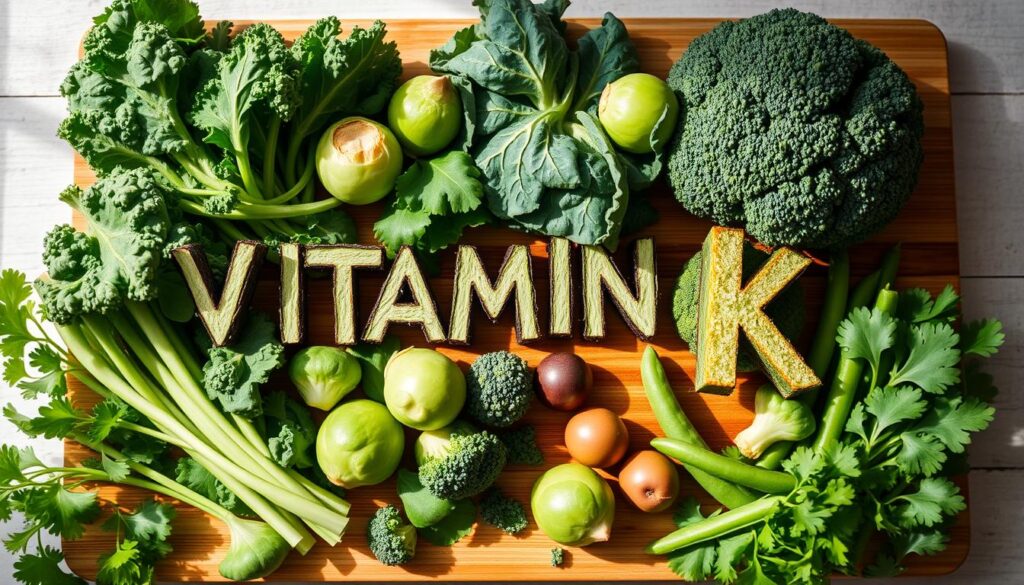
Vitamin K is crucial for your overall health. It supports essential bodily functions and optimizes nutrition. Women need 90 micrograms daily, while men require 120 micrograms1.
Your body needs two types of Vitamin K: K1 and K2. They support blood clotting, bone health, and heart wellness. Green veggies and plant oils provide K11.
Animal products and fermented foods offer Vitamin K2. Adding these foods to your diet can boost your nutritional intake1.
Discover Vitamin K-rich foods to improve your meals. Leafy greens and fermented options are great choices2.
Key Takeaways
- Vitamin K supports critical bodily functions
- Two types of Vitamin K exist: K1 and K2
- Daily intake varies by gender
- Sources include vegetables, animal products, and fermented foods
- Proper nutrition can optimize Vitamin K absorption
Understanding Vitamin K and Its Essential Role in Health
Vitamin K is crucial for your body’s basic processes. It helps with blood clotting, bone health, and cell function. Your body uses two types: K1 and K23.
Each type of vitamin K supports your wellness differently. They work together to keep you healthy and strong.
- Blood Clotting: Essential for preventing excessive bleeding
- Bone Metabolism: Supports bone density and strength
- Cardiovascular Health: Helps regulate calcium distribution
Vitamin K deficiency can show up in subtle ways. Look out for unusual bruising, long bleeding times, or weak bones4.
Newborns and people with certain health issues are more likely to lack vitamin K3.
“Vitamin K is your body’s natural guardian, protecting you from bleeding risks and supporting bone health.”
Your daily vitamin K needs matter. Men should aim for 120 mcg, while women need about 90 mcg4.
Supplements can help if your diet falls short. Always check with your doctor before starting any new supplement3.
For vitamin K, eat a variety of foods. Green veggies, fermented foods, and some oils are great sources5.
Use a vitamin K foods chart to track your intake. This can help you make sure you’re getting enough.
Pro Tip: Cooking methods can impact vitamin K absorption, so consider both raw and cooked vegetable options in your diet.
Foods High in Vitamin K
Vitamin K is crucial for your health. It’s important to know the best food sources. This knowledge helps you meet daily needs and support your body’s functions.
Green Leafy Vegetables: Your K1 Powerhouse
Leafy greens are champs for Vitamin K. Include kale, spinach, and collard greens in your diet. These foods are packed with vitamin K16.
A cup of kale provides over 1000 micrograms of vitamin K. This makes it an excellent choice for daily intake7.
- Kale: 1062 mcg per cup
- Spinach: 888 mcg per cup
- Collard greens: 772 mcg per cup
- Broccoli: 220 mcg per cup
Animal and Fermented Vitamin K2 Sources
Animal products and fermented foods offer great Vitamin K2 options. Natto, a fermented soybean dish, is the highest natural source6.
Dairy products, egg yolks, and organ meats are also rich in this nutrient. Chicken and goose liver are good choices.
| Food Source | Vitamin K2 Content (per 100g) |
|---|---|
| Goose Liver | 369 mcg |
| Hard Cheese | 76 mcg |
| Egg Yolks | 32 mcg |
Additional Vitamin K Food Sources
Fruits, nuts, and oils can boost your Vitamin K intake. Kiwi, avocado, and blueberries offer moderate amounts.
Pine nuts and cashews are good nut options. Soybean and canola oils can also help increase your intake6.
“Vitamin K is a fat-soluble vitamin that requires some healthy fat for optimal absorption in your body.”
Adults need about 90-120 micrograms of vitamin K daily6. Talk to a doctor before changing your diet, especially if you take blood thinners.
Conclusion
Vitamin K is vital for optimal health. It comes in two forms: K1 and K2. Each form plays a crucial role in your body’s functions8. A diet rich in Vitamin K supports blood clotting and bone health9.
Your food choices affect your Vitamin K intake. Green leafy veggies provide K1. Animal products and fermented foods offer K210. A study of 36,629 people showed high K2 intake might lower peripheral arterial disease risk8.
Your body absorbs K2 ten times better than K18. Most people get enough Vitamin K from food. However, some might need supplements8. Talk to your doctor before taking supplements, especially if you use blood thinners9.
Want to know more? Check out new research on Vitamin K. Adding various Vitamin K sources to your diet can boost your health. It may improve your heart and bone wellness9.
FAQ
What is Vitamin K and why is it important?
Vitamin K is a vital fat-soluble nutrient. It’s crucial for blood clotting, bone health, and heart function. This vitamin acts as a coenzyme for proteins involved in these processes.
What are the two types of Vitamin K?
Vitamin K comes in two main types: K1 and K2. K1 is found in green veggies and plant oils. K2 is present in animal products and fermented foods.
How much Vitamin K do I need daily?
Women need 90 micrograms (mcg) daily, while men need 120 mcg. Your needs may vary, so ask a doctor about your specific requirements.
What are the best food sources of Vitamin K1?
Green leafy veggies are top sources of Vitamin K1. Kale, parsley, and spinach are excellent choices. Broccoli, Brussels sprouts, and asparagus also provide good amounts.
What are the best food sources of Vitamin K2?
Natto, fermented soybeans, is the highest natural source of Vitamin K2. It contains 850 mcg per 3-ounce serving. Other good sources include goose liver, cheeses, egg yolks, and some meats.
What are the symptoms of Vitamin K deficiency?
Vitamin K deficiency can cause excessive bleeding and easy bruising. You might notice blood clots under nails or dark, blood-containing stool. It can also affect bone health and blood clotting.
Can I take Vitamin K supplements?
Vitamin K supplements are available if you can’t get enough from food. If you take blood thinners, talk to your doctor before starting supplements.
How can I improve Vitamin K absorption?
Your body only absorbs 4% to 17% of Vitamin K from spinach. Eat Vitamin K-rich veggies with some fat to boost absorption. This helps your body use the nutrients better.
Are there Vitamin K-rich fruits and nuts?
Yes! Kiwi, plantains, avocado, and blueberries contain Vitamin K. Pine nuts and cashews also provide some Vitamin K to your diet.
How does Vitamin K support bone health?
Vitamin K works with osteocalcin, a protein that helps build bones. It also supports Matrix Gla-protein (MGP). MGP may reduce abnormal calcification in blood vessels, improving bone and heart health.
Source Links
- Foods high in vitamin K: 40 of the best – https://www.medicalnewstoday.com/articles/321586
- Top 50 Foods High in Vitamin K – https://ketone.com/blogs/blog/supplements-top-50-foods-high-in-vitamin-k?srsltid=AfmBOoqslf9qL0wwLMFoWhPufb_ajm3DfWNAF47J3eh9-myxw5rr-6Pq
- Vitamin K Information | Mount Sinai – https://www.mountsinai.org/health-library/supplement/vitamin-k
- Vitamin K – https://nutritionsource.hsph.harvard.edu/vitamin-k/
- Office of Dietary Supplements – Vitamin K – https://ods.od.nih.gov/factsheets/VitaminK-HealthProfessional/
- 21 Foods for Your Vitamin K Fix – https://health.clevelandclinic.org/foods-high-in-vitamin-k
- Vitamin K Content of Foods – https://www.nutrition.va.gov/docs/UpdatedPatientEd/Food_Drug_Vitamin_K_Content_of_Foods_2018.pdf
- Vitamin K-2: Functions, sources, benefits, and deficiency symptoms – https://www.medicalnewstoday.com/articles/325059
- Vitamin K as a Diet Supplement with Impact in Human Health: Current Evidence in Age-Related Diseases – https://pmc.ncbi.nlm.nih.gov/articles/PMC7019739/
- Vitamin K – sources, physiological role, kinetics, deficiency, detection, therapeutic use, and toxicity – https://pmc.ncbi.nlm.nih.gov/articles/PMC8907489/

