
Your diet plays a crucial role in hair growth and strength. Natural foods can transform your locks from lifeless to vibrant1. A nutrient-rich diet supports hair follicles’ metabolism and cell division1.
Nutrition and hair health are closely linked. Best foods for hair growth provide essential vitamins and minerals. Buckwheat contains zinc, iron, magnesium, vitamin E, and B vitamins for healthy hair1.
Nutritional deficiencies can lead to hair loss1. Smart food choices can help solve this problem. Greek yogurt, with 20 grams of protein per serving, provides essential building blocks1.
Key Takeaways
- Nutrition directly impacts hair growth and health
- Nutrient-rich foods can prevent hair loss
- Protein and vitamins are crucial for hair strength
- A balanced diet supports hair follicle metabolism
- Strategic food choices can improve hair density
Understanding the Connection Between Nutrition and Hair Growth
Your hair’s health depends on the nutrients you eat. What you eat affects your hair’s strength and growth. Poor nutrition can harm your hair’s vitality.
Half of adults experience pattern hair loss by age 50. This shows how important nutrition is for hair health2. Your diet can either help or hurt hair growth.
Nutritional Deficiencies and Hair Loss
Lack of certain nutrients can cause hair problems. Iron deficiency, common worldwide, affects hair health2. Some nutrients are vital for strong hair follicles:
- Protein for follicle structure
- Biotin for keratin production
- Iron for oxygen transportation
- Zinc for hair growth and repair
Key Nutrients Supporting Healthy Hair Growth
Hair-friendly foods are rich in specific vitamins and minerals. Antioxidants can block DHT-induced processes and neutralize harmful free radicals3. These nutrients help prevent hair loss.
How Diet Affects Your Hair Growth Cycle
Your diet impacts cell function and inflammation in hair growth. Unsaturated fatty acids, vitamins, and minerals influence the hair cycle3. Zinc, copper, and vitamins A and C help absorb iron for hair health3.
Nutrition isn’t just about what you eat—it’s about feeding your hair from the inside out.
Eating hair-friendly foods can improve your hair’s look and strength. Understanding these links helps you take steps towards healthier hair.
Foods for Hair Growth: Essential Options for Your Diet
The right foods can transform your hair growth journey. Your diet is crucial for maintaining vibrant locks. With about 100,000 hair shafts on your scalp, proper nutrients are vital.
Let’s explore top foods that boost hair growth:
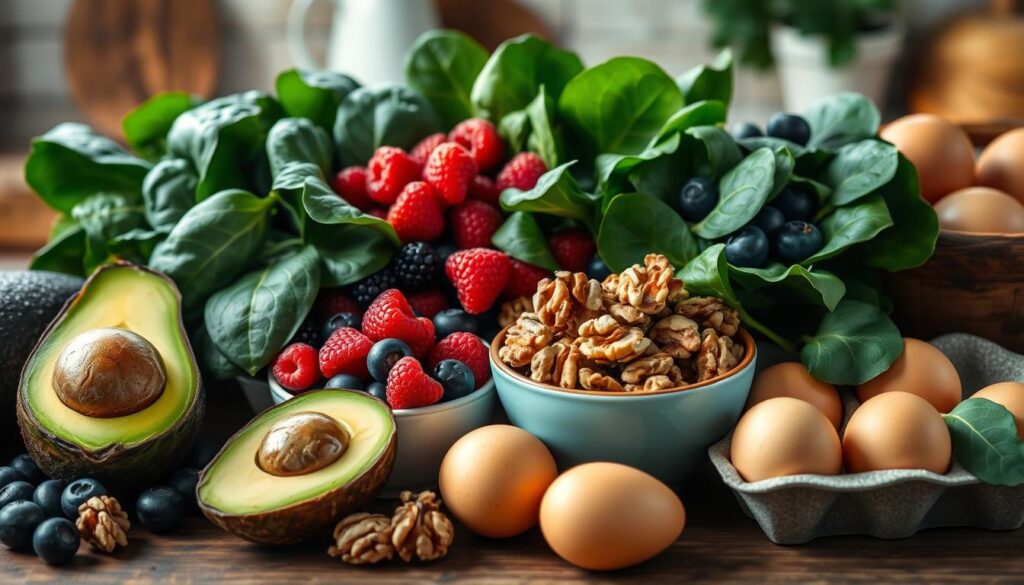
- Eggs: Packed with protein and biotin, eggs are a powerhouse for hair nutrition4.
- Salmon: Rich in omega-3 fatty acids, providing 1.22 g of DHA per serving5.
- Spinach: Loaded with iron and vitamins that support hair strength4.
- Berries: Antioxidant champions that boost hair health5.
| Food | Key Nutrients | Hair Growth Benefits |
|---|---|---|
| Oysters | Zinc | Covers 100% daily zinc needs5 |
| Avocado | Vitamin E | Supports scalp circulation4 |
| Sunflower Seeds | Vitamin E | 49% daily value per serving5 |
Focusing on hair-friendly foods is an investment in your locks’ future. Your hair’s life cycle lasts about 3.5 years. Consistent good nutrition makes a difference.
Nutrition is the foundation of healthy, beautiful hair. What you eat today grows tomorrow.
Conclusion
Hair health is closely linked to the nutrients we consume. Research shows diet plays a crucial role in maintaining strong, vibrant locks6. Nutritional deficiencies are often the root cause of hair loss7.
Natural foods boost hair growth, but they’re not a cure-all. Hair typically grows 1 cm per month, affected by genetics, diet, and overall health7. For best results, combine healthy foods with proper hair care.
Your hair’s health starts with understanding your body’s nutritional needs. Zinc, protein, and biotin are key for hair tissue growth and repair6. A healthcare professional can help create a personalized nutrition plan for you.
Hair growth is complex, involving more than just diet. A balanced approach is best. Include good nutrition, stress management, and expert advice to reach your hair health goals.
FAQ
Can diet really impact hair growth?
Yes, diet plays a vital role in hair health. Nutritional deficiencies can affect hair growth and cause hair loss. Foods rich in protein, omega-3s, iron, and vitamins B12, D, and biotin support healthy hair growth.
What are the top foods for promoting hair growth?
Eggs are rich in protein and biotin. Salmon provides omega-3 fatty acids. Spinach offers iron and vitamins.
Berries contain antioxidants and vitamin C. Sweet potatoes are high in beta-carotene. Avocados offer healthy fats. Nuts and seeds provide zinc and vitamin E.
How quickly can I see results from changing my diet?
Hair growth is slow. Dietary changes usually take 3-6 months to show noticeable results. Many factors influence hair growth, including genetics, health, and nutrition.
Consistency is key. Maintain a balanced diet rich in hair-healthy nutrients. Be patient with the process.
Can nutritional deficiencies cause hair loss?
Yes, nutritional deficiencies can lead to hair loss. Lack of protein, biotin, iron, zinc, and vitamins A, C, D, and E can disrupt hair growth.
These deficiencies can weaken hair structure and reduce hair production. They may also increase hair shedding.
Are supplements necessary for hair growth?
A balanced diet is best. Supplements can help if you have nutritional gaps. Consult a healthcare professional before starting any supplement regimen.
Focus on getting nutrients from whole foods. Aim for a varied, balanced diet first.
Do proteins matter for hair growth?
Protein is crucial for hair growth. Hair is mostly keratin, a protein. Dietary protein maintains strong, healthy hair.
Eggs, fish, lean meats, beans, and Greek yogurt provide protein. These foods support hair health and growth.
How does hydration affect hair growth?
Hydration is essential for hair health. Water helps transport nutrients to hair follicles. It supports cellular function and prevents dry, brittle hair.
Aim to drink at least 8 glasses of water daily. This supports hair growth and overall health.
Can stress impact hair growth?
Yes, stress can disrupt your hair growth cycle. It may lead to conditions like telogen effluvium, causing rapid hair loss.
Combine a nutritious diet with stress management techniques. Try meditation, regular exercise, and adequate sleep to support healthy hair growth.
Source Links
- 13 Foods for Hair Growth With Biotin, Omega-3s, Vitamins – https://www.verywellhealth.com/foods-for-hair-growth-8598578
- Diet and hair loss: effects of nutrient deficiency and supplement use – https://pmc.ncbi.nlm.nih.gov/articles/PMC5315033/
- Influence of Nutrition, Food Supplements and Lifestyle in Hair Disorders – https://pmc.ncbi.nlm.nih.gov/articles/PMC9650738/
- 9 Food for Hair Growth and Thickness – Diet for Healthy Hair – https://www.metropolisindia.com/blog/lifestyle/best-foods-to-grow-thick-and-healthy-hair
- Here Are 12 Foods To Eat for Healthy Hair Growth – https://www.health.com/foods-for-hair-growth-7963750
- The Importance of Nutrition for Healthy Hair Growth – https://neofollics.com/blogs/articles/the-importance-of-nutrition-for-healthy-hair-growth
- Nourishing Foods for Hair Growth: A Diet Guide for Healthy Hair – https://www.hairmdindia.com/blog/foods-for-hair-growth-diet-for-healthy-hair-hairmd/

