
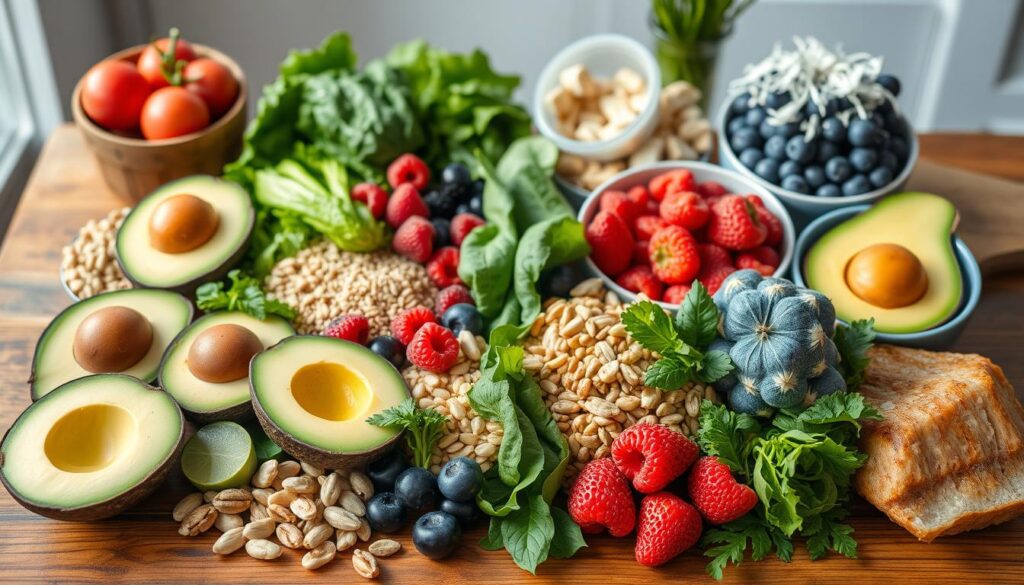
Pregnancy nutrition is vital for you and your baby’s health. Choosing the right foods is key to healthy eating during pregnancy. Whole foods provide essential nutrients that support your baby’s growth and development1.
Your pregnancy diet should focus on nutrient-dense options. These foods deliver maximum nutritional benefits. Whole foods supply extra protein, calcium, iron, and vital vitamins1.
From dairy to leafy greens, each food choice impacts your baby’s health. Selecting the best foods means choosing items with comprehensive nutritional support.
Legumes, salmon, eggs, and lean meats are great protein sources. These foods provide essential nutrients for both mother and child1. They help ensure optimal fetal development and maternal health.
Key Takeaways
- Prioritize nutrient-dense whole foods during pregnancy
- Focus on protein-rich foods for baby’s development
- Include diverse food groups for comprehensive nutrition
- Stay hydrated and maintain balanced eating habits
- Choose foods that support both maternal and fetal health
Essential Nutrients for a Healthy Pregnancy
Your prenatal diet is vital for both you and your baby’s health. Knowing the right nutrients helps you eat well for two. Pregnancy superfoods are packed with elements that support growth and well-being.
Let’s explore the key nutritional needs during this special time. These nutrients are crucial for a healthy pregnancy journey.
Protein and Iron Requirements
Protein is crucial during pregnancy. It supports fetal growth and increased blood volume. Aim for about 71 grams of protein daily2.
Iron is equally important. You need 27 milligrams daily to prevent anemia3. It helps deliver oxygen to your growing baby.
- Protein supports tissue growth
- Iron prevents pregnancy-related anemia
- Lean meats, beans, and legumes are excellent sources
Calcium and Vitamin D Needs
Calcium and vitamin D are key for strong bones and teeth. Pregnant women should get 1,000 milligrams of calcium daily2. Vitamin D helps absorb calcium.
The recommended daily intake of vitamin D is 600 IU3. These nutrients work together for your baby’s development.
“Nutrition is the foundation of a healthy pregnancy” – Maternal Health Expert
Folate and Folic Acid Importance
Folic acid helps prevent neural tube defects. You need 400-600 micrograms daily before and during pregnancy4. Most prenatal vitamins include this essential nutrient3.
| Nutrient | Daily Requirement | Key Benefit |
|---|---|---|
| Folic Acid | 400-600 mcg | Prevents neural tube defects |
| Iron | 27 mg | Supports blood production |
| Calcium | 1,000 mg | Builds strong bones |
Pro tip: A daily prenatal vitamin helps meet critical nutritional needs. It’s a simple way to support your pregnancy journey.
Foods to Eat When Pregnant
Pregnancy nutrition is vital for a healthy pregnancy and baby development. Your diet provides essential nutrients for you and your growing little one. Choose nutrient-dense foods that support optimal growth and well-being5.
Focus on a balanced diet with various nutrient-rich options. Key food groups to prioritize include vegetables, fruits, dairy, proteins, and whole grains.
- Vegetables: Carrots, spinach, and leafy greens5
- Fruits: Cantaloupe, oranges, and berries5
- Dairy: Yogurt and milk for calcium5
- Proteins: Beans, salmon, and lean meats5
- Whole grains: Ready-to-eat cereals and fortified grains5
Calorie needs change throughout pregnancy. Your nutritional requirements will vary by trimester:
| Trimester | Extra Calories Needed |
|---|---|
| First Trimester (0-12 weeks) | No extra calories6 |
| Second Trimester (13-26 weeks) | 340 extra calories daily6 |
| Last Trimester (after 26 weeks) | 450 extra calories daily6 |
Important considerations for pregnancy nutrition include consuming 8-12 ounces of seafood weekly and maintaining proper folic acid intake6.
Take 400-800 mcg of folic acid in prenatal supplements6. Pay attention to iron supplementation, as many women don’t get enough during pregnancy6.
Use iodized salt for iodine intake. Choose foods rich in choline for your baby’s brain development6.
Avoid potentially harmful foods such as:
- Raw or undercooked meats
- Unpasteurized dairy products
- Raw fish or shellfish
- Deli meats (unless heated)
- Raw sprouts
Limit caffeine intake and completely avoid alcohol during pregnancy6. Always consult your healthcare provider for personalized nutritional advice tailored to your needs.
Conclusion
Your pregnancy nutrition is vital for your health and your baby’s growth. A well-planned diet sets the foundation for optimal development. Balanced meals and understanding your nutritional needs help you navigate this special time confidently78.
When choosing pregnancy foods, variety is crucial. Your body needs different nutrients to support your changing physiology. Healthcare professionals can help create a personalized nutrition plan for you7.
A comprehensive approach to pregnancy nutrition provides essential building blocks for your child’s health. Your thoughtful choices today benefit both you and your baby long-term8.
Embrace this journey with mindful eating and self-care. Stay informed and listen to your body’s needs. Enjoy nurturing new life through balanced nutrition7.
FAQ
How much protein do I need during pregnancy?
Pregnant women need about 71 grams of protein daily. Protein is vital for your baby’s growth and development. Lean meats, poultry, fish, eggs, legumes, and dairy are great protein sources.
These foods also provide iron and calcium. Both nutrients support your health and your baby’s.
What are the most important nutrients I should focus on during pregnancy?
Key nutrients include folate, iron, calcium, vitamin D, and omega-3 fatty acids. Folate prevents neural tube defects. Iron wards off anemia.
Calcium aids bone development. Vitamin D helps absorb calcium. Omega-3s boost your baby’s brain and eye growth. A prenatal vitamin can help cover these bases.
Are there specific foods I should eat during pregnancy?
Yes! Eat nutrient-dense whole foods like leafy greens, sweet potatoes, salmon, eggs, and berries. Whole grains, avocados, and legumes are also great choices.
Include lean proteins, dairy, fruits, vegetables, and whole grains in your meals. Eat 8-12 ounces of low-mercury seafood weekly. Stay hydrated too.
What foods should I avoid during pregnancy?
Steer clear of raw or undercooked meats, unpasteurized dairy, high-mercury fish, and too much caffeine. Limit caffeine to 200 mg daily, about one 12-ounce coffee cup.
Be careful with soft cheeses, deli meats, and raw fish. Wash fruits and veggies well. Practice food safety to protect yourself and your baby.
How much calcium do I need during pregnancy?
You need about 1,000 milligrams of calcium daily during pregnancy. It’s crucial for your baby’s bones and teeth. Good sources include dairy, fortified plant milks, and leafy greens.
Calcium-fortified foods are also helpful. If you’re lactose intolerant or avoid dairy, ask your doctor about supplements.
Is it safe to take a prenatal vitamin during pregnancy?
Yes, a daily prenatal vitamin is usually safe and recommended. These supplements fill nutritional gaps and provide essential nutrients like folic acid and iron.
They also supply calcium and vitamin D. Always check with your doctor before starting any new supplements.
How much water should I drink during pregnancy?
Staying hydrated is crucial during pregnancy. Aim for 8-10 glasses (64-80 ounces) of water daily. Your needs may increase based on activity, climate, and health.
Water forms amniotic fluid and supports increased blood volume. It also helps prevent common pregnancy issues like constipation and urinary tract infections.
Source Links
- 13 Foods to Eat When You’re Pregnant – https://www.healthline.com/nutrition/13-foods-to-eat-when-pregnant
- Pregnancy and Nutrition | MedlinePlus – https://medlineplus.gov/pregnancyandnutrition.html
- Vitamins and other nutrients during pregnancy – https://www.marchofdimes.org/find-support/topics/pregnancy/vitamins-and-other-nutrients-during-pregnancy
- Vitamins, minerals and supplements in pregnancy – https://www.nhs.uk/pregnancy/keeping-well/vitamins-supplements-and-nutrition/
- Nutrition During Pregnancy – https://www.hopkinsmedicine.org/health/wellness-and-prevention/nutrition-during-pregnancy
- Eat Healthy During Pregnancy: Quick tips – MyHealthfinder – https://odphp.health.gov/myhealthfinder/pregnancy/nutrition-and-physical-activity/eat-healthy-during-pregnancy-quick-tips
- The importance of nutrition in pregnancy and lactation: lifelong consequences – https://pmc.ncbi.nlm.nih.gov/articles/PMC9182711/
- Eating right during pregnancy: MedlinePlus Medical Encyclopedia – https://medlineplus.gov/ency/patientinstructions/000584.htm

