
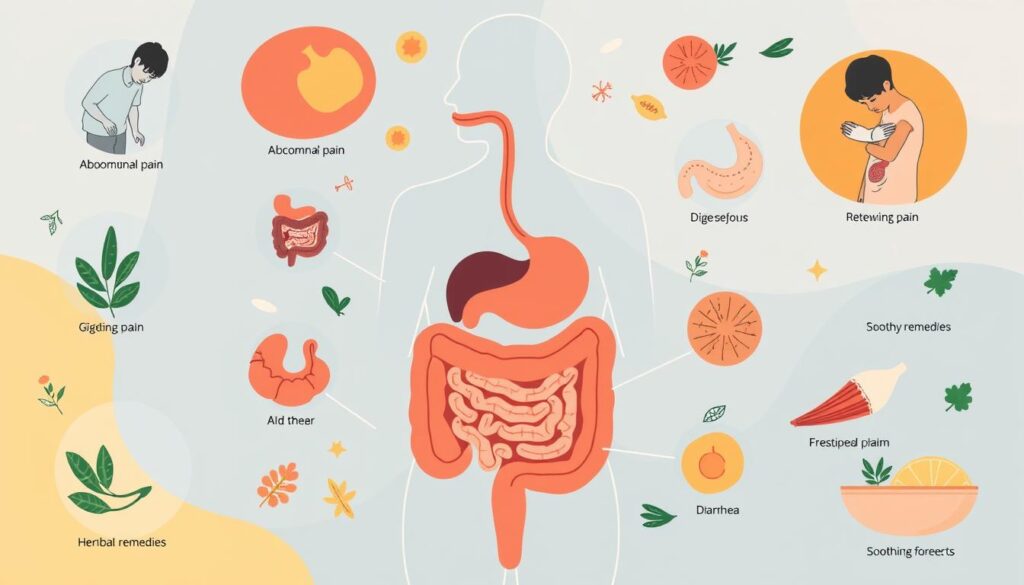
Stomach cramps and digestive discomfort can be painful and frustrating. These issues often show up as abdominal pain and diarrhea. Such problems can pop up out of nowhere, messing up your day-to-day life1.
Knowing what causes your tummy troubles is key to dealing with them. Many things can set off these digestive issues. They range from virus infections to food problems12.
Over 20 percent of people have food issues that lead to these uncomfortable symptoms2. Your body talks to you through loose stools, cramps, and frequent toilet trips.
Most cases clear up fast. But if they last long, they might point to a bigger problem. In such cases, it’s best to see a doctor1.
Key Takeaways
- Abdominal pain and diarrhea can result from multiple health conditions
- Food sensitivities impact digestive health significantly
- Symptoms lasting over a week may require professional evaluation
- Proper hydration and diet are critical for recovery
- Understanding your body’s signals is key to managing digestive issues
Understanding Abdominal Pain and Diarrhea: Common Symptoms
Digestive issues can be tricky to figure out. Knowing about abdominal pain and diarrhea helps spot health problems. It’s key to know when to see a doctor.
Identifying Abdominal Pain Types
Abdominal pain comes in different forms and strengths. Your body may feel various sensations that point to digestive issues. Irritable Bowel Syndrome (IBS) can cause unique pain patterns.
IBS pain may include cramping, sharp pains, or dull aches. You might also feel bloated or gassy. These symptoms can change based on what triggers them.
- Cramping sensations
- Intermittent sharp pains
- Dull, persistent discomfort
- Bloating and gas
IBS affects both the stomach and intestines. Some people only feel mild discomfort. Others may face tougher challenges3.
Recognizing Different Forms of Diarrhea
Diarrhea isn’t always the same. It can show up in various ways. These differences might point to issues like food poisoning or stomach flu.
- Watery stools
- Loose, unformed bowel movements
- Potentially bloody or mucus-containing discharge
If diarrhea lasts more than a few days, it could be serious. It might signal infections, drug side effects, or digestive problems4.
When Symptoms Require Medical Attention
“Your body communicates through symptoms. Listen carefully and seek help when needed.”
Some symptoms need a doctor’s help right away. Watch out for these signs:
- Frequent nausea
- Sustained fever above 102°F
- Bloody stools
- Inability to consume food
- Extreme thirst
- Mental confusion
Babies and older adults are at higher risk from long-lasting digestive issues. Not drinking enough water can be very dangerous.
If left untreated, dehydration can become life-threatening4. Always seek medical help if you’re unsure about your symptoms.
Common Causes of Digestive Distress
Digestive issues can arise from many sources, affecting your daily life and health. Functional gastrointestinal diseases are the most common digestive system problems. These include constipation, irritable bowel syndrome (IBS), and diarrhea5.
Several key conditions can lead to digestive distress:
- Food Allergies: Trigger inflammatory responses in the digestive tract
- Lactose Intolerance: Causes digestive discomfort after consuming dairy products
- Celiac Disease: An autoimmune reaction to gluten that damages the intestinal lining
- Inflammatory Bowel Disease: Chronic conditions causing ongoing digestive inflammation
Your digestive health depends on many factors. Diet, stress, and lifestyle all play vital roles in gut wellness5. Common triggers include:
- Low-fiber diet
- Lack of exercise
- Chronic stress
- Certain medications
“Understanding your body’s unique digestive patterns is key to managing potential health issues.”
Digestive conditions are quite common. Irritable Bowel Syndrome affects 1 in 10 people in the U.S. yearly6. Crohn’s disease impacts about 700,000 Americans6.
Abdominal pain after eating can stem from various issues. These may include food allergies, indigestion, or inflammatory conditions7.
Recognizing potential causes is the first step toward effective management of your digestive health.
Effective Home Remedies and Treatment Options
Digestive issues can be tough. Knowing different treatment approaches can help manage symptoms better. Let’s explore strategies that can provide relief during challenging digestive moments.
Dietary Modifications and BRAT Diet
The BRAT diet helps manage diarrhea effectively. It includes easily digestible, low-fiber foods that stabilize your digestive system8.
Your diet should include:
- Bananas
- Rice
- Applesauce
- Toast
Stay away from high-fiber, spicy, and fatty foods. These can cause more digestive problems9.
Natural Remedies and Supplements
Herbal supplements can boost your digestive health. Probiotics offer significant benefits for gut10. Try these natural remedies:
- Chamomile tea
- Lemongrass tea
- Bilberry extract
- Glutamine supplements
Saccharomyces boulardii, a specific probiotic, helps with antibiotic-associated and traveler’s diarrhea10.
Hydration and Electrolyte Balance
Staying hydrated is crucial during digestive issues. Drink 8-10 glasses of water daily8. Oral Rehydration Solutions like Pedialyte can replenish essential electrolytes10.
Clear liquids such as broth and pulp-free fruit juices are great for hydration8.
Over-the-Counter Medications
Antidiarrheal medications can quickly relieve symptoms. Bismuth subsalicylate and loperamide work well10. Always consult with a healthcare professional before starting any medication.
If symptoms last more than two days, seek medical help. Also, get help for severe pain, high fever, or signs of dehydration10.
Conclusion
Understanding abdominal pain and diarrhea is key to better digestive health. Recognizing early symptoms and taking preventive steps can greatly improve your gut wellness. Simple practices like hand-washing can cut diarrhea rates by a third11.
Don’t wait to get medical help for ongoing digestive problems. Some medicines and supplements can ease symptoms effectively. Probiotics and zinc may lessen the impact of diarrheal illnesses11.
Over-the-counter treatments like Imodium and Pepto-Bismol can help with mild cases11. A balanced diet and careful food prep are crucial for prevention. Be cautious about water and food when traveling.
Learning about digestive health helps you make smart choices for your well-being. Seek medical help if diarrhea lasts over a week or pain is severe11.
Stay informed and proactive to keep your gut healthy. This approach can lead to a more comfortable and healthier life.
FAQ
What are the main causes of abdominal pain and diarrhea?
Stomach flu, food poisoning, and allergies often cause these symptoms. Irritable bowel syndrome, infections, and lactose intolerance can also be culprits. Stress and intestinal disorders may contribute to discomfort as well.
Diet, travel, and health conditions can trigger abdominal pain and diarrhea. It’s important to identify the root cause for proper treatment.
When should I seek medical attention for abdominal pain and diarrhea?
Consult a healthcare professional if you experience these warning signs:
– Fever above 102°F (38.9°C)
– Bloody stools
– Persistent vomiting
– Inability to keep food down
– Extreme thirst
– Mental confusion
– Symptoms lasting more than a few days
How can I treat abdominal pain and diarrhea at home?
Try the BRAT diet: bananas, rice, applesauce, and toast. Stay hydrated with clear liquids and avoid caffeine and spicy foods.
Consider taking probiotics or trying natural remedies like ginger or peppermint. Over-the-counter medications may help, but consult a doctor if symptoms persist.
Are certain people more at risk for complications from diarrhea?
Yes, infants, older adults, and those with weak immune systems face higher risks. These groups can become dehydrated quickly and may need immediate medical care.
How can I prevent abdominal pain and diarrhea?
Practice good hygiene and food safety. Stay hydrated and eat a balanced diet. Be cautious when traveling and avoid contaminated water.
Wash hands often and cook foods thoroughly. Manage stress through meditation and yoga to support digestive health.
Can stress cause abdominal pain and diarrhea?
Yes, stress and anxiety can greatly impact your digestive system. These feelings may lead to abdominal pain, diarrhea, and other gut issues.
Try relaxation techniques and exercise to manage stress. Counseling might also help reduce these symptoms.
Is diarrhea always a sign of a serious condition?
Most cases of diarrhea are short-lived and resolve on their own. However, persistent or severe symptoms may indicate a more serious issue.
If you experience fever or blood in the stool, seek medical help. These signs could point to a condition requiring professional evaluation.
Source Links
- Abdominal Pain and Diarrhea – https://www.healthline.com/health/abdominal-pain-and-diarrhea
- Abdominal pain and diarrhea: 7 common causes – https://www.medicalnewstoday.com/articles/323852
- Irritable bowel syndrome – Symptoms and causes – https://www.mayoclinic.org/diseases-conditions/irritable-bowel-syndrome/symptoms-causes/syc-20360016
- Diarrhea – Symptoms and causes – https://www.mayoclinic.org/diseases-conditions/diarrhea/symptoms-causes/syc-20352241
- Gastrointestinal Diseases: Symptoms, Treatment & Causes – https://my.clevelandclinic.org/health/articles/7040-gastrointestinal-diseases
- Blog | 7 Common Causes of Digestive Issues – https://www.reidhealth.org/blog/7-common-causes-of-digestive-issues
- Stomach Pain & Treatment | Aurora Health Care – https://www.aurorahealthcare.org/services/gastroenterology-colorectal-surgery/abdominal-pain
- 7 Ways To Stop Diarrhea Fast Naturally – https://www.health.com/condition/digestive-health/diarrhea-home-remedies
- How to Treat Stomach Pain in Adults – https://www.webmd.com/first-aid/abdominal-pain-in-adults-treatment
- 5 Effective Diarrhea Remedies – https://www.healthline.com/health/digestive-health/most-effective-diarrhea-remedies
- Diarrhea: Causes, treatment, and symptoms – https://www.medicalnewstoday.com/articles/158634

