
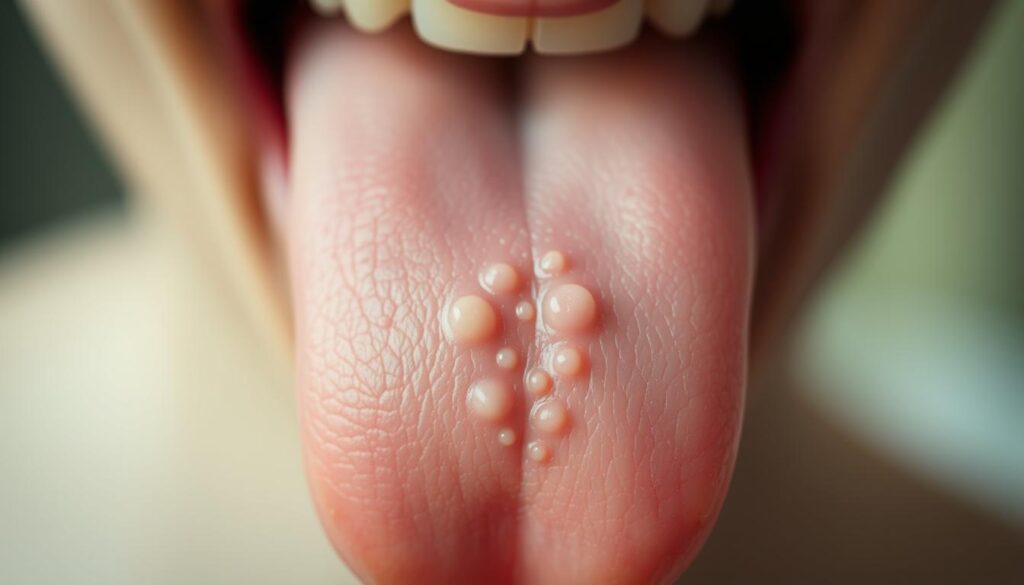
Spotting a bump on your tongue can be alarming. Most are harmless, but knowing their nature is vital. Papillae on the tongue house taste buds for recognizing taste, texture, and temperature1.
Many bumps are just enlarged papillae or brief irritations. Some might need medical attention. Transient lingual papillitis, or lie bumps, are small white or red tongue bumps.
These painful bumps usually heal within days without treatment1. Spicy foods, stress, or minor irritations can trigger inflamed tongue papillae.
Tongue bumps vary from harmless swellings to serious conditions. Some result from taste bud inflammation, infections, or health issues2. Watching these bumps helps maintain oral health.
Key Takeaways
- Most tongue bumps are harmless and temporary
- Lie bumps typically resolve within a few days
- Persistent bumps lasting over a week require medical evaluation
- Papillae play a crucial role in taste and sensation
- Some tongue bumps may indicate underlying health conditions
Understanding Your Tongue’s Anatomy and Function
Your tongue is a remarkable organ with multiple functions. It’s vital for communication, digestion, and overall health. The tongue helps you speak clearly and detect different flavors.
The tongue has a complex network of muscles and sensory cells. It can move in various directions for speaking and eating. Your tongue produces over 90 words per minute using more than 20 different movements3.
Structural Overview of the Tongue
The tongue has a unique oblong shape covered by special membranes. A small tissue, the lingual frenulum, connects it to the mouth floor. This helps control tongue movement and flexibility3.
Taste Perception and Papillae
Taste papillae are tiny bumps that enhance flavor perception. They expose sensory cells to food, helping you recognize different tastes. Your tongue can detect five main flavors: sweet, salty, sour, bitter, and umami4.
Immune Function and Digestion
- Contains numerous immune system cells
- Stimulates saliva production
- Aids in moving chewed food
- Enables touch sensation for food testing
The tongue hosts many immune cells, defending against germs entering the mouth. It also helps pre-digestion by stimulating saliva production. Your tongue guides food towards the throat for swallowing3.
“The tongue is not just an organ of taste, but a complex system essential for multiple bodily functions.”
Knowing your tongue’s anatomy helps spot potential issues. Eruptive Lingual Papillitis or Fungiform Papillae Inflammation are examples. Painful Tongue Lesions may indicate underlying health conditions needing medical attention.
Common Types of Tongue Bumps and Their Causes
Tongue lesions can signal potential health issues. Different swollen tongue bumps have unique traits. They stem from various causes and affect oral health differently.
Lie bumps on tongues are common and often uncomfortable. These small, irritating bumps appear suddenly. They create tiny red or white spots that usually last 1-2 days5.
- Classic transient lingual papillitis: Single small bumps lasting 1-2 days
- Eruptive lingual papillitis: More extensive symptoms lasting 2-15 days
- U-shaped lingual papillitis: Associated with potential tongue swelling
Several factors can cause tongue bumps to form:
- Digestive problems
- Stress
- Food allergies
- Spicy or acidic food consumption
Important: Never attempt to pop lie bumps, as this can cause tissue damage and increase infection risk5.
Other causes include human papillomavirus (HPV), canker sores, and traumatic fibroma. Most swollen tongue bumps are harmless. However, persistent or painful bumps need medical evaluation6.
Lie bumps usually go away in 2-3 days5. Good oral hygiene helps manage these bumps. Avoid irritating foods too. See a doctor if symptoms persist or worsen6.
Medical Conditions Associated with Tongue Bumps
Tongue bumps can signal various health issues. Different lesions may appear on your tongue’s surface. These bumps can help identify potential health concerns.
Infectious Causes of Tongue Lesions
Painful tongue lesions can stem from various infections. Oral herpes appears as small, painful blisters. These blisters usually heal within four to six days7.
Oral thrush can create white, velvet-like sores in your mouth7. Bacterial infections often cause these tongue issues.
- Syphilis: Can cause painless sores on the tongue
- Scarlet fever: Leads to a distinctive “strawberry tongue” appearance
- Viral infections: May trigger temporary tongue bumps
Non-Infectious Tongue Conditions
Some tongue bumps aren’t caused by infections. Chronic irritation or inflammation can lead to certain conditions. Traumatic fibroma appears as a smooth, firm bump7.
| Condition | Characteristics |
|---|---|
| Glossitis | Causes tongue to become smooth and swollen |
| Lymphoepithelial Cysts | Small, yellowish bumps typically harmless |
Serious Medical Conditions
Most tongue bumps are harmless. However, some may indicate serious health problems. Tongue cancer can appear as a lump that bleeds easily7.
Seek medical help for persistent or changing tongue lesions8. Early detection is crucial for managing potential tongue-related health issues.
Early detection is key to managing potential tongue-related health issues.
A healthcare provider can diagnose tongue bumps through a thorough exam. They’ll recommend appropriate treatment based on their findings7.
Conclusion
Knowing about tongue bumps is key for good oral health. Most are harmless and go away on their own. Stay alert to changes in your tongue’s appearance9. See a doctor if you have long-lasting or painful bumps that affect eating or drinking10.
Painful tongue spots can come from many things. These include small injuries, viruses, or allergies10. Good oral care helps prevent and manage these issues. Brush twice daily, floss often, and use a tongue scraper9.
Most tongue bumps are safe, but some might point to health problems. Watch for ongoing pain, swelling, or changes in how bumps look. Your tongue’s health reflects your overall wellness9.
A healthy tongue is usually pink with smooth bumps. Keep up good oral care and stay hydrated. Seek expert help when needed. Catching issues early is crucial for tongue health10.
FAQ
What are tongue bumps?
Tongue bumps are small protrusions on your tongue’s surface. They’re often harmless and involve fungiform papillae. These bumps can be white, red, or skin-colored.
Various causes like irritation, infection, or minor inflammation can lead to tongue bumps. Most are temporary and clear up within a week.
What causes transient lingual papillitis (lie bumps)?
Lie bumps can result from stress, hormonal changes, or eating acidic foods. Bite injuries and local irritation are also common causes. These small, painful bumps form when papillae become swollen and irritated.
About half the population experiences lie bumps. They typically heal without treatment in a few days.
Are tongue bumps always a sign of something serious?
Most tongue bumps are harmless and don’t require much concern. However, persistent bumps that don’t heal need medical evaluation. Bumps that change or interfere with eating should be checked for serious conditions.
How can I treat tongue bumps at home?
For mild tongue bumps, try avoiding irritating foods and maintaining good oral hygiene. Rinsing with salt water can help soothe the affected area.
Over-the-counter pain relievers and mild topical anesthetics may provide relief. If bumps persist or become painful, consult your healthcare provider.
When should I see a doctor about tongue bumps?
Seek medical attention if bumps last longer than two weeks or cause significant pain. Changes in size, color, or shape warrant a doctor’s visit.
Bumps accompanied by fever or those that spread rapidly need professional evaluation. These could indicate an underlying health condition.
Can certain medical conditions cause tongue bumps?
Yes, various conditions can cause tongue bumps. These include oral herpes, scarlet fever, syphilis, diabetes, and anemia.
Some infections and systemic health issues can affect your tongue’s appearance. Oral cancer may also manifest as changes in tongue texture.
Are tongue bumps contagious?
Some tongue bumps can be contagious, depending on their cause. Viral infections like oral herpes can spread between people.
HPV-related squamous papilloma is also transmissible. However, lie bumps and stress-induced inflammation aren’t contagious.
How can I prevent tongue bumps?
To reduce tongue bumps, maintain excellent oral hygiene and avoid tobacco and excessive alcohol. Eat a balanced diet and manage stress levels.
Stay hydrated and use a soft-bristled toothbrush. Avoid very hot or irritating foods. These strategies help keep your tongue healthy and minimize inflammation.
Source Links
- Tongue Bumps: when to see a doctor — Kemptville Smiles Dentistry – https://kemptvillesmiles.com/blog/bumps-on-your-tongue/
- Bumps on Tongue: 10 Common Causes (& What to Do) – https://www.tuasaude.com/en/bumps-on-tongue/
- In brief: How does the tongue work? – InformedHealth.org – https://www.ncbi.nlm.nih.gov/books/NBK279407/
- Tongue Anatomy and Its Many Functions – https://www.verywellhealth.com/tongue-anatomy-4774957
- Lie bumps: Symptoms, causes, and treatment – https://www.medicalnewstoday.com/articles/320275
- Tongue problems: MedlinePlus Medical Encyclopedia – https://medlineplus.gov/ency/article/003047.htm
- Tongue Bumps: Photos and Causes – https://www.verywellhealth.com/tongue-bumps-8631294
- Tongue Problem Basics – https://www.webmd.com/oral-health/tongue-problem-basics-sore-or-discolored-tongue-and-tongue-bumps
- Tongue Bumps: Enlarged Papillae and Other Problems – https://crest.com/en-us/oral-care-tips/tongue-health/tongue-bumps-enlarged-papillae-and-other-problems?srsltid=AfmBOopK0gBspxAgqz4OyHcglNnv8yBJ1QjOeuzhiimMwUZTUtcLeOyv
- Your Guide on How to Get Rid of Bump on Tongue – Smile Studio Boston – https://smilestudioboston.com/how-to-get-rid-of-bump-on-tongue/

