
Your blood oxygen level is key to good health. It shows how well your body moves oxygen to organs and tissues1. For healthy adults, oxygen levels should be between 95% and 100%23.
Blood oxygen levels give clues about your heart and lung health. Keeping track can help spot health issues early. This way, you can take steps to stay healthy3.
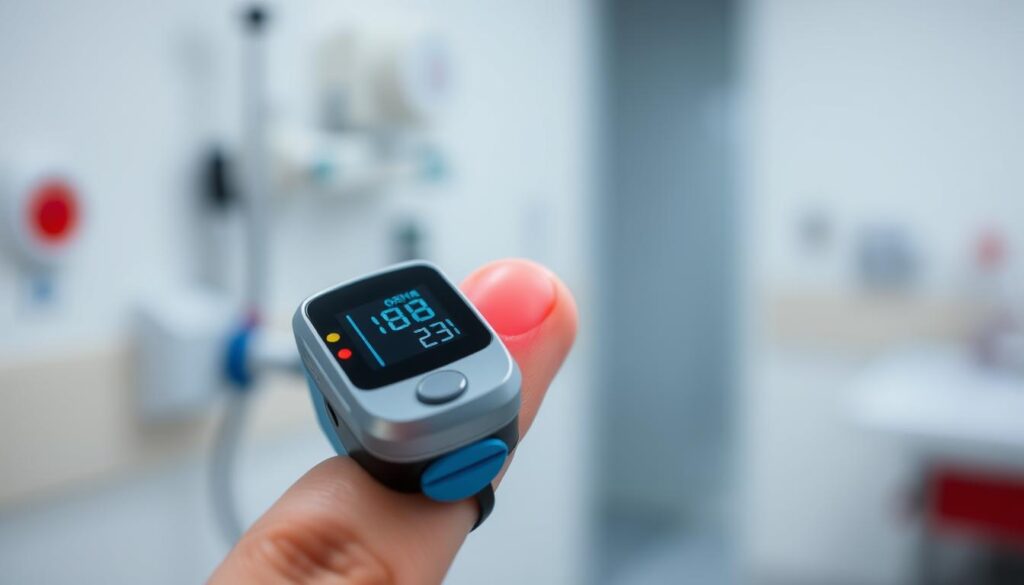
Checking your oxygen level is easy. You can use a pulse oximeter. It’s a simple device that gives quick readings1.
Key Takeaways
- Normal blood oxygen levels range from 95% to 100%
- Oxygen saturation reflects overall health and cellular function
- Easy-to-use devices can help track blood oxygen levels
- Factors like altitude and health conditions can impact oxygen levels
- Regular monitoring can help detect potential health risks
Understanding Blood Oxygen Saturation and Its Importance
Your body needs oxygen to work well. Blood oxygen saturation shows how well your body moves and uses oxygen4. Knowing this can help you watch your health and spot problems early.
Blood oxygen levels show how much oxygen is in your blood. A good level is usually 95% to 100%5. Doctors use two main ways to check these levels:
What Blood Oxygen Level Means
Your oxygen levels show how well your lungs put oxygen in your blood. Normal levels are between 75 and 100 mm Hg6. Levels below 95% might mean health problems5.
How Oxygen Circulates in Your Body
You get oxygen when you breathe. Red blood cells carry it through your body. Your blood system moves oxygen to cells and takes away carbon dioxide4.
Why Oxygen Levels Matter for Your Health
Good oxygen levels help your organs work, especially your brain and heart. Low levels can cause big health issues4. Some health problems need regular checks of blood oxygen levels5.
“Your body’s oxygen levels are a key indicator of overall health and cellular function.”
If you can’t breathe well or have chest pain, your oxygen might be low5. Talk to a doctor if you’re worried about your oxygen levels.
Normal Blood Oxygen Level: Healthy Ranges and Measurements
Measuring oxygen levels in your body is key to good health. It gives you insights into your overall well-being7. Healthy people usually have blood oxygen levels between 95% and 100% on a pulse oximeter7.
Normal arterial oxygen pressure ranges from 75 to 100 mmHg8. If your blood oxygen drops below 92%, it’s wise to see a doctor9.
| Oxygen Level | Interpretation |
|---|---|
| 95-100% | Normal Range |
| 92-94% | Borderline |
| Below 92% | Potential Health Concern |
Interesting fact: People over 70 typically have blood oxygen levels around 95%7. Those with chronic conditions like COPD may have different target ranges9.
“Knowing your oxygen levels can be a key indicator of your respiratory health.” – Medical Respiratory Experts
Home oxygen monitoring can have a small margin of error. Skin tone, nail polish, and light can affect readings9.
Signs of Low Blood Oxygen and Common Causes
Knowing the signs of low blood oxygen is vital for your health. Spotting early warnings helps you get medical help quickly and avoid problems.
Key Symptoms of Low Blood Oxygen
Low blood oxygen can show up in many ways10:
- Persistent headaches
- Difficulty breathing or shortness of breath
- Rapid heart rate
- Persistent coughing and wheezing
- Confusion or mental disorientation
- Bluish discoloration of skin, fingernails, and lips (cyanosis)
Medical Conditions Affecting Oxygen Levels
Several health issues can lower your blood oxygen level11:
- Chronic lung diseases like COPD and asthma
- Pneumonia
- Anemia
- Heart defects
- Sleep apnea
Risk Factors and Warning Signs
Knowing risk factors for low oxygen can help you manage your health better. You can get proper medical guidance to stay healthy.
| Risk Category | Potential Impact |
|---|---|
| Lifestyle Factors | Smoking, sedentary lifestyle |
| Environmental | High altitude, air pollution |
| Medical Conditions | Chronic respiratory diseases |
Warning signs requiring immediate medical attention include severe sudden shortness of breath, extreme confusion, and rapid heartbeat. People with lung issues or recovering from breathing problems should check their oxygen often11.
Conclusion
Knowing your Normal Blood Oxygen Level is key to staying healthy. Regular checks can spot health issues early. A full Oxygen Saturation test shows how well your lungs work12. Healthy people usually have oxygen levels between 95% and 100%13.
Taking care of your Blood Oxygen Levels Chart needs smart steps. See a doctor if you often have low oxygen signs. Some health problems can affect your oxygen levels12.
Treatment might include extra oxygen, lifestyle changes, or fixing other health issues. Home checks have become more vital, especially during events like COVID-19.
Pulse oximeters help track oxygen levels fast and well14. Keep in mind that height, fitness, and health can change your results. Stay informed and put your lung health first.
FAQ
What is a normal blood oxygen level?
Normal blood oxygen levels range from 75-100 mm Hg on an arterial blood gas test. On a pulse oximeter, normal levels are 95-100%. Levels below 92% may require medical attention.
Your doctor can help you understand what’s normal for your health condition.
How do I measure my blood oxygen levels?
Blood oxygen levels can be measured using two main methods. An arterial blood gas (ABG) test is more accurate but invasive.
A pulse oximeter is a non-invasive device that clips onto your fingertip. It provides a quick reading of your oxygen saturation.
What are the symptoms of low blood oxygen?
Low blood oxygen symptoms include shortness of breath, chest pain, confusion, and rapid heartbeat. Cyanosis, a blue discoloration of skin and mucus membranes, may also occur.
Seek immediate medical help if you experience severe or sudden symptoms.
What medical conditions can affect blood oxygen levels?
COPD, asthma, pneumonia, anemia, and heart defects can impact blood oxygen levels. Lung disorders, chronic respiratory diseases, and COVID-19 can also affect oxygen levels.
Circulatory system issues may significantly influence your oxygen levels as well.
How can I improve my blood oxygen levels?
Try breathing exercises, get fresh air, and quit smoking to improve blood oxygen levels. Regular physical activity and a healthy diet can also help.
For serious conditions, your doctor might recommend oxygen therapy or specific treatments.
Are pulse oximeters accurate?
Pulse oximeters are generally reliable but can have a 2-3% error margin. Factors like smoking, bright lights, and skin tone may affect readings.
Follow device instructions carefully for the most accurate results. Consult a healthcare professional if you have concerns.
What risk factors can impact blood oxygen levels?
Smoking, high altitude, and chronic respiratory diseases can impact blood oxygen levels. Heart conditions, obesity, and certain medical treatments are also risk factors.
Age, overall health, and lifestyle choices can influence your blood oxygen saturation.
When should I be concerned about my oxygen levels?
Be concerned if your oxygen saturation drops below 92%. Watch for persistent shortness of breath, chest pain, confusion, or blue-tinged skin.
Always consult a doctor if you have ongoing concerns about your blood oxygen levels.
Source Links
- When Should You Be Concerned About Your Blood Oxygen Level? – https://www.health.com/blood-oxygen-level-8425396
- What Are Normal Oxygen Levels During Sleep? – https://www.sleepfoundation.org/physical-health/what-are-normal-oxygen-levels-during-sleep
- How to Monitor and Improve Your Blood Oxygen Levels | Banner – https://www.bannerhealth.com/healthcareblog/teach-me/blood-oxygen-level-what-you-need-to-know
- Blood Oxygen Level: What It Is & How To Increase It – https://my.clevelandclinic.org/health/diagnostics/22447-blood-oxygen-level
- Blood Oxygen Levels: What Is a Normal Level? – https://www.healthline.com/health/normal-blood-oxygen-level
- Normal blood oxygen levels: What is safe, and what is low? – https://www.medicalnewstoday.com/articles/321044
- What Are Blood Oxygen Levels by Age? Chart, Normal, High & Low – https://www.medicinenet.com/what_are_blood_oxygen_levels/article.htm
- Low blood oxygen (hypoxemia) – https://www.mayoclinic.org/symptoms/hypoxemia/basics/definition/sym-20050930
- What Is a Good Blood Oxygen Level? – https://www.verywellhealth.com/blood-oxygen-level-8656297
- Hypoxemia: Causes, Symptoms, Diagnosis & Treatment – https://my.clevelandclinic.org/health/diseases/17727-hypoxemia
- Low blood oxygen (hypoxemia) Causes – https://www.mayoclinic.org/symptoms/hypoxemia/basics/causes/sym-20050930
- Oxygen Saturation and How It Is Tested – https://www.verywellhealth.com/oxygen-saturation-914796
- Pulse Oximetry – StatPearls – NCBI Bookshelf – https://www.ncbi.nlm.nih.gov/books/NBK470348/
- Blood Oxygen Levels – All You Wanted to Know – Apollo Hospital Blog – https://www.apollohospitals.com/health-library/normal-blood-oxygen-levels-hypoxemia-symptoms-and-treatment/

