
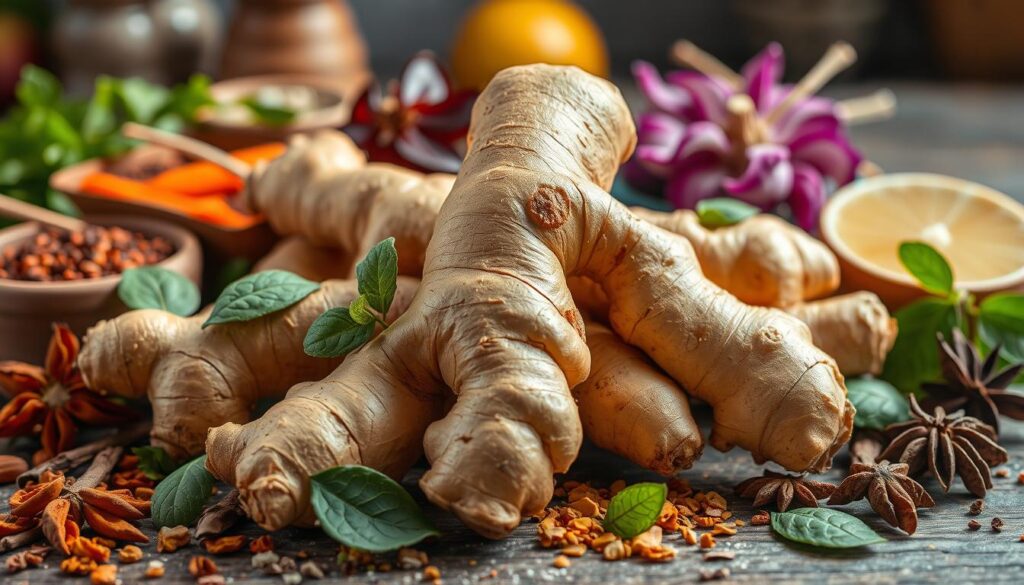
Ginger, a powerful root, offers remarkable health benefits. This extraordinary spice has transformed wellness for centuries. It provides a natural path to better health1.
Ginger’s healing history spans thousands of years. Ancient cultures recognized its medicinal properties long before modern science. You can easily add this root to your diet through tea, shots, or direct consumption1.
Ginger’s special power comes from gingerol, its bioactive compound. This substance boosts your immune system and fights inflammation1. Consuming 3-4 grams daily can unlock potential health improvements1.
Key Takeaways
- Ginger offers extensive health benefits dating back to ancient medicine
- Consuming 3-4 grams daily maximizes potential health advantages
- Gingerol provides powerful immune-boosting properties
- Multiple consumption methods make incorporating ginger easy
- Natural alternative for supporting overall wellness
Understanding Ginger’s Rich History and Composition
Ginger has been a powerful natural remedy for centuries. This extraordinary root belongs to a family that includes turmeric and cardamom. It boasts more than 1,300 distinct species2.
Ginger was once an incredibly valuable commodity. In the 13th and 14th centuries, it cost more than a sheep3. Today, India leads world production at 43% of the total global output4.
What Makes Ginger a Powerful Medicinal Plant
Ginger’s medicinal prowess comes from its complex chemical makeup. The root contains active compounds like gingerol, zingerone, and shogaol. These offer extensive health benefits.
- Antioxidant capabilities
- Anti-inflammatory effects
- Antibacterial potential
- Potential cancer-fighting properties2
The Science Behind Gingerol
Gingerol, ginger’s primary bioactive compound, has been widely studied. Pharmacokinetic research shows it’s absorbed well from the gut into the bloodstream. Measurable plasma concentrations occur after ingestion2.
Different Forms of Ginger Usage
You can enjoy ginger’s benefits in various forms, including:
- Fresh ginger root
- Dried ginger powder
- Ginger tea
- Ginger supplements
“Ginger is not just a spice, but a natural medicine cabinet in root form.”
Ginger can be used for skin and hair care. You can add it to your diet or use it in topical treatments. The recommended daily serving is 170 mg to 1 g of ginger powder2.
Always talk to a doctor before starting any new supplement routine. They can help you decide what’s best for your health.
Benefits of Ginger
Ginger packs a punch for your health. This amazing root offers many advantages for your body. It can support weight management and provide natural relief5.
Ginger tea may help with weight loss. Studies show it can reduce body weight in people with obesity. It’s a great addition to your fitness plan5.
- Supports weight loss efforts
- Reduces inflammation
- Improves digestive health
Ginger does more than burn calories. It may help regulate metabolism and reduce inflammation. This creates a well-rounded approach to health6.
“Nature’s most powerful roots can unlock incredible wellness potential” – Nutrition Experts
Ginger offers many health benefits beyond weight control. Here are some key advantages:
- Reduces muscle pain after exercise6
- Manages blood sugar levels5
- Fights potential cancer risks5
- Supports heart health by reducing cholesterol5
Pro tip: Add fresh ginger or ginger tea to your daily routine. Even a small amount can boost your overall wellness.
Conclusion
Ginger is a remarkable natural remedy with incredible health benefits. This powerful root offers diverse healing properties. It can reduce muscle soreness and potentially lower cancer risks7.
Adding ginger to your daily routine can be tasty and therapeutic. It may boost your immune system and reduce inflammation. Ginger can also provide relief from various digestive issues8.
A review of ginger’s medicinal properties shows its potential to protect heart health. It also supports overall well-being8.
Scientists are still studying ginger’s full potential. Current evidence looks promising. Many clinical studies have explored its effects on health9.
Talk to your doctor before increasing your ginger intake. This is especially important if you have health conditions or take medications8.
Embrace this remarkable root to enhance your wellness journey. Enjoy ginger in tea, supplements, or cooking. It’s a natural way to support your health and well-being.
FAQ
What exactly is ginger?
Ginger is a flowering plant from Southeast Asia. It’s a root used as a spice and medicinal ingredient. You can consume it fresh, dried, powdered, as an oil, or in juice form.
What are the primary health benefits of ginger?
Ginger offers many health benefits, including relief from nausea and pain. It may help with weight loss, blood sugar control, and improved digestion. Ginger can also aid in managing cholesterol and reducing cancer risk.
Its main compound, gingerol, provides powerful anti-inflammatory and antioxidant effects.
How can I incorporate ginger into my diet?
You can add ginger to your diet in many ways. Drink ginger tea, use fresh or powdered ginger in cooking, or add it to smoothies. You can also use ginger supplements or include it in sweet and savory dishes.
Is ginger safe for everyone to consume?
Ginger is generally safe, but consume it in moderation. People on blood thinners or with diabetes should talk to a doctor first. Those with specific health conditions should also consult a healthcare professional before increasing ginger intake.
Can ginger help with weight loss?
Studies suggest ginger may help reduce body weight in people with obesity. Its compounds can boost metabolism and support weight management efforts. For best results, combine ginger with a healthy diet and exercise.
How does ginger help with digestion?
Ginger can speed up stomach emptying, helping manage symptoms of functional dyspepsia. Its natural compounds support digestive health by reducing inflammation. Ginger also promotes smoother digestive processes.
What makes gingerol so special?
Gingerol is the main bioactive compound in ginger. It’s responsible for many of ginger’s medicinal properties. Gingerol has powerful anti-inflammatory and antioxidant effects, which can help reduce oxidative stress.
Can ginger help with menstrual pain?
Research shows ginger may be as effective as some pain medications for menstrual pain. Its natural anti-inflammatory properties can help reduce cramping and discomfort during menstruation.
Are there any potential benefits for brain health?
Some studies suggest ginger’s compounds might help prevent degenerative brain diseases. It may reduce inflammation and oxidative stress in the brain. This could potentially help with conditions like Alzheimer’s and Parkinson’s.
How does ginger support immune health?
Ginger has antimicrobial properties that may help fight certain infections. Its anti-inflammatory compounds can support your immune system. Ginger can also help your body defend against common illnesses.
Source Links
- 10 Health Benefits of Ginger – Spice World Inc – https://spiceworldinc.com/health/10-health-benefits-of-ginger/
- Ginger Root – StatPearls – NCBI Bookshelf – https://www.ncbi.nlm.nih.gov/books/NBK565886/
- Ginger: A Healing Spice with a Rich History | The Modern Nurse – https://www.themodernnurse.com/blog/the-history-of-ginger
- Ginger – https://en.wikipedia.org/wiki/Ginger
- 11 Scientifically Proven Health Benefits of Ginger – https://www.healthline.com/nutrition/11-proven-benefits-of-ginger
- Health Benefits of Ginger – https://www.webmd.com/diet/ss/slideshow-health-benefits-ginger
- Ginger: Health Benefits – https://www.news-medical.net/health/Ginger-Health-Benefits.aspx
- Ginger: Health benefits and dietary tips – https://www.medicalnewstoday.com/articles/265990
- Ginger on Human Health: A Comprehensive Systematic Review of 109 Randomized Controlled Trials – https://pmc.ncbi.nlm.nih.gov/articles/PMC7019938/

