
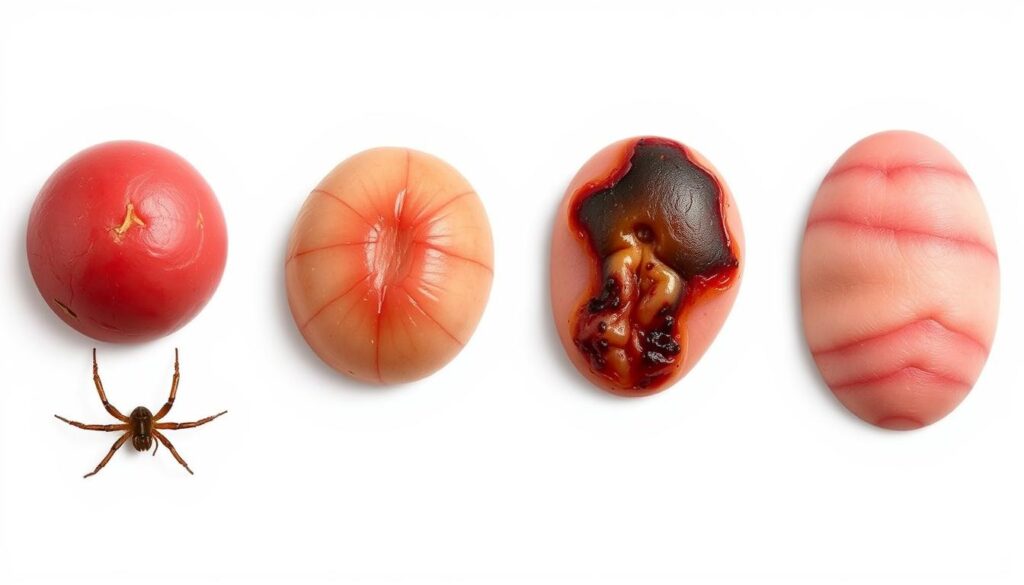
Brown recluse spider bites can be dangerous to your health. These venomous spiders live in certain parts of the United States1. Their bites rarely kill but can cause serious health problems2.
Brown recluse spiders have strong venom and live in specific areas. They’re mostly found in the south-central U.S. and are more active when it’s warm12. Spotting these bites early can help with treatment.
Brown recluse bite symptoms can be hard to spot right away. You might feel intense pain and itching around the bite for hours1. More serious symptoms can show up later3.
Key Takeaways
- Brown recluse bites are most common in the south-central United States
- Symptoms can develop slowly over hours or days
- Immediate medical attention is crucial for proper treatment
- Bites can cause significant tissue damage
- Not all bites result in severe complications
Understanding Brown Recluse Spiders and Their Bites
Brown recluse spiders are small but potentially harmful creatures. Knowing about these arachnids can help you stay safe. Let’s explore their features, habitats, and the effects of their bites.
Physical Characteristics of Brown Recluse Spiders
Brown recluse spiders have unique features that set them apart. They’re light brown with a dark violin-shaped mark on their back4. These spiders have six eyes in three pairs, unlike most spiders with eight eyes4.
They measure about ¾ inches long, making them small but potentially dangerous4. Their size and markings help in identifying them correctly.
Habitat and Geographic Distribution
Brown recluse spiders live mainly in the southern and midwestern United States4. They like warm, dry, and dark places. You might find them in:
- Attics
- Garages
- Closets
- Rarely disturbed storage areas
How Brown Recluse Venom Works
Brown recluse venom contains powerful enzymes that break down cell membranes5. This can cause serious health issues. The venom’s effects may include:
- Skin lesions
- Potential tissue death (necrosis)
- Blood cell disruption
Despite being highly poisonous, no verified deaths from their bites have been reported5. This fact highlights the importance of proper treatment.
Look for these symptoms if you suspect a brown recluse bite: redness, white blisters, nausea, and muscle pain4. About 10% of bites can cause serious health problems4.
Children, elderly, and people with weak immune systems are at higher risk4. Seek medical help if you notice these symptoms.
Remember, many suspected brown recluse spider bites might actually be other medical conditions with similar symptoms5.
Brown Recluse Bite Stages and Progression
Brown recluse spider bites can be dangerous and hard to spot. These spiders live in certain parts of the United States. Their bites often go unnoticed at first but can become serious over time.
Most victims won’t even feel the initial bite6. The bite area changes within hours. A clear pattern emerges as time passes:
- First 2-8 hours: Mild redness appears6
- Next 24-48 hours: A characteristic “bull’s-eye” pattern develops
- Several days later: White blister formation occurs1
Severe bites can lead to serious issues. The wound may turn dark in the center. It can become blue, purple, or black7.
Some people might get fever, chills, and joint pain7. These are signs of a systemic reaction.
“Brown recluse venom is more potent than a rattlesnake’s, causing potential tissue destruction”6
Healing usually takes about 8 weeks. Severe cases may need more time. Kids are at higher risk and might face worse problems7.
If you think a brown recluse bit you, see a doctor right away. Quick treatment can help prevent long-term damage6.
Essential First Aid and Treatment Options
Quick action is vital for brown recluse spider bite recovery. Knowing the right treatment can help manage potential complications8.
Immediate Steps After a Bite
Start first aid right after discovering the bite. Follow these critical steps:
- Clean the wound thoroughly with soap and water
- Apply a cold compress to reduce swelling
- Elevate the affected area to minimize inflammation
- Avoid moving the bitten area extensively
Medical Treatment Approaches
Doctors may suggest various treatments based on bite severity8. Pain management often includes:
| Treatment Type | Purpose |
|---|---|
| Acetaminophen | Pain relief |
| Antibiotics | Prevent infection |
| Antihistamines | Reduce itching |
Severe cases might need special care. Doctors may use hyperbaric oxygen or skin grafts for major tissue damage8.
Home Care Guidelines
During recovery, follow these home care tips:
- Maintain wound cleanliness
- Apply antibiotic cream regularly
- Monitor for signs of infection
- Rest and avoid strenuous activities
Most bites heal fully within three months9. Children, older adults, and those with weak immune systems need immediate medical care9.
Remember: Prompt and proper treatment can significantly reduce the risk of complications from a brown recluse spider bite.
Conclusion
Brown recluse spider bites can be serious and need quick action. Knowing the symptoms is key for good treatment. Your grasp of bite stages and risks can help manage these encounters.
Quick first aid is vital if you think you’ve been bitten. Clean the area with soap and water. Call Poison Control at 1-800-222-122210. Treatment may include tetanus shots, pain relief, and antibiotics11.
Prevention is crucial too. Check your home regularly. Seal off possible entry points. Keep your living spaces tidy and organized10.
Most bites heal without major issues. The healing process usually takes about three months. Seek medical help if symptoms get worse10. Staying informed helps you manage risks and protect your health12.
FAQ
What does a brown recluse spider bite look like initially?
A brown recluse spider bite starts as a painless, mild red mark. Within an hour, slight redness appears. After 2-8 hours, the bite area develops a “bull’s-eye” look.
How long does it take for a brown recluse bite to heal?
Healing typically takes about 8 weeks. Severe cases may need longer recovery and medical help. The wound goes through stages, including blisters and possible tissue darkening.
What are the most serious symptoms of a brown recluse bite?
Severe symptoms include festering wounds and tissue death. Fever, chills, nausea, and joint pain may occur. In critical cases, the bite center can turn dark.
Significant tissue damage is possible in these situations.
How can I identify a brown recluse spider?
Brown recluse spiders are light brown with a dark violin-shaped mark. They measure 1/4 to 1/2 inch long and have six eyes. These spiders prefer warm, dry, and dark places.
What should I do immediately after a brown recluse bite?
Clean the wound with soap and water. Apply a cold compress and elevate the affected limb. Seek medical help, especially for children or if symptoms worsen.
Watch the bite for signs of infection or worsening symptoms.
Where are brown recluse spiders most commonly found?
Brown recluse spiders live mainly in the Midwest and South of the United States. They like warm, dry spots in undisturbed areas. Look for them in storage boxes, closets, attics, and garages.
Can a brown recluse bite be fatal?
Most brown recluse bites aren’t fatal but can cause serious tissue damage. Severe cases may need special treatments like oxygen therapy or skin grafts. Infected wounds can lead to complications.
How can I prevent brown recluse spider bites?
Shake out clothing and bedding to prevent bites. Wear protective gear in high-risk areas. Seal home entry points to keep spiders out.
Reduce clutter and keep your living space clean. This helps minimize spider habitats.
Source Links
- Brown Recluse Spider Bite: Care Instructions – https://myhealth.alberta.ca/Health/aftercareinformation/pages/conditions.aspx?hwid=abo1649
- Gallery of Dangerous Spider Bite Photos – https://www.verywellhealth.com/spider-bite-pictures-4028011
- Spider bites-Spider bites – Symptoms & causes – Mayo Clinic – https://www.mayoclinic.org/diseases-conditions/spider-bites/symptoms-causes/syc-20352371
- What Does a Brown Recluse Bite Look Like? – https://www.moxieservices.com/blog/what-does-a-brown-recluse-bite-look-like/
- Brown Recluse Spider Bite Symptoms | Brown Recluse Venom | Orkin – https://www.orkin.com/pests/spiders/brown-recluse-spiders/brown-recluse-spider-bite
- Brown Recluse Spider Bites: Treatment, Symptoms & Pictures – https://www.emedicinehealth.com/spider_bite_brown_recluse_spider_bite/article_em.htm
- Brown Recluse Bites: How to Identify Them and What to Do – https://resources.healthgrades.com/right-care/skin-hair-and-nails/brown-recluse-bites
- Brown Recluse Spider Bite – https://www.columbiadoctors.org/health-library/condition/brown-recluse-spider-bite/
- How to Identify and Treat a Brown Recluse Spider Bite – https://www.healthline.com/health/brown-recluse-bite-stages
- Brown Recluse Bites Can Be Dangerous—How to Spot and Treat Them – https://www.health.com/brown-recluse-bites-7556624
- Clinical Experience With Management of 20 Brown Recluse Spider Bites: An Effective Treatment Regimen – https://pmc.ncbi.nlm.nih.gov/articles/PMC6140087/
- PDF – https://www.jabfm.org/content/jabfp/13/6/415.full.pdf

