
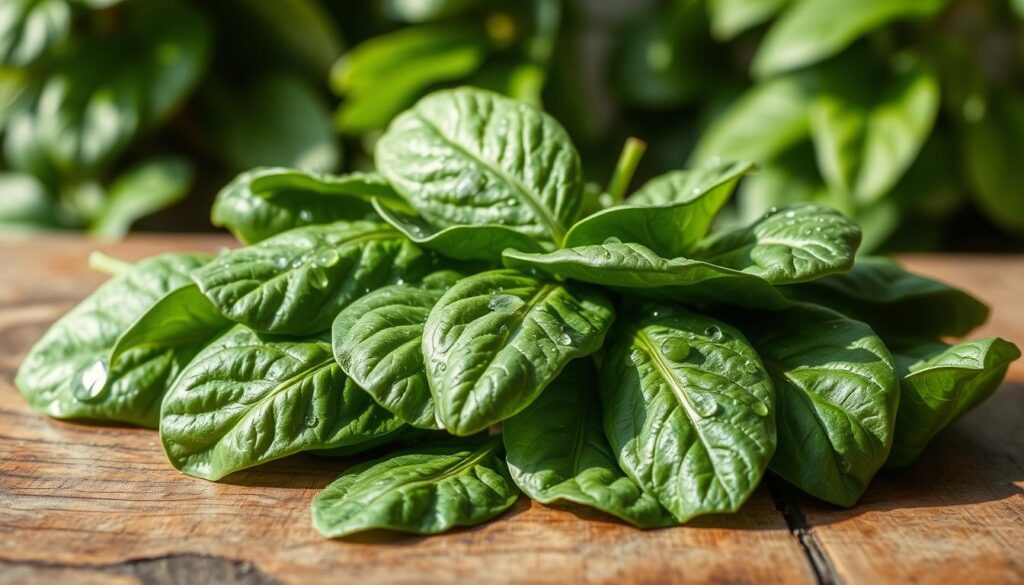
Spinach can revolutionize your health journey. Most Americans eat only 1.5 pounds yearly, but you might want more1. This leafy green packs an impressive nutritional punch for your whole body2.
Imagine a food that supports wellness with just a few servings. Spinach has only 7 calories per cup. Yet, it delivers a massive boost of essential vitamins and minerals2.
Spinach is more than just a side dish. It supports heart health and may improve memory and athletic performance. Its nutrient profile includes vitamins K, A, and C, plus potassium and iron12.
Key Takeaways
- Spinach is a low-calorie, nutrient-dense superfood
- Contains multiple essential vitamins and minerals
- Supports heart, brain, and overall health
- Versatile ingredient for various dishes
- Beneficial for vegetarians and athletes
What Makes Spinach a Nutritional Powerhouse
Spinach is a leafy green that packs an incredible nutritional punch. This versatile vegetable is more than just a simple salad ingredient. It’s a true superfood loaded with essential nutrients that can transform your health3.
Essential Vitamins and Minerals
Spinach is a nutritional treasure trove of vitamins and minerals. A small serving can boost your daily nutrient intake dramatically4.
- Vitamin C: 34% of daily recommended intake
- Calcium: Supporting bone health
- Magnesium: Crucial for energy metabolism
- Potassium: Helps manage blood pressure
“Eating spinach is like giving your body a natural multivitamin” – Nutrition Experts
Protein and Fiber Profile
Spinach offers impressive nutritional benefits with minimal calories3. Your body will thank you for adding this leafy green to your diet.
| Nutritional Component | Amount per 100g |
|---|---|
| Calories | 23 |
| Protein | 2.9g |
| Fiber | 2.2g |
| Water Content | 91% |
Spinach’s protein and fiber content make it great for vegetarian and health-conscious diets. Its low-calorie nature provides maximum nutritional value with minimal intake3.
Pro tip: The water content in spinach helps keep you hydrated while providing essential vitamins and minerals!
Remarkable Health Benefits of Spinach
Spinach is a nutritional powerhouse that can transform your health. This leafy green packs an incredible punch of nutrients. It supports your body from head to toe5.
Spinach offers numerous advantages for your overall wellness. Here are the key health benefits you can expect:
- Supports Brain Health: Boost cognitive function with lutein, which improves memory and processing speed5
- Strengthens Bone Health: Provides the recommended daily amount of vitamin K5
- Enhances Blood Oxygen: Increases hemoglobin production through its iron content5
Your body will thank you for adding spinach to your meals. It’s a nutrient-dense food with only 7 calories per cup. Spinach delivers significant health benefits5.
| Nutrient | Amount per 100g |
|---|---|
| Protein | 2.9 grams |
| Vitamin A | High content |
| Vitamin K | Recommended daily amount |
“Spinach is nature’s multivitamin, delivering a powerful blend of nutrients in every bite.”
Despite its benefits, spinach has potential drawbacks. It contains oxalates, which may cause issues for people prone to kidney stones5.
Always wash spinach thoroughly before eating. Consider cooking it to reduce pathogen risks5.
Want to boost your health? Try new spinach recipes that are delicious and easy to enjoy6!
How to Include Spinach in Your Diet
Adding spinach to meals can boost your nutrition effortlessly. This leafy green offers many ways to enhance your diet. Enjoy delicious spinach dishes while improving your health.
Spinach packs a powerful nutritional punch. It’s rich in vital nutrients that benefit your body, hair, skin, and brain7.
This versatile green is essential for healthy cooking. It can be easily added to various dishes.
Raw Preparation Techniques
Making a spinach salad is easy and nutritious. Try these methods to eat more spinach:
- Toss raw spinach leaves into fresh salads
- Blend spinach smoothies with berries and citrus fruits8
- Add raw spinach to sandwiches and wraps
- Puree spinach leaves to enhance nutrient absorption8
Cooking Techniques for Spinach
Cooking spinach can increase its nutritional value. Try these tasty preparation methods:
- Sauté spinach with garlic and olive oil
- Add to soups and stews for extra nutrition
- Mix into pasta dishes for a quick nutrient boost
- Steam spinach to preserve maximum nutrients8
Pro tip: Combine spinach with healthy fats like olive oil to enhance vitamin absorption!
Spinach offers 19 incredible nutrients per serving. It’s an affordable way to improve your meals.
At about 75¢ per dish, you can easily add this superfood to your daily diet8.
Conclusion
Spinach nutrition offers amazing health benefits that can transform your diet. Growing spinach at home or buying fresh leaves is easy. This nutrient-dense superfood can be added to your daily meals9.
Spinach’s antioxidants and health-boosting properties make it a great dietary addition. Its nutritional advantages are well-documented. Research shows spinach supports heart health and reduces oxidative stress910.
Your body benefits from spinach’s rich nutrient profile. It contains essential vitamins, minerals, and compounds that promote wellness. The high nitrate content may help manage blood pressure and support metabolism10.
Spinach is beneficial, but consult healthcare professionals if you have specific health conditions. Try different preparation methods to enjoy its nutritional benefits. Adding spinach to your diet can enhance your journey towards optimal health11.
FAQ
How many calories are in spinach?
Raw spinach is a low-calorie food. Two-thirds of a cup (100 grams) contains only 23 calories. This makes it great for weight watchers.
What vitamins and minerals does spinach contain?
Spinach is a nutrient powerhouse. It’s rich in vitamin K, A, folate, and manganese. It also contains vitamin C, magnesium, iron, and potassium.
Is spinach good for weight loss?
Yes! Spinach is perfect for weight loss. It’s low in calories and high in fiber. This helps you feel full while providing essential nutrients.
How can I incorporate spinach into my diet?
There are many ways to enjoy spinach. Add it raw to salads or blend it into smoothies. You can also sauté it as a side dish.
Try adding spinach to soups, stews, or pasta dishes. It’s versatile in both raw and cooked forms.
What are the main health benefits of spinach?
Spinach offers many health perks. It protects against diseases and lowers blood pressure. It also boosts brain health and supports healthy blood.
Spinach can improve gut health and protect eyesight. It may even reduce oxidative stress and cancer risk.
Is raw or cooked spinach better?
Both raw and cooked spinach have benefits. Cooked spinach provides more calcium, vitamin A, iron, and zinc. Raw spinach retains more vitamin C.
Steaming is often better than boiling. It helps keep more nutrients in the spinach.
Can spinach help improve athletic performance?
Yes, spinach can boost athletic performance. The nitrates in spinach may help with this. It can also help lower cholesterol levels.
Are there any precautions when eating spinach?
Some people should be careful with spinach. Those prone to kidney stones or on blood thinners should talk to their doctor first.
How much protein and fiber does spinach contain?
Spinach is a good source of protein and fiber. It has 3 grams of protein and 2.2 grams of fiber per 100 grams.
The fiber in spinach is mostly insoluble. This type of fiber helps digestion and prevents constipation.
What’s the best way to absorb nutrients from spinach?
To get the most from spinach, try these tips. Add it to salads with acidic dressings. Pair it with healthy fats like avocado or olive oil.
Pureeing or lightly cooking spinach can help too. This increases the absorption of nutrients like lutein and beta-carotene.
Source Links
- 7 Reasons You Should Eat More Spinach – https://health.clevelandclinic.org/benefits-of-spinach
- Spinach Is the Legit Superfood You Need in Your Life – https://www.goodhousekeeping.com/health/diet-nutrition/a19500845/spinach-nutrition/
- Spinach 101: Nutrition Facts and Health Benefits – https://www.healthline.com/nutrition/foods/spinach
- Health benefits and nutritional value of spinach – https://www.medicalnewstoday.com/articles/270609
- Health Benefits of Spinach – https://www.webmd.com/diet/health-benefits-spinach
- Spinach and Its Remarkable Benefits – https://lenoir.ces.ncsu.edu/2019/03/spinach-and-its-remarkable-benefits/
- 14 Easy And Tasty Ways To Eat Spinach – CircleDNA – https://circledna.com/blog/14-easy-and-tasty-ways-to-eat-spinach/?srsltid=AfmBOoqhaTHoTjwmF5yKQumsw615yuhV2wUPjKxXCzjaNCdY-H5U36sx
- Add Spinach for Extra (Inexpensive) Nourishment | Heavenly Homemakers – https://www.heavenlyhomemakers.com/add-spinach-extra-inexpensive-nourishment
- Antioxidant Effects of Spinach (Spinacia oleracea L.) Supplementation in Hyperlipidemic Rats – https://pmc.ncbi.nlm.nih.gov/articles/PMC3999804/
- Effect of Spinach, a High Dietary Nitrate Source, on Arterial Stiffness and Related Hemodynamic Measures: A Randomized, Controlled Trial in Healthy Adults – https://pmc.ncbi.nlm.nih.gov/articles/PMC4525132/
- Frontiers | Impact of baby spinach as a carrier for the development of sustainable probiotics prior to consumption – https://www.frontiersin.org/journals/sustainable-food-systems/articles/10.3389/fsufs.2024.1430146/full

