
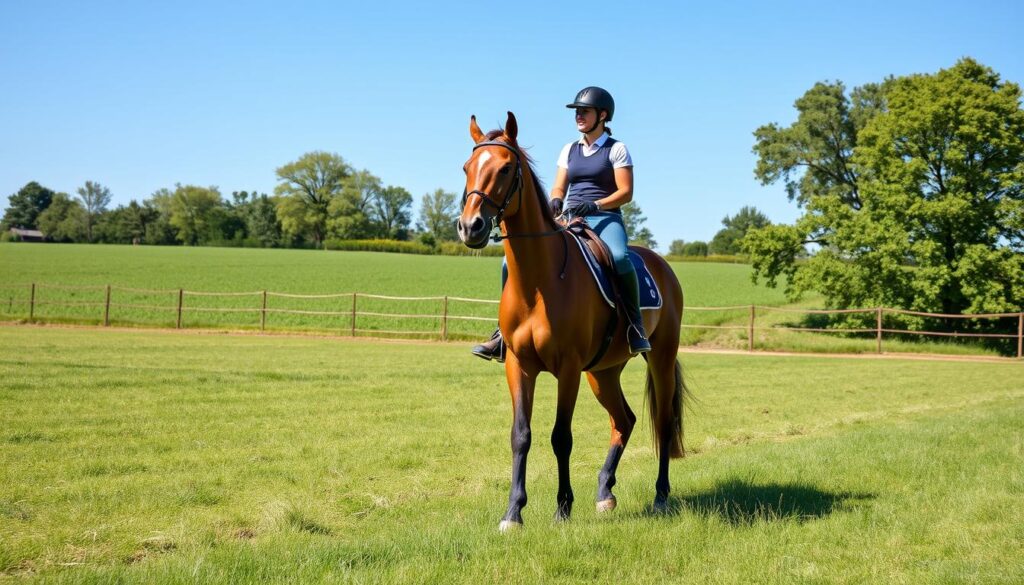
Horse riding is an exciting world that combines sport and art. It connects you with magnificent animals while providing a full-body workout. This guide will help you navigate the thrilling journey of horseback riding.
Horse riding lessons can transform your life. They offer physical and mental benefits. Trainers recommend starting with well-trained horses to build confidence and skills1.
The equestrian world opens up a social community. You can meet like-minded individuals and bond with incredible animals2. Horse riding is a dynamic experience that challenges your body and mind.
An average adult can burn 250-400 calories during a steady riding session. This makes it an excellent form of exercise2.
Key Takeaways
- Horse riding is a versatile and engaging sport for all ages
- Develops physical fitness and mental well-being
- Provides an opportunity to connect with animals
- Offers both recreational and therapeutic benefits
- Suitable for beginners and experienced riders alike
Understanding the Basics of Horse Riding
Horse riding requires careful preparation and knowledge. Understanding the basics is key for a safe and fun experience. This guide will help you get started with horse riding techniques3.
Choosing the Right Horse for Your Skill Level
Selecting the perfect horse is crucial for your riding experience. Consider these key factors when choosing a horse:
- Temperament matching your experience level
- Size and build appropriate for your physique
- Training and previous riding history
Beginners should look for gentle, well-trained horses with a calm nature4. Professional riding centers carefully select friendly horses. This ensures a safe start to your horse riding journey4.
Essential Horse Riding Equipment
Proper horse riding gear is vital for safety and comfort. Your must-have equipment includes:
| Equipment | Purpose |
|---|---|
| Riding Helmet | Critical safety protection |
| Riding Boots | Secure foot positioning and protection |
| Riding Pants | Comfort and friction reduction |
Make sure your helmet fits properly and your boots have a heel. This ensures secure stirrup placement3. Sturdy boots are essential for safety during your riding adventures4.
Basic Horse Riding Terminology
Learning the right language helps you communicate with your horse and instructor. Some key terms include:
- Gait: The horse’s manner of moving
- Rein: Leather straps used for directing the horse
- Stirrups: Foot supports attached to the saddle
Remember, confidence comes with knowledge. Take time to learn and practice your horse riding techniques4.
Try taking lessons at a local equestrian center. This will help build your skills and confidence before advanced riding4.
Developing Your Riding Skills
Horseback riding mastery is an ongoing journey of skill development. It involves understanding key techniques and improving physical abilities. Building a strong bond with your horse is crucial, and horse riding lessons can guide you through this process.
Proper Riding Techniques for Beginners
Starting your equestrian journey requires patience and dedication. Focus on learning fundamental horse riding techniques. These skills will form the foundation of your abilities5.
- Proper mounting and dismounting
- Basic horse control methods
- Understanding horse communication signals
The Importance of Posture and Balance
Your posture is crucial for effective horseback riding. Developing core strength and balance are key for smooth communication with your horse5.
Professional trainers recommend specific exercises to improve your physical conditioning. These exercises enhance your riding stability6.
“Fitness is the bridge between you and exceptional horsemanship”
Practicing in Different Gaits
Progressing through various gaits requires consistent practice and strategic training6. Riders should focus on mastering:
- Walking with controlled movements
- Smooth trotting techniques
- Confident cantering skills
Remember, becoming proficient in horseback riding takes time and dedication. Seek guidance from experienced trainers and enjoy developing your equestrian skills5.
Safety Tips for Horse Riding
Preparation is crucial for a safe and enjoyable horse riding experience. Understanding key precautions can prevent potential accidents. Always wear a safety-standard riding helmet, regardless of what others are wearing7.
Proper gear is essential for minimizing risks. Replace helmets every 5 years or after a fall. Body protectors and air jackets are recommended, especially for older riders7.
Avoid wearing jewelry when handling horses. It can pose unexpected dangers7.
Being physically fit helps prevent fatigue-related mishaps. Stay aware of your surroundings and follow guide instructions. Keep one hand on the reins while riding or taking photos7.
Matching the right horse with the right rider reduces safety risks8. Safety in equestrian sports is an ongoing learning process.
Stay alert, follow guidelines, and invest in proper gear. These steps will boost your confidence and enhance your connection with horses.
FAQ
How do I choose the right horse as a beginner?
Beginners should pick calm, patient horses with experience teaching new riders. Older, well-trained horses are often ideal choices. Seek help from a pro trainer to find a horse that suits your needs.
Consider your skill level, size, and riding goals when choosing. Many riding schools offer gentle horses trained for novices.
What essential gear do I need for horse riding?
Key gear includes a certified helmet, boots with small heels, and comfortable riding pants. Fitted gloves are also important. For extra safety, think about wearing a protective vest.
Quality gear ensures both comfort and protection while riding. Invest in items that fit well and meet safety standards.
How important is posture when riding a horse?
Posture is crucial in horse riding. It helps you communicate with your horse and maintain balance. Good posture also prevents injuries.
Keep your back straight, shoulders relaxed, and heels down. Sit deep in the saddle. Your posture affects how the horse moves and responds.
What are the different horse gaits I should learn?
Start with the walk, a four-beat gait. Next, learn the trot, a two-beat diagonal movement. The canter, a three-beat gait, comes after.
Each gait needs different techniques and balance. Master each one slowly before moving to the next. Take your time to build confidence.
How can I ensure my safety while horse riding?
Safety begins with proper training and preparation. Always wear a certified helmet and ride horses that match your skill level. Take lessons from qualified instructors.
Learn to read horse body language and basic behavior. Practice emergency dismounting. Never ride alone as a beginner. Always tell someone your riding plans.
How do I understand horse behavior?
Watch horses’ ear positions, tail movements, and body stances. These signs show how they feel. Forward-facing ears often mean curiosity. Pinned-back ears might signal discomfort.
Observe horses calmly to learn their language. Approach them with confidence and respect. Understanding their behavior helps build trust.
What should I do in case of a riding emergency?
Stay calm and carry a first aid kit for you and your horse. Learn basic first aid and keep emergency contacts handy. Know how to dismount safely.
Bring a mobile phone and ride with a friend when possible. Tell someone where you’re riding and when you’ll return.
How long does it take to become a proficient horse rider?
Becoming proficient varies for each person. Most beginners need several months to feel comfortable and confident. Regular lessons and practice speed up progress.
Horse riding is a lifelong skill. Each ride offers new chances to learn and improve. Patience and passion will help you succeed.
Source Links
- How to Ride a Horse English & Western Style for Beginners – https://www.wikihow.com/Ride-a-Horse
- A beginner’s guide to getting started – https://horseandcountry.tv/introduction-to-horse-riding-a-beginners-guide-to-getting-started
- How to ride a horse for beginners (basics, safety, mistakes) – Horse Rookie – https://horserookie.com/how-to-ride-a-horse-for-beginners/
- New To Horseback Riding? Here’s What You Need To Know | C Lazy U Ranch – https://www.clazyu.com/blog/horseback-riding/new-to-horseback-riding-heres-what-you-need-to-know/
- Advancing Your Riding Journey: Tips for Intermediate Equestrians – Pine Hill Ranch – https://thepinehillranch.com/advancing-your-riding-journey-tips-for-intermediate-equestrians/
- Horse Goals or Bust! Part 4: Rider Skill Assessment & Training Plan | Julie Goodnight Academy – https://signin.juliegoodnight.com/articles/free-articles/julies-blog/rider-skill-assessment-training-plan/
- Safety when Riding – In The Saddle – https://www.inthesaddle.com/safety-when-riding/
- Riding Safety Tips – Equitours – Horseback Vacations Worldwide – https://www.equitours.com/preparing-for-your-trip/riding-safety-tips/

