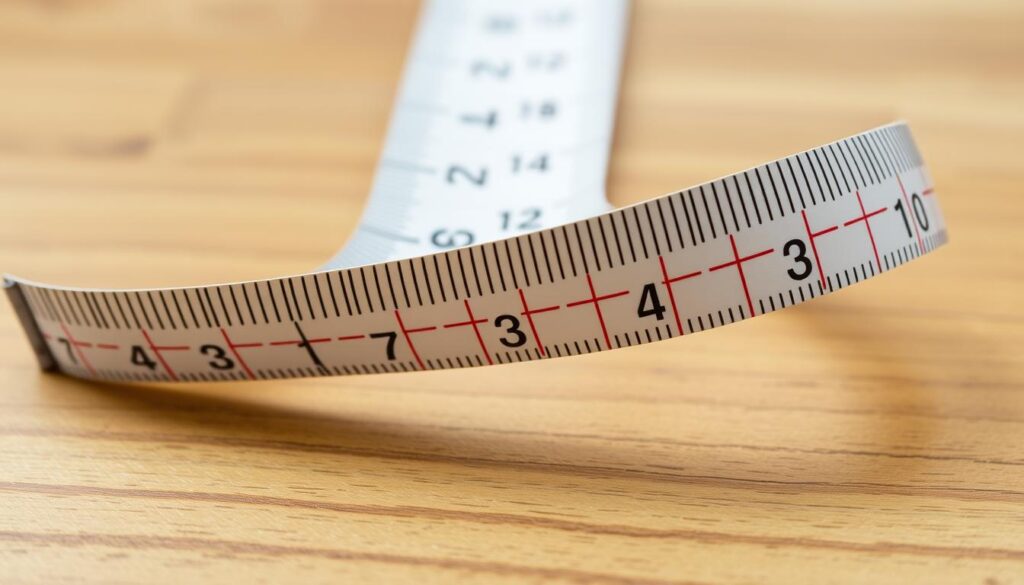
Reading a measuring tape is crucial for DIY fans and pros alike. It’s key for home projects and precise engineering work. A standard tape has markings for inches and centimeters, offering versatile measurement options1.
Most U.S. tapes measure down to 1/16 of an inch2. Pro-grade tapes often have ‘Fractional Read’ or ‘Easy Read’ blades for quick measurement interpretation2.
For accuracy, look at the blade’s precision and durability. Standard tapes usually span 15 to 50 feet. Long-distance versions can reach up to 100 feet3.
Safety is vital when using measuring tapes. Always wear protective eyewear. Handle the tape with care to avoid injuries during use1.
Key Takeaways
- Measure accurately by understanding tape markings
- Choose a tape measure with clear, precise graduations
- Use safety precautions when handling measuring tools
- Understand both metric and imperial measurement systems
- Practice reading different tape measure types
Understanding the Basics of a Measuring Tape
A measuring tape is crucial for precise measurements in various industries and DIY projects. It helps improve accuracy for professionals and home improvement enthusiasts alike. Knowing its basics can greatly enhance your measuring skills.
What is a Measuring Tape?
A measuring tape is a flexible tool for precise distance and length measurements. It originated in tailoring, using cloth tape as its initial design4.
Today, these tools come in various materials. You can find them made of fiberglass, plastic, and cloth4.
Different Types of Measuring Tapes
Measuring tapes come in several variations to meet specific needs:
- Imperial Unit Tapes (inches and feet)5
- Metric Unit Tapes (centimeters and millimeters)5
- Dual-Scale Tapes with both imperial and metric markings5
Importance of Accuracy in Measurements
Precision is key when reading a measuring tape. Some advanced tapes can measure increments as small as 1/32″4. These tiny markings are crucial for professional work.
Reviews often stress the importance of understanding these intricate markings6. Mastering them can greatly improve your measuring accuracy.
“Measurement is the first step that leads to control and eventually to improvement.” – H. James Harburn
| Tape Type | Key Features | Best Used For |
|---|---|---|
| Stanley PowerLock | 25-foot length, industry standard | Construction projects |
| Metric Tape | Centimeter and millimeter gradations | Precise scientific measurements |
| Fractional Tape | Detailed incremental markings | Woodworking and crafts |
Professional craftsmen suggest using mechanical pencils for marking measurements. This ensures the highest level of precision6. Learning your tape measure’s details will greatly boost your measurement skills.
Reading Inches on a Measuring Tape
Reading a Precision Measuring Tape is vital for accurate measurements. It’s a key skill for DIY enthusiasts and professionals alike. Mastering this technique ensures project success.
Understanding the Inch Markings
U.S. tape measures show markings down to 1/16 of an inch. This level of detail allows for precise measurements7.
The blade features several key marking types:
- Long vertical lines for whole inches
- Half-inch marks (longest fraction marks)
- Quarter-inch marks
- Eighth-inch and sixteenth-inch marks (progressively smaller)
How to Measure in Inches
For accurate measurements with a Reliable Read Tape Measure, follow these steps:
- Align the zero mark with the object’s edge
- Extend the tape across the length
- Read the nearest whole inch
- Count the fraction marks for precise reading8
Common Mistakes to Avoid
Professional Measuring Tape Brands warn against these errors:
- Misreading fraction marks
- Failing to account for the hook’s movement
- Allowing the tape to sag during measurement
For critical projects, use a mechanical pencil to mark measurements. This ensures better accuracy8. Check out this guide for more tips.
Reading Centimeters on a Measuring Tape
Metric tape measures show large numbers for centimeters and smaller marks for millimeters. These tapes usually range from 3m to 10m long. They’re handy for many projects.
For accurate readings, line up the zero mark with the object’s edge. Each centimeter has 10 millimeter divisions. This allows for precise measurements9.
To measure, find the large numbered marks first. Then count the smaller millimeter lines for exact readings. The halfway mark between centimeters helps with easier measurements9.
Converting between inches and centimeters is easy. One inch equals 2.54 centimeters. Many modern tapes have both imperial and metric markings. This gives you flexibility for different projects10.
Accuracy comes from careful alignment and reading the smallest markings. Remember to take your time and double-check your measurements.
FAQ
What are the main types of measuring tapes available?
Measuring tapes come in various types. Pocket tapes are perfect for everyday use. Long tapes help with extended measurements. Specialized tapes cater to specific industries like construction and tailoring.
Many tapes feature both imperial and metric measurements. This adds versatility for different measurement needs.
How do I read measurements accurately on a measuring tape?
Start by aligning the zero mark with the object’s edge. For inches, check the whole inch mark first. Then count the fraction marks (half, quarter, eighth, or sixteenth).
With centimeters, read the whole number. Count the millimeter marks between them. Pay attention to the floating hook at the tape’s end.
What’s the difference between imperial and metric measuring tapes?
Imperial tapes use inches as the main unit. Longer marks show whole inches, shorter ones show fractions. Metric tapes use centimeters and millimeters, with 10 millimeters per centimeter.
Remember, 1 inch equals 2.54 centimeters. Many modern tapes include both systems for easy use.
How can I avoid common mistakes when using a measuring tape?
Be careful not to misread fraction marks. Always account for the hook’s slight movement. Keep the tape straight without sagging during measurement.
Use the tape on a stable surface. Hold it taut for the most accurate reading.
What safety precautions should I take when using a measuring tape?
Control the tape’s rewinding to prevent quick snapping. This helps avoid potential injuries. Use the hook carefully and be mindful of the tape’s tension.
Store your measuring tape in its case when not in use. This protects the blade and maintains its accuracy.
How do I choose the best measuring tape for my needs?
Think about your typical projects and measurement lengths. Consider if you need both imperial and metric measurements. Look for tapes with clear markings and a durable blade.
Check for a reliable hook mechanism. Consider the material (metal or fiberglass). Look for additional features like magnetic ends or special coatings.
Source Links
- How to Read a Tape Measure – https://www.thetapestore.co.uk/knowledgebase/How_to_Read_a_Tape_Measure.html
- Accurately Reading a Tape Measure – https://www.ustape.com/accurately-reading-a-tape-measure/?srsltid=AfmBOooHc5HKJv7rRP007ZbowMPf2vOJssK6Cv2J_HiNz2c1xJHV0MbM
- How to Read a Tape Measure – https://www.homedepot.com/c/ab/how-to-read-a-tape-measure/9ba683603be9fa5395fab90e6f14546
- How to Read a Tape Measure | Reading Measuring Tape With Pictures | Construction Measuring Tools | Using Tape Measures – https://www.johnsonlevel.com/News/TapeMeasure
- How to Read a Tape Measure – A Woodworker’s Guide – https://learn.kregtool.com/learn/how-to-read-a-tape-measure/
- DIY 101: How To Properly Read a Tape Measure – https://www.familyhandyman.com/article/how-to-read-a-tape-measure/?srsltid=AfmBOopcY2HGY6oT4Fet9HbrMoGUDzvGapObLf5TJm1LebM1vsC-vfg2
- Accurately Reading a Tape Measure – https://www.ustape.com/accurately-reading-a-tape-measure/?srsltid=AfmBOooCSTJseKba_vEmVFKOjzWK7eYKCz92P6XLn2BUl__Y4ilk_D_c
- DIY 101: How To Properly Read a Tape Measure – https://www.familyhandyman.com/article/how-to-read-a-tape-measure/?srsltid=AfmBOopPji48B5B2AK1xr0oaqd6j7lQH9wvwqdfl-YRMu3HCuLN5BoV7
- Accurately Reading a Tape Measure – https://www.ustape.com/accurately-reading-a-tape-measure/?srsltid=AfmBOorBeNXLEXtLUirZcV2HF_3N3YRhvzmktMIJ2AwXBm35-7CotOqz
- DIY 101: How To Properly Read a Tape Measure – https://www.familyhandyman.com/article/how-to-read-a-tape-measure/?srsltid=AfmBOoqWSzHRwS80Ucd86kQHH-CFaX2VMNMAfAAhKq7ldnKKwxQ8Xs47