
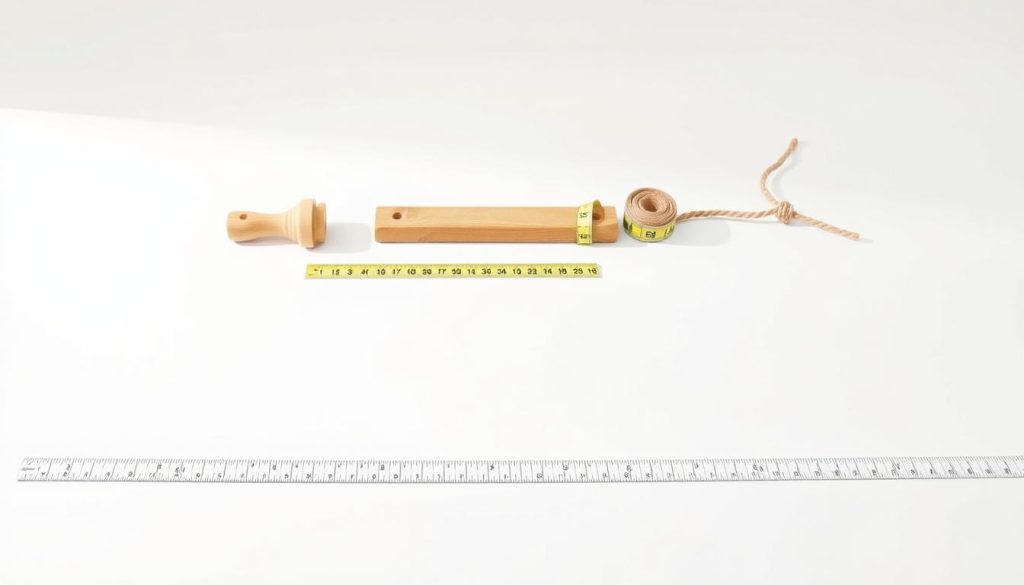
Linear feet are vital for home improvement, construction, and DIY projects. This 12-inch straight measurement helps plan projects accurately1. It’s useful for measuring flooring, lumber, fencing, and fabrics.
A linear foot calculator can save time and reduce waste1. This simple technique determines the exact length of materials needed. Learning basic calculations ensures precise ordering and cuts costs1.
Key Takeaways
- Linear feet measure exactly 12 inches in a straight line
- Used for measuring various materials like lumber and fencing
- Critical for accurate project planning and material estimation
- Helps reduce waste by precise measurement techniques
- Applicable in home improvement, construction, and DIY projects
Understanding Linear Feet Basics
Linear feet are crucial in many industries for precise length measurement. It’s a vital skill for pros and DIY fans. A linear foot is simply one foot or twelve inches in a straight line.
What Is a Linear Foot?
The linear feet definition is simple: it’s length without width or height. This measure is key in construction, real estate, and manufacturing. It helps with accurate measurements and cost calculations.
Common Applications of Linear Feet
- Measuring lumber and building materials
- Calculating carpet or flooring requirements
- Determining pipe and fencing lengths
- Pricing moving services
Many building materials are sold by linear feet, not square feet. Moving companies often charge by linear footage. They usually have a minimum charge of five linear feet.
Linear Feet vs Square Feet: Key Differences
The linear feet formula helps tell linear and square measures apart. Linear feet measure length, while square feet calculate area. To find square feet, multiply length by width.
A room 15 linear feet long and 10 wide is 150 square feet. To convert inches to linear feet, divide by 12. So, 36 inches equals 3 linear feet2.
Calculate Linear Feet: Step-by-Step Methods
Linear feet measurement is key for many projects. It’s all about measuring length in feet. For accuracy, convert non-feet measurements to feet. Linear feet conversion is easy to do3.
To calculate linear feet, find the total length of an object. Break complex measurements into smaller parts. Online calculators can help with tricky shapes4.
Shipping companies use linear feet for pricing. They base this on standard pallet sizes3.
Exact measurements matter in all industries. In roofing, small errors can cost a lot4. Experts suggest adding 10-15% extra for waste.
Mastering linear feet helps in planning and saving money. This skill is useful for home projects and freight shipping3.
FAQ
What exactly is a linear foot?
A linear foot is a straight-line length measurement. It’s one foot long, regardless of width or height. This simple method measures objects or materials without considering other dimensions.
How is a linear foot different from a square foot?
Linear feet measure length only, while square feet calculate area. A linear foot describes a board’s length. A square foot shows its total surface area. Linear feet are for straight measurements. Square feet help calculate total coverage.
Where are linear feet measurements typically used?
Linear feet are common in construction, carpentry, and landscaping. They’re also used in home improvement and flooring installations. Fabric purchasing, shipping, and fencing projects often use linear feet too.
How do I calculate linear feet for a project?
To find linear feet, measure an object’s length in a straight line. Use a tape measure and record the length in feet. For multiple pieces, add up their individual lengths.
Are there online tools to help calculate linear feet?
Yes! Many online calculators can help you convert measurements to linear feet. These tools often let you input different units like inches or centimeters. They quickly convert them to linear feet for you.
How precise do I need to be when measuring linear feet?
Precision depends on your project. For home improvement, measuring to 1/8 or 1/4 inch is usually enough. Professional applications may need more precise measurements, like 1/16 inch or smaller.
Can I convert other measurements to linear feet?
Yes, you can convert various measurements to linear feet. Divide inches by 12 to get linear feet. Multiply yards by 3 for linear feet. For meters, multiply by 3.28 to get linear feet.
What common mistakes should I avoid when measuring linear feet?
Avoid using crooked measuring tools or measuring at an angle. Don’t forget about curves or irregularities in your measurements. Always double-check your work. Make sure your measuring tools aren’t worn out or inaccurate.
Source Links
- How to Calculate Linear Feet – https://www.inchcalculator.com/how-to-calculate-linear-feet/
- What Is A Linear Foot | Architect’s Information – https://www.architecturelab.net/what-is-a-linear-foot/
- ᑕ❶ᑐ Calculate Linear Feet for Freight Shipping – Linear Feet Calculator – https://www.freightrun.com/tools/linear-feet-calculator
- Guide to Calculating Linear Feet in Roofing Projects – https://colonyroofers.com/learningcenter/calculating-linear-feet-roofing

