
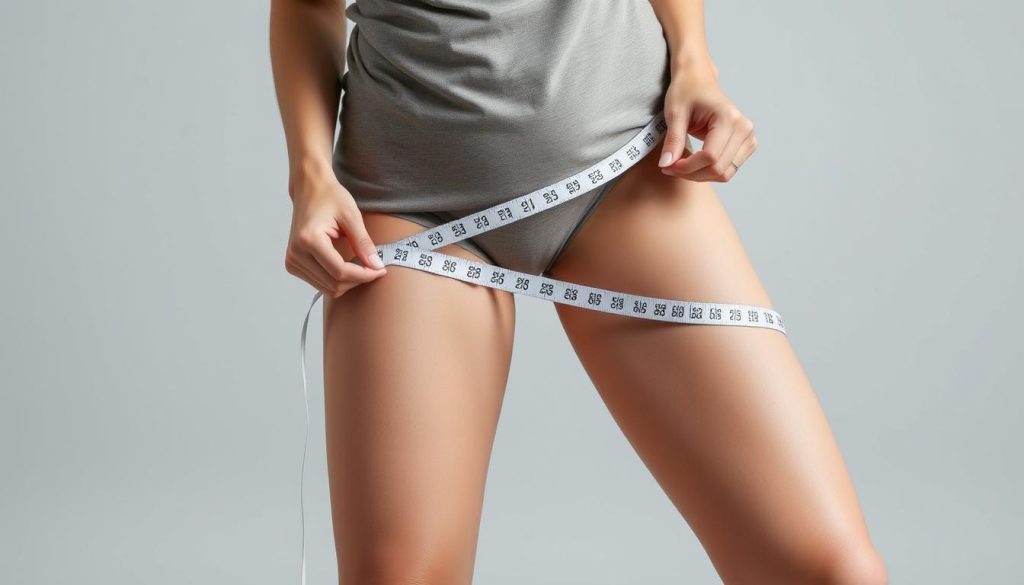
Measuring your thighs is key for tracking fitness and body composition. It offers insights into muscle growth and body fat percentage. Thigh measurements can also reveal potential health indicators1.
Fitness experts suggest tracking thigh size as part of body measurements. The average thigh size differs between men and women. Men typically measure around 22 inches, while women average 20 inches1.
Precise thigh measurements can uncover important health information. Studies show that larger thighs may lower the risk of heart disease and diabetes. This simple technique provides more than just looks-based insights1.
Key Takeaways
- Thigh measurements provide crucial fitness tracking data
- Average thigh circumference differs by gender and age
- Measurements can indicate potential health risks
- Consistent tracking helps monitor body composition changes
- Measurement accuracy depends on proper technique
Why Measuring Your Thighs Matters for Health and Fitness
Thigh measurements offer more than just fitness tracking. They provide key insights into your overall health and body composition. Your thigh size reveals important information about muscle and fat distribution2.
Benefits of Regular Thigh Measurements
Tracking thigh size offers several health benefits. Research shows interesting links between thigh measurements and wellness:
- Protect against cardiovascular diseases3
- Indicate potential metabolic health risks3
- Track muscle development and fitness progress2
Understanding Body Composition Analysis
Thigh measurements help decode your unique body makeup. Different body types store fat and muscle in various ways2. People with a gynoid body type often have more muscle and fat in their thighs and buttocks2.
Connection to Overall Health Indicators
Thigh measurements reveal important health information. A study of 2,816 people found a 62 cm thigh circumference best protected against heart disease. It also lowered the risk of premature death3.
Lower body fat cells absorb harmful fatty acids. This contributes to better metabolic health3.
| Measurement Indicator | Health Significance |
|---|---|
| Thigh Circumference | Cardiovascular Disease Risk |
| Muscle Mass | Metabolic Health |
| Fat Distribution | Overall Wellness |
Tracking thigh size offers valuable insights into your fitness journey. It also helps identify potential health risks. Knowledge is power, especially when it comes to understanding your body.
Essential Tools and Preparation for Thigh Measurement
Accurate thigh measurement requires the right tools and approach. A flexible tape measure is key for precise fitness assessment4. Professional measurements need careful preparation and attention to detail.
For your measurement toolkit, gather these items:
- Flexible measuring tape (at least 60 inches long)
- Form-fitting clothing
- Comfortable, private space
- Optional: Assistant for assistance
Choose a private, consistent space for measurements. Wear tight clothing that shows your body’s shape for accuracy5. Measure at the thickest part of your thigh4.
Consistency is key in tracking progress. Weekly measurements help monitor body changes effectively5. Digital tracking can provide deep insights into your fitness journey4.
Follow these tips for accurate measurements:
- Keep the tape measure horizontal
- Avoid pulling the tape too tight
- Maintain consistent body posture
- Measure at the same time of day
Body measurements reveal more than just numbers. They paint a picture of your health and fitness progress5. These steps ensure precise and meaningful anthropometric measurement.
How to Measure Your Thighs: Step-by-Step Instructions
Accurate thigh measurement is key for fitness assessment and tracking body fat percentage. It helps monitor progress and set realistic health goals. Studies show 80% of people struggle with taking accurate body measurements6.
For thigh measurement, use a soft cloth or flexible tape measure7. Stand with feet shoulder-width apart, maintaining good posture. Find the widest part of your thigh, usually ½ to ¾ up from your knee7.
Experts suggest keeping the tape parallel to the floor while measuring. Wrap it snugly around your thigh without squeezing the skin. Make sure the tape is level and not too tight.
Breathe normally during measurement, as this can affect precision7. Most adult women’s thighs measure 22-25 inches, while men’s typically range from 24-27 inches6.
Record your results right away to avoid forgetting. Use digital fitness apps or a measurement journal to track changes. Consistent documentation creates a reliable baseline for monitoring your health and body composition progress6.
FAQ
Why are thigh measurements important for fitness tracking?
Thigh measurements offer key insights into body composition. They help track muscle mass and fat distribution. These measurements are vital for setting and achieving fitness goals.
They provide a more complete view of physical health. This goes beyond traditional weight measurements.
How often should I measure my thighs?
Measure your thighs every 4-6 weeks for effective tracking. This allows time to see real changes in your fitness progress.
Always measure under similar conditions. Use the same time of day and similar clothing for accuracy.
What tools do I need to measure my thighs accurately?
You’ll need a flexible measuring tape, like cloth or fiberglass. Wear form-fitting clothing for the best results.
A mirror or helper ensures the tape is level. A full-length mirror helps maintain proper posture during measurement.
Can thigh measurements indicate health risks?
Yes, thigh circumference can signal health risks. Research links it to cardiovascular health and metabolic risks.
It may also indicate conditions like diabetes and obesity. Unusual thigh measurements might point to underlying health concerns.
Where exactly should I measure my thighs?
Measure at the widest part of your thigh. This is usually midway between your hip and knee.
Stand with your weight evenly spread. Keep feet shoulder-width apart. Ensure the tape is level and snug against the skin.
Do different types of exercise affect thigh measurements?
Yes! Strength training can increase muscle mass and thigh size. Cardio and fat-loss exercises might reduce measurements.
Cycling, running, and weight training impact thighs differently. Each workout type uniquely affects thigh composition and size.
How can I ensure my thigh measurements are as accurate as possible?
For maximum accuracy, always:
– Use the same measuring tape
– Wear form-fitting clothing
– Measure at the same time of day
– Stand in a relaxed, natural position
– Keep the tape measure snug but not tight
– Have someone help you for the most precise measurement
Are thigh measurements different for men and women?
Yes, thigh measurements vary between men and women. This is due to differences in muscle mass and fat distribution.
Men typically have more muscle mass. Women tend to have higher body fat percentages. These biological differences affect healthy thigh measurements for each gender.
Source Links
- A Step-by-Step Guide to Accurately Measure Your Thigh Circumference – https://undersummers.com/blogs/undersummers-about-us/a-step-by-step-guide-to-accurately-measure-your-thigh-circumference?srsltid=AfmBOoqV74vkKZbGdgR8T2u_q-20v1m1I7psXn-J-WNWvEELRCO2t9By
- Wondering How to Get Thicker Thighs? Try These Exercises on for Size – https://www.healthline.com/health/fitness/how-to-get-thicker-thighs
- Why Bigger Thighs Are Healthier (Seriously!) – https://speakinoutweeklynews.net/2021/09/24/thick-thighs-save-lives-why-bigger-thighs-are-healthier-seriously/
- How to Take Body Measurements – Health and Fitness Tracking – http://www.fitstream.com/articles/how-to-take-body-measurements-a6345
- Blog | How to use a body measurement chart template – https://www.zenoti.com/blogs/body-measurement-chart
- How to Get Your Accurate Body Measurements for Clothing Sizes – https://www.dummies.com/article/home-auto-hobbies/crafts/sewing/how-to-get-your-body-measurements-194894/
- 5 Ways to Take Body Measurements – wikiHow – https://www.wikihow.com/Take-Body-Measurements

