
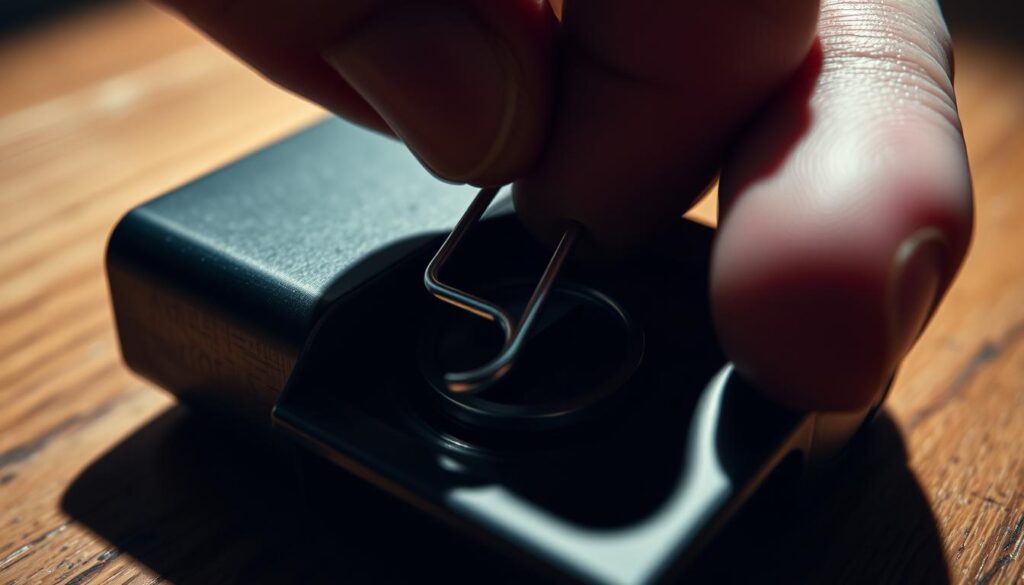
Locked out? A paperclip might be your emergency key. This DIY technique can be a lifesaver when traditional methods fail. Mastering it requires precision, two paperclips, and basic lock knowledge1.
Pros know lock picking needs strategic tool use. You’ll need a tension wrench and pick made from paperclips1. Pliers help shape these tools well1.
Most American locks have at least five internal pins to manipulate1. This skill needs practice and respect for laws. Only try on locks you own or have permission to access1.
Experts can set pins quickly. Beginners should take it slow and be patient1.
Key Takeaways
- Paperclip lock picking requires two distinct tools
- Understanding lock mechanisms is crucial
- Always practice on your own locks
- Legal and ethical considerations are paramount
- Precision and patience are key skills
Understanding Lock Mechanisms
Lock bypassing is a captivating skill that demands in-depth knowledge of lock functions. Pin tumbler locks are the most common in homes. Their history spans thousands of years, protecting dwellings since ancient times.
These intricate devices use complex mechanisms. They pose a challenge even for seasoned lock pickers2.
Lock mechanics involve key components that allow non-destructive entry. Locks typically have a complex system of pins and chambers. These are designed to prevent unauthorized access3.
Understanding these mechanisms is vital for those interested in improvised lock picks.
How Locks Fundamentally Work
A standard lock contains multiple key elements that collaborate to provide security:
- Pin chambers that house different sized pins
- Driver pins that prevent rotation
- Springs maintaining pin tension
- A plug that rotates when correctly aligned
Types of Locks Vulnerable to Picking
Not all locks are created equal. Some locks are more susceptible to picking techniques:
- Pin tumbler locks
- Wafer locks
- Cylinder locks
Safety and Legal Considerations
Lock picking should only be practiced on locks you own or have explicit permission to explore.
Lock picking demands mechanical sensitivity, patience, and analytical thinking. It’s an intriguing skill, but practitioners must understand the legal implications. Always ensure you’re practicing ethically and legally3.
Lock picking is more art than precise science. Developing the right technique requires constant practice and a gentle touch2.
Tools You Need for Picking
Lock picking requires careful preparation and the right equipment. It’s a delicate skill that demands precision and proper tools4. Having the correct materials is crucial for success with bobby pins or paperclips.
Choosing the Right Paperclip
Size matters when selecting paperclips for lock manipulation. Thicker and larger paperclips are better because they’re more durable under pressure5. Choose sturdy metal paperclips that can withstand bending and manipulation.
- Choose paperclips with sufficient width and height1
- Avoid thin or plastic paperclips that might break easily4
- Aim for metal clips that can be easily reshaped
Additional Tools You Might Consider
Your toolkit can include other makeshift lock opening tools. Here are some alternatives:
- Bobby pins
- Hair pins
- Straight wires
- Small screwdrivers5
Preparing Your Tools
Proper preparation is key to successful lock picking. You’ll need two paperclips for creating a tension wrench and the actual pick1. Use pliers to carefully straighten and reshape your tools.
Pro Tip: Always have multiple paperclips ready, as some might break during the process5.
Remember, patience and practice are essential when learning to manipulate locks with these DIY tools4. If you face difficulties, consult a professional locksmith to avoid damaging the lock.
Step-by-Step Guide to Picking a Lock
Lock picking is a fascinating skill for emergency access. It requires precision and patience. Most American locks have at least five pins to set1.
Choose the right tools for lock picking. Paperclips, hairpins, or specialized tools can work. Learn single-pin picking (SPP) and raking methods6.
A lock picking guide can offer more advanced tips. Practice is key to mastering lock manipulation. Start with padlocks, which have fewer pins7.
Your first tries may only have a 50/50 chance. Raking pins often needs multiple attempts. Listen for subtle clicks when pins set correctly6.
If you face persistent issues, seek a professional locksmith. Your skills will improve with practice. Know when to ask for expert help1.
FAQ
Is lock picking with a paperclip legal?
Lock picking is only legal on locks you own or have permission to access. Unauthorized attempts can lead to criminal charges. Always ensure you have the right to pick a lock.
What tools do I need to pick a lock with a paperclip?
You’ll need two sturdy metal paperclips and pliers. One paperclip becomes a tension wrench, the other a pick or rake. Pliers help shape the paperclips precisely.
How difficult is it to pick a lock with a paperclip?
Lock picking requires practice and skill. Beginners may find it challenging due to the need for a delicate touch. Most American locks have at least five pins, demanding precision and patience.
Can I damage the lock while trying to pick it?
Yes, there’s a risk of damaging the lock if you’re inexperienced. Improper technique can bend or break internal components. If unsure, it’s best to consult a professional locksmith.
Are there alternatives to paperclips for lock picking?
Alternatives include hairpins, small screwdrivers, or specialized lock picking sets. Hairpins can be effective as they’re similarly shaped and flexible. Always ensure you have legal rights before attempting.
What types of locks work best for paperclip lock picking?
Tumbler locks are typically the most suitable for paperclip lock picking. Older or less complex locks with fewer pins are easier to manipulate. Avoid high-security or electronic locks, as these require specialized tools.
How can I practice lock picking safely?
Practice on locks you own, like old padlocks or specially designed practice locks. Work in a controlled environment. Never attempt to pick locks on someone else’s property without permission.
What should I do if I get stuck while trying to pick a lock?
If you can’t pick the lock, stop immediately to avoid causing damage. For urgent situations with your own property, contact a professional locksmith. They can help you gain access safely and efficiently.
Source Links
- How to Pick a Lock Using a Paperclip: 9 Steps (with Pictures) – https://www.wikihow.com/Pick-a-Lock-Using-a-Paperclip
- An Introduction to Lock Picking: How to Pick Pin Tumbler Locks – https://www.artofmanliness.com/skills/manly-know-how/how-to-pick-a-lock-pin-tumbler-locks/
- How to Pick Lock: A Definitive Guide to Single-Pin Picking – https://www.lockpickworld.com/pages/how-to-pick-locks?srsltid=AfmBOornPkWwxUOoJ-kvvRbll51T1nCsawN-6aDieC1v-f1PDhrgVRjo
- How Do You Pick a Door Lock With One Paperclip? – Absolute Locksmith – https://www.theorangecountylocksmith.com/blog/how-do-you-pick-a-door-lock-with-one-paperclip/
- How To Pick A Lock With A Paperclip | Picker Of Locks – https://pickeroflocks.com/how-to-pick-a-lock-with-a-paperclip/
- How to Pick Lock: A Definitive Guide to Single-Pin Picking – https://www.lockpickworld.com/pages/how-to-pick-locks?srsltid=AfmBOoqbDbvum9LX1rk6emLsaYuryQPrhHJ1Ac59vcliCV6T_7L3tFTd
- How to Pick a Lock (with Pictures) – wikiHow – https://www.wikihow.com/Pick-a-Lock

