
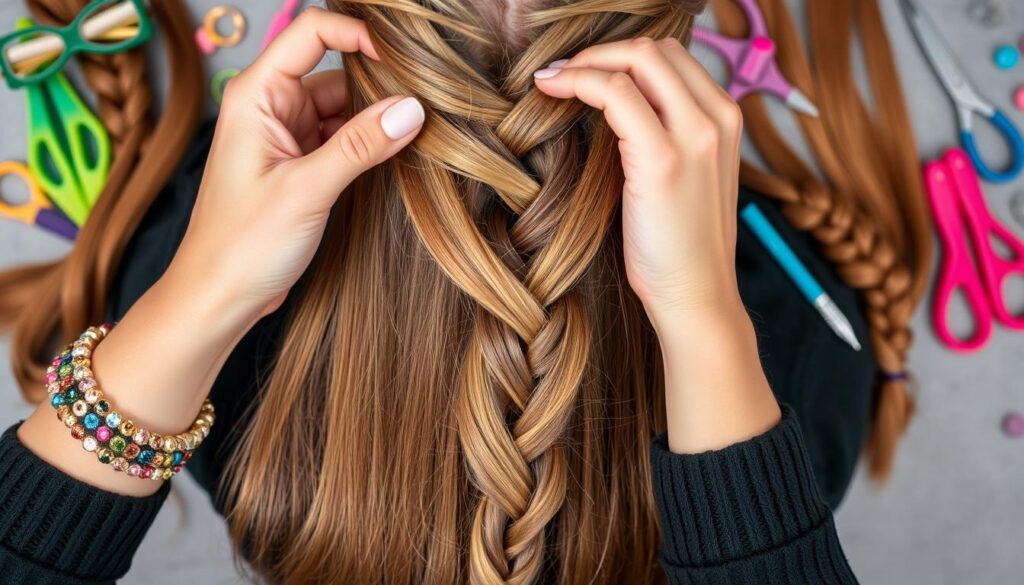
Hair braiding can revolutionize your styling routine. It offers endless creative options for various hair types and occasions. This versatile technique is perfect for beginners and those looking to enhance their skills1.
Braiding is more than just a hairstyle. It’s a protective method that prevents breakage and promotes healthy hair growth. You only need a few tools to start, making it easy for anyone to learn2.
Braid styles range from simple three-strand to complex French and fishtail braids1. Don’t let the complexity scare you. Most braiding techniques are simpler than they appear.
With practice, you can master basic braids and move on to more intricate styles1. Braiding is suitable for various hair lengths and types.
Key Takeaways
- Hair braiding is a versatile and protective styling technique
- Minimal tools are required to start braiding hair
- Braids range from simple three-strand to complex styles
- Practice is key to improving braiding skills
- Suitable for various hair lengths and types
Understanding the Basics of Hair Braiding
Hair braiding blends creativity with cultural heritage. It’s an art form that requires skill and practice. Learning the basics is key to mastering various styles.
Proper tools and knowledge are essential for successful braiding. Understanding your hair’s unique traits is crucial. Preparing well sets the stage for creating stunning braids.
Essential Tools for Braiding
- Wide-tooth comb
- Hair elastics
- Bobby pins
- Styling products
- Hair moisturizer
Hair Types and Braiding Compatibility
Each hair type needs a specific braiding approach. African hair braiding techniques suit various textures, from straight to coily3. Hair length matters too.
Most braiding styles work best with at least 2-3 inches of hair3. This length allows for better grip and styling options.
“Braiding is not just a hairstyle, it’s a form of cultural expression and personal artistry.”
New braiders should start simple and build skills gradually. Practice before a mirror to improve sectioning and rhythm3. Cornrows and box braids are great for beginners.
Preparing Your Hair for Braiding
- Wash and condition your hair
- Detangle thoroughly
- Apply moisturizing products
- Section hair carefully
- Begin braiding with confidence
Remember, every great braider started as a beginner. Patience and practice are your best tools.
Step-by-Step Guide to Basic Braids
Braiding your hair can transform your look dramatically. Learning the basic three-strand braid is a crucial skill. This guide will help you create a perfect braid for any occasion.
Preparing Your Hair for Braiding
Gather your braiding essentials first. You’ll need these key tools for a flawless braid:
- Brush or wide-toothed comb
- Hair elastics
- Bobby pins
- Styling cream or gel
Start by detangling your hair thoroughly. This prevents breakage and ensures a smooth braid4.
For frizzy hair, use a smoothing cream or light gel. This will help control flyaways5.
Creating Your Three-Strand Braid
Split your hair into three equal sections. Maintain consistent tension for a perfect braid5.
Cross the right section over the middle. Then, cross the left section over the new middle.
Continue this pattern down your hair’s length4.
Finishing and Securing Your Braid
Leave 1-2 inches unbraided at the end. This gives your braid a traditional look5.
Secure the braid with a hair elastic matching your hair color. For extra style, try these accessories:
- Decorative hair clips
- Ribbons
- Sparkly hair pins
Pro Tip: Practice braiding during downtime. This helps develop muscle memory4.
As you improve, try advanced styles like Senegalese twists or crochet braids. These build on the basic three-strand braid6.
| Braiding Difficulty | Time Required | Skill Level |
|---|---|---|
| Basic Three-Strand Braid | 5-10 minutes | Beginner |
| Senegalese Twists | 1-2 hours | Intermediate |
| Crochet Braids | 2-3 hours | Advanced |
Remember, every great hairstylist started with the basics. Keep practicing, and you’ll become a braiding expert in no time!
Exploring Various Braiding Styles
Braiding transforms your look while protecting your hair. It’s an art form that offers beauty and practical benefits. Braids can boost your hair’s health and growth.
Let’s explore some exciting braiding techniques. These styles can elevate your hair game. They’ll also showcase your personal flair.
French Braid: A Beginner’s Approach
The French braid looks intricate but is simple to learn. Start at your crown and braid down. This creates a smooth, elegant look for any occasion7.
- Begin with detangled hair
- Divide hair into three equal sections
- Cross sections over each other, adding hair with each pass
- Secure with an elastic band
Dutch Braid: Technique and Tips
The Dutch braid is a reverse French braid. It creates a raised, three-dimensional effect. This style works great for dreadlocks and other protective hairstyles7.
| Technique | Key Points |
|---|---|
| Starting Position | Begin with clean, detangled hair |
| Braiding Method | Cross sections under instead of over |
| Hair Addition | Incorporate new hair with each pass |
Fishtail Braid: When You’re Ready to Advance
The fishtail braid offers a complex and stunning option. Split your hair into two sections. Alternate small pieces from each side to create an intricate look8.
“Braiding is not just a hairstyle, it’s a form of self-expression.” – Hair Styling Expert
These braiding techniques offer something for everyone. Try them for protective styles or a new look. Don’t get discouraged if your first attempts aren’t perfect.
Caring for Your Braided Hair
Protective hairstyles like braids need careful upkeep for healthy natural hair. African hair braiding requires special care to prevent damage and boost growth9. Proper braid care ensures your hair stays strong and vibrant during styling10.
Regular moisturizing and gentle handling are key for braid maintenance. Apply a light moisturizing spray every 10 days to keep your scalp hydrated10. Use nourishing oils like avocado, castor, and almond for scalp health9.
Follow a protective hair care routine with gentle washing every 1-2 weeks9. Keep box braids in for no more than 6-8 weeks to avoid pressure-induced breakage11.
Give your hair a 2-3 week break after removing braids. This prevents excessive strain on your hair11. Remove braids carefully to minimize damage.
Watch for signs of scalp irritation, dryness, or breakage. These indicate it’s time for a style change10. Use protein and moisturizing treatments before and after braiding9.
FAQ
What tools do I need to start braiding my hair?
Essential braiding tools include a brush, comb, hair elastics, and bobby pins. Dry shampoo, hairspray, and conditioning oil can enhance your braids’ appearance. These extras help keep your style fresh and polished.
Can all hair types be braided?
Braiding works for straight, wavy, and curly hair of various textures. There’s a braiding style for everyone, regardless of hair thickness. African braiding styles like box braids and cornrows suit multiple hair types.
How long can I keep my braids in?
Keep braids in for 2-4 weeks, depending on your hair type and style. Give your hair breaks between braided styles to prevent damage. This allows your scalp and hair to breathe.
Are braids considered a protective hairstyle?
Braids are excellent protective hairstyles that prevent breakage and reduce hair manipulation. They can promote hair growth when done properly. Box braids, cornrows, and Senegalese twists effectively protect natural hair.
How do I maintain my braids?
Maintain braids with gentle washing and moisturizing your scalp. Protect your hair while sleeping using a silk or satin pillowcase. Avoid braiding too tightly to prevent damage to your hair and scalp.
What’s the difference between French and Dutch braids?
French braids create a smooth look by adding side sections as you braid. Dutch braids cross sections under instead of over, creating a raised, textured appearance. Both styles incorporate hair from the sides while braiding.
Can braiding help my hair grow?
Braiding can support hair growth when done correctly. It protects hair from daily wear and reduces breakage. To promote growth, avoid tight braiding and give your hair regular breaks.
How do I learn to braid my own hair?
Start with a simple three-strand braid on clean, detangled hair. Watch tutorials and practice in front of a mirror. Be patient and begin with basic techniques before trying complex styles.
Source Links
- How To Braid Hair: 7 Types You Can Learn At Home – https://www.southernliving.com/fashion-beauty/hairstyles/how-to-braid-hairstyles?srsltid=AfmBOooBuJTuOTC37OVpEtgAtqNPz3T5meuuW9sFlmr0oibHEwxfK0io
- How to Braid Hair: The Ultimate Guide for Beginners – https://aiirprofessional.com/blogs/braids/how-to-braid?srsltid=AfmBOorzfeA9q-qYIV33h633m1hRBaqasxysiQt_hd6Cdc9jLFDoB_mr
- How to Braid Hair: The Ultimate Guide for Beginners – https://aiirprofessional.com/blogs/braids/how-to-braid?srsltid=AfmBOoqWOrEUx-WvBSaFaqkrXMcsAHnJ60pQQer3K0pzAiAF6H9V4uqS
- Hair Braiding for Absolute Beginners – https://www.instructables.com/How-to-Braid-Your-Own-Hair/
- 3 Simple Ways to Do a Basic Hair for Complete Beginners – https://www.wikihow.com/Do-a-Basic-Hair-Braid
- Basic Braids 101: A Step-By-Step Guide To Easy Styles – https://jvnhair.com/blogs/under-the-dryer/basic-braids-101-a-step-by-step-guide-to-easy-styles
- 10 Trendy African Hair Braiding Styles To Look Out – https://harlemnaturalhairsalon.com/african-hair-braiding-styles-to-try/
- Exploring 43 Trendy Jumbo Box Braid Style – https://www.fancivivi.com/blogs/guide/jumbo-box-braids-hairstyles?srsltid=AfmBOooCLsrcQ4rMhaMv4br41BWpdxHchx4EJ81oTgJv7e2bY_lsauJ2
- How to care for braided, 4C hair – https://www.thehairroutine.com/blogs/journal/4c-box-braids-hair-care
- Expert-recommended products to help maintain your braids, plus editor favorites – https://www.today.com/shop/how-maintain-braids-t262951
- How to Care for Your Natural Hair While Wearing Box Braids – https://www.beautycon.com/article/how-to-care-for-your-natural-hair-while-wearing-box-braids

