
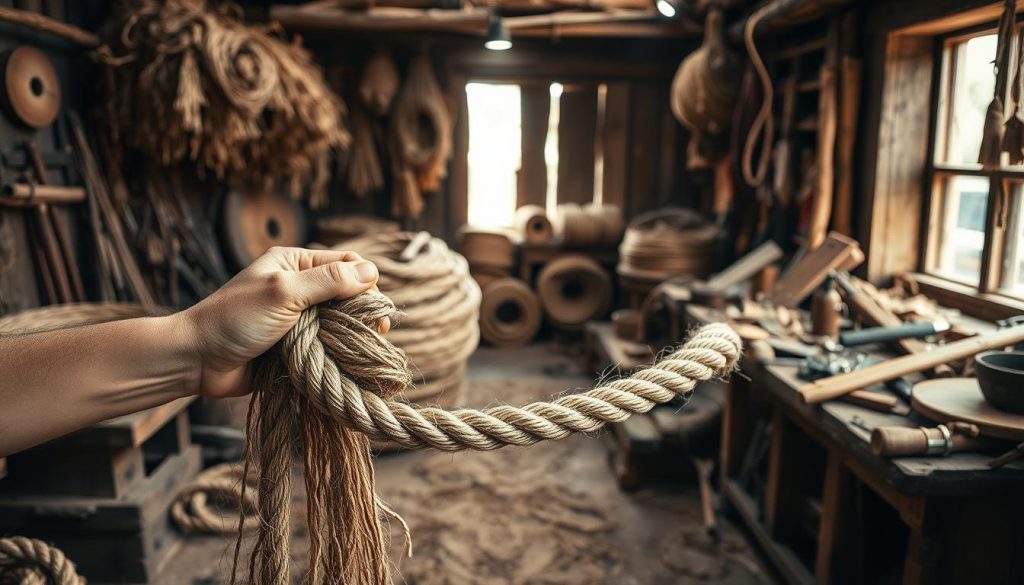
Rope making is an ancient craft that still fascinates many today. It links us to traditional skills and offers practical solutions. This versatile skill blends creativity with functionality, perfect for DIY fans and outdoor lovers.
The process involves choosing and preparing natural plant fibers. Materials like nettle and agave can be turned into strong, reliable cordage1. This DIY project needs patience and careful attention to detail.
It typically takes about 2 hours to complete a rope1. The result is a useful tool for survival, crafting, and outdoor activities.
Rope making’s appeal lies in its simplicity. There’s great satisfaction in creating something useful with your own hands.
Key Takeaways
- Rope making is an accessible DIY project for beginners
- Natural plant fibers provide excellent material for cordage
- The entire rope-making process takes approximately 2 hours
- Finished ropes can be 100% biodegradable
- Proper fiber extraction is crucial for rope strength
Rope making offers an engaging experience for various interests. It’s great for fiber arts, survival skills, or traditional craft enthusiasts. A well-made rope can lift up to 20 kg, showing the power of this ancient skill1.
Essential Materials and Fiber Sources for Rope Making
Rope crafting is an ancient art that relies on selecting the right materials. The choice of fibers can greatly improve your homesteading skills and braiding techniques2.
Exploring Natural Fiber Options
Nature offers a wide range of materials for rope making. These include some remarkable natural fiber sources.
- Stinging Nettle (Urtica dioica)2
- Milkweed (Asclepias syriaca)2
- Dogbane (Apocynum cannabinum)2
- Yucca species2
- Agave species2
Timing and technique are crucial when harvesting natural fibers. Stinging nettle is best collected when plants are going to seed.
The process involves careful extraction and drying. This can take several months to complete2.
Modern Rope Making Materials
Modern rope crafting now includes synthetic alternatives. These offer increased strength and durability at lighter weights3.
Some popular modern materials include:
- Polypropylene: Rot-proof and water-resistant3
- Nylon: High strength with natural elongation3
- Polyester: Excellent chemical and UV resistance3
- Dyneema: Incredibly strong, 15 times stronger than steel by weight3
“The art of rope making is as much about selecting the right material as it is about mastering the craft.”
Each material brings unique properties to rope crafting. Manila hemp is one of the strongest natural fibers.
It’s particularly resistant to saltwater decomposition3. Knowing these traits helps you choose the perfect material for your cordage needs.
Make Rope: Basic Techniques and Preparation
Rope making is vital for outdoor enthusiasts and craft lovers. It requires mastering core techniques like reverse wrap and thigh-rolling. Thorough cleaning of fibers ensures strong, reliable rope4.
A 4-foot stalk can yield a 2-foot cord after careful processing4. The reverse wrap technique needs precise knot tying. Twisting cordage requires tight, consistent tension to prevent unraveling4.
Tenderizing and cleaning fibers takes about 9 minutes per 3-foot stalk4. Rolling fibers on denim can be effective, though the fabric might wear quickly4.
For advanced rope making, professional techniques help create complex cordage. Various materials like milkweed, cedar bark, or recycled cotton strips can be used4. Choosing the right fibers is key to making durable, functional ropes.
Practice will help you turn raw materials into versatile cordage. You can use it for camping, crafting, or survival situations. Mastering these skills opens up many creative possibilities.
FAQ
What are the best natural fibers for making rope?
Natural fibers like dogbane, milkweed, hemp, cotton, and tree bark are great for rope-making. Each material offers unique benefits for different projects. Some provide durability, while others offer more flexibility.
How long does it take to learn basic rope-making techniques?
Beginners can grasp basic techniques like reverse wrap and thigh-rolling in a few hours. Mastering consistent tension and creating longer ropes takes a few weeks of practice.
Can I make rope from recycled materials?
Yes! You can turn plastic bags and old t-shirts into sturdy cordage. This eco-friendly method helps reduce waste and supports sustainable crafting.
What tools do I need to start making rope?
You’ll need a flat surface or your thigh, scissors, and fiber materials. Advanced techniques might require a fiber splitter or twisting board.
How strong are handmade ropes compared to store-bought ones?
Handmade ropes can be as strong as commercial ones with proper technique. The strength depends on your materials and twisting consistency. High-quality natural fibers like hemp can produce very sturdy ropes.
Is rope making a good skill for homesteading?
Rope making is a valuable homesteading skill. It provides cordage for tasks like animal tethering and garden support. This versatile craft connects you to traditional methods and self-sufficiency.
What are some common mistakes beginners make when making rope?
Beginners often struggle with inconsistent fiber tension and uneven twisting. Not properly cleaning materials or using weak fibers are also common errors. Practice and patience are key to improving rope-making skills.
Can children learn rope-making techniques?
Children over 8 can enjoy rope making with adult supervision. Simple techniques like finger braiding help develop fine motor skills. It’s a fun way for kids to learn about traditional crafts.
Source Links
- How to Make Rope / String With Natural Plant Fibers – https://www.instructables.com/How-to-Make-Rope-String-With-Natural-Plant-Fibers/
- Cordage: Making Natural Rope – https://www.wildernesscollege.com/cordage.html?srsltid=AfmBOoqceOce1rwTJrnyzwW4YpUXpF1IIqPNd1LoieE90xh2uJKJ8rL9
- Rope Material Guide – https://www.rope.com/blogs/the-rope-blog/rope-material-guide?srsltid=AfmBOooZb53VH-4qMpvAEA-x6JDp9F2cFZvXrW4OQaPm2Zg5s07kopAO
- Make Rope Out of Dead Plants — With No Tools – https://www.instructables.com/Make-rope-out-of-dead-plants—-with-no-tools/

