
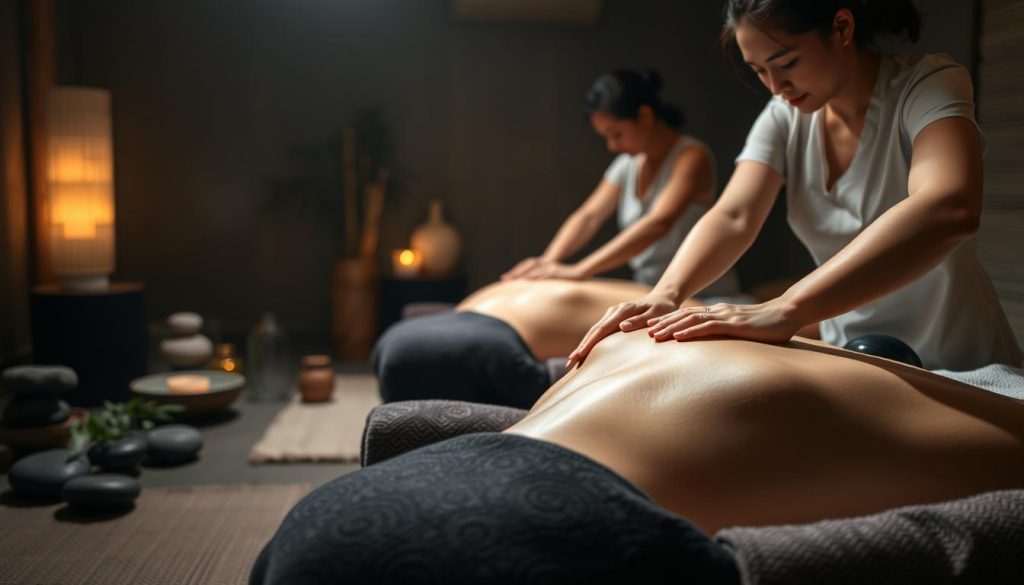
Asian massage is a powerful healing tradition. It goes beyond simple relaxation. These techniques come from centuries-old practices aimed at restoring balance and promoting wellness1.
Asian massage offers a unique approach to physical and mental restoration. It blends ancient wisdom with targeted bodywork. The core philosophy focuses on energy flow, called ‘chi’ or ‘qi’1.
This practice aims to balance the body’s internal systems. Thai massage, shiatsu, and traditional Chinese techniques each bring unique healing approaches.
Clients can expect a transformative session. It may include stretching and targeted pressure points. These sessions typically last 60 to 90 minutes2.
Prices for these specialized massages usually range from $50 to $100. Remember to include a 15-20% tip for your massage therapist2.
Key Takeaways
- Asian massage focuses on balancing body energy and promoting holistic healing
- Techniques vary from Thai to shiatsu massage styles
- Sessions typically last 60-90 minutes
- Prices range from $50-$100 per session
- Massage aims to address both physical and emotional wellness
Understanding Asian Massage Traditions and Philosophy
Asian massage is a profound healing art that goes beyond physical manipulation. These ancient practices offer a sophisticated approach to wellness. They’re rooted in centuries of traditional knowledge and have been around for over 2,500 years3.
The Essence of Energy Flow
The core of Asian massage traditions is the concept of chi or vital energy. This energy flows through specific pathways in the body called meridians4. Practitioners of various massage types understand this crucial concept of energy balance.
- Chi represents the life force connecting physical and spiritual wellness
- Meridians are energy channels through which chi circulates
- Blockages in these channels can lead to physical and emotional disturbances
Healing Principles and Holistic Approach
Traditional healing approaches focus on the connection between mind, body, and spirit. The Yin and Yang philosophy stresses the importance of balance for optimal health5. About half of Americans have shown growing interest in these holistic massage techniques5.
Cultural Significance in Wellness
Asian massage is a comprehensive wellness practice, not just a therapeutic technique. Reflexology and aromatherapy massage show how these traditions address overall well-being3. Regular practice can boost happiness, reduce stress, and improve health3.
Massage is not just a luxury, but a path to holistic healing and self-discovery.
Popular Types of Asian Massage
Asian massage offers a variety of healing techniques developed over millennia. Each style targets the body’s energy systems and promotes holistic healing6.
These methods focus on wellness, using unique approaches to balance and restore the body.
- Chinese Tui Na Massage: A powerful technique that balances the body’s energy flow. Practitioners use pushing, kneading, and rubbing methods to stimulate Qi (life energy) through specific meridian channels6.
- Japanese Anma Massage: Rooted in ancient healing practices, this massage style focuses on precise pressure point manipulation. Shiatsu, a popular variant, applies targeted finger pressure along energy lines to restore balance7.
- Thai Massage: A dynamic approach that combines stretching and compression techniques. Therapists use yoga-like poses to release tension, working along energy lines called “sen”7.
Acupressure massage targets specific points to relieve various health issues. Studies show these methods can help with back pain and headaches6.
About 50% of massage clients ask for these holistic Asian techniques. They report less stress and better physical comfort7.
Asian massage is more than just a treatment – it’s a journey of healing that connects body, mind, and spirit.
The massage market has grown by 15% annually in recent years. This shows a rising interest in traditional Asian massage techniques7.
People are recognizing the deep healing potential of these time-honored practices.
Conclusion
Asian massage is more than relaxation. It’s a holistic approach to wellness rooted in ancient healing traditions. These practices offer a unique path to physical and mental rejuvenation8.
Studies show massage therapy can reduce anxiety and depression symptoms. It’s a powerful tool for overall health8. Each technique, from shiatsu to Thai massage, has its own healing philosophy.
Practitioners balance body energy by targeting specific meridian points. This helps relieve tension and promote wellness1. About 80% of people report pain relief and better mobility after massage therapy8.
Learn more about these practices through trusted Asian massage resources. Regular sessions can improve circulation, reduce stress, and support overall well-being1.
Asian massage helps with physical discomfort and mental tension. It offers a gentle yet powerful approach to healing8. These techniques reconnect us with our body’s natural healing potential.
Working with skilled practitioners can unlock a transformative wellness path. It bridges ancient wisdom with modern understanding. Asian massage invites us to explore our body’s incredible healing abilities.
FAQ
What is the difference between Asian massage and traditional Western massage?
Asian massage focuses on energy flow and holistic wellness. It uses concepts like chi and meridian lines. Western massage concentrates on muscle manipulation and physical relaxation.
Asian techniques include acupressure, stretching, and targeted pressure point work. These methods aim to balance the body and mind.
Are Asian massage techniques safe for everyone?
Asian massage is generally safe, but caution is necessary. Consult a healthcare provider if you have medical conditions, injuries, or are pregnant.
Styles like Thai, shiatsu, or tui na can be intense. Inform practitioners about your health status for a customized treatment.
How does chi (qi) relate to massage techniques?
Chi is vital life energy flowing through the body’s meridian lines. Asian massage aims to unblock, balance, and stimulate this energy flow.
Acupressure and reflexology target points believed to regulate chi. These practices promote overall wellness by addressing energy disruptions.
What should I wear during an Asian massage?
Clothing requirements vary by massage type. Thai massage recommends loose, comfortable clothing for stretching and movement.
Some styles like shiatsu may require full clothing. Others might use traditional draping similar to Western massage techniques.
How long does a typical Asian massage session last?
Asian massage sessions typically range from 60 to 90 minutes. Thai massage can last up to two hours and involves active stretching.
Reflexology might be shorter, focusing on specific pressure points. Session length depends on the chosen technique and treatment goals.
What are the potential health benefits of Asian massage?
Asian massage offers stress reduction, improved circulation, and pain relief. It can enhance flexibility, boost immune function, and promote mental relaxation.
Tui na addresses musculoskeletal issues. Reflexology may help with systemic health and energy balance.
How do I choose the right type of Asian massage for me?
Consider your health goals, physical condition, and personal preferences. Thai massage improves flexibility, while shiatsu focuses on pressure points.
Tui na targets specific muscle groups. Aromatherapy massage offers a relaxing experience. Consult a trained practitioner for personalized recommendations.
Are there any potential risks associated with Asian massage?
Asian massage is generally safe but may cause temporary soreness or bruising. Deep pressure techniques like tui na or shiatsu can lead to discomfort.
People with blood disorders, recent injuries, or chronic health issues should consult a healthcare professional first. Always communicate any concerns to your massage therapist.
Source Links
- What is Asian Massage? – https://www.primemassagechairs.com/blogs/news/what-is-asian-massage
- How Often Should You Schedule an Asian Massage? – https://www.westgardenspa.com/blog/how-often-should-you-schedule-an-asian-massage/
- Dive into Diversity: Varieties of Asian Massage – WaySpa – https://www.wayspa.com/blog/dive-into-diversity-varieties-of-asian-massage/
- What is Chinese Massage? Techniques, Benefits, and Traditional – https://lspadanang.com/techniques-benefits-and-traditional-chinese-massage-therapy/
- Journey Into Tranquility: Understanding The Philosophy Of Chinese Massage – https://usawire.com/journey-into-tranquility-understanding-the-philosophy-of-chinese-massage/
- Benefits and Types of Asian Massage Therapy – https://shangri-la-spa.com/blog/what-are-the-benefits-and-types-of-asian-massage-therapy-for-relieving-stress/
- 5 Popular Types of Asian Massage Therapy – Best Asian Massage in NYC | Garden Retreat Spa – https://gardenretreatspa.com/5-popular-types-of-asian-massage-therapy/
- The Healing Power of Massage: Exploring Asian Massage Therapy – https://www.reviveasian.com/healing-power-asian-massage

